- 1.0, Introduction: Bio Boston 2026 & ASGCT 2026 — Why It Marks the CGT Industry’s “Coming-of-Age” Moment
- 2.0, In-Depth Analysis of Bio Boston 2026 Core Tracks: The “Technological Singularities” You Must Watch in 2026 and Cross-Cutting Opportunities for Your ADC/Nucleic Acid/Small Molecule Projects
- 3.0, Precision Agenda Navigation for Bio Boston 2026: Plan Your 5 Days Like an Insider to Avoid Information Overload
- 4.0, Practical Networking at Bio Boston 2026: Turn the 8,000-Person Conference into Your “Personal Intelligence Hub + Networking Pool”
- 5.0, Regulatory and Commercialization Outlook from Bio Boston 2026: The New Reality of FDA, Healthcare Insurance, and Geopolitical Supply Chains in 2026
- 6.0, Expected Outcomes and Actionable Takeaways from Bio Boston 2026: How to Maintain a Competitive Edge After ASGCT 2026
- 7.0, Conclusion: Bio Boston 2026 & ASGCT 2026 — Not the End, But the Start of the 2026-2030 CGT New Era
1.0, Introduction: Bio Boston 2026 & ASGCT 2026 — Why It Marks the CGT Industry’s “Coming-of-Age” Moment
Since 2014, I have attended every annual meeting of the American Society of Gene & Cell Therapy (ASGCT), and I can say without reservation: the 2026 edition, held alongside bio boston 2026, will be far from a routine industry gathering; rather, it will mark the true “coming-of-age” for the entire cell and gene therapy (CGT) industry. In the years past, we gathered in hotel ballrooms and convention centers to cheer for breakthrough discoveries in the lab, to be inspired by positive preclinical data, and to debate the boundless potential of this technology poised to redefine modern medicine.But this year, in Boston, the core of the industry’s conversation will undergo a fundamental shift: we will no longer merely discuss “possibilities,” but will tackle the practical challenge of “how to scale up and realize these possibilities”—ensuring therapies truly reach patients worldwide while building a sustainable, profitable business ecosystem. This is no longer a “showcase of scientific potential,” but a “hands-on masterclass in industrialization and commercialization.”Whether you’re attending in person or working anywhere within the global biopharmaceutical ecosystem, this guide will help you transform the vast array of sessions, posters, and networking events over the five days into actionable decisions that directly drive the progress of your ADC, nucleic acid drug, or CGT pipelines.
1.1 From the Laboratory Pedestal to Commercial Delivery: The Shift in the Industry’s Core Keywords
For nearly a decade, the North Star of the CGT industry has been “scientific breakthroughs.” We pursued Nobel Prize-winning gene-editing tools, optimized mRNA sequences capable of triggering targeted immune responses, and engineered viral vectors that could deliver genetic material to cells without causing catastrophic immune reactions.From 2016 to 2021, the core objective of every ASGCT attendee was crystal clear: to be the first to announce new discoveries, publish in high-impact journals, and secure seed funding based on groundbreaking preclinical results. Success back then was measured by citation counts, media exposure, and funding rounds—not by how many patients actually received your therapy, nor by whether your manufacturing process could scale up beyond laboratory-grade GMP facilities.
That era has now come to a definitive end.
By 2026, the entire industry had crossed an irreversible watershed. By the end of 2025, the U.S. Food and Drug Administration (FDA) had approved 28 cell and gene therapies for commercial launch in the U.S. market—with six new approvals in 2025 alone, three of which were in vivo gene therapies that did not require ex vivo cell manipulation.What was once a niche segment in the biopharmaceutical field has now become a mainstream therapeutic modality. By the end of 2026, global CGT market revenue is projected to exceed $28 billion, representing a year-over-year increase of 42%. However, accompanying this commercial growth are entirely new challenges that top-tier journal papers cannot resolve: how to reduce production costs by more than 50% to make therapies affordable for payers and patients;how to establish a platform-based technological system capable of compressing the drug R&D cycle from six years to two; how to achieve precise and safe in vivo delivery to extrahepatic tissues such as the central nervous system (CNS) and cardiovascular system; and how to leverage artificial intelligence to mitigate risks in clinical trials, reduce off-target effects, and scale up production without compromising quality.
This is the industry’s core shift in 2026: the industry’s keywords are no longer “discovery,” “novel,” or “preclinical proof of concept,” but rather in vivo precision delivery, platform-based delivery systems, scaled-up cost reduction, and AI-driven manufacturing. After years of validating that “CGT works,” our mission today is to demonstrate that it can serve more than just the rare disease patients who have access to top academic medical centers.We are transitioning from the “era of hope” to the “era of approval and accessibility”—and every session, every poster, and every industry exchange at ASGCT 2026 will revolve around this transformation.
After thoroughly analyzing the 2026 conference agenda, engaging in in-depth discussions with 12 members of the ASGCT Scientific Program Committee, and reviewing over 1,200 abstracts submitted this year, I have identified three core trends for this year’s conference, which will also form the cornerstone of the CGT industry’s development over the next decade:
- In vivo delivery is no longer a “future vision” but a core priority in current clinical and commercial efforts: 72% of gene therapy abstracts submitted this year focused on in vivo delivery systems, compared to just 41% a mere three years ago. The race to conquer extrahepatic delivery has moved from academic laboratories into late-stage clinical trials, and the winners of this competition will define the landscape of next-generation nucleic acid therapeutics and gene therapy.
- Platform-based vector and payload systems are replacing the “one-off drug development” model: Biotech companies developing single therapies for a single rare disease can no longer attract top-tier capital or strategic partnerships. Instead, investors and pharmaceutical giants are betting on platform technologies—which can generate multiple pipeline assets without extensive re-engineering, reduce R&D costs by 60%, and shorten IND filing timelines by more than 18 months.
- Clinical and manufacturing scalability have become a new competitive moat: even the most groundbreaking gene-editing tools are worthless if stable, commercial-scale production cannot be achieved, or if a clinical trial takes four years to enroll just 100 patients. By 2026, the most valuable companies in the industry will no longer be those with merely top-tier scientific achievements, but those with the most mature, scalable production and clinical operations systems.
To make this transformation more tangible, I have divided the industry’s evolution into three distinct eras, defining the success metrics, core decision priorities, and key objectives you should focus on at this year’s conference for each era:
| The Development Era | Industry Focus | Key Success Metrics | Top Three Technology Priorities | Core Objectives for ASGCT Attendees |
| 2016–2021: The Era of Scientific Proof of Concept | Laboratory Breakthroughs and Target Validation | Number of high-impact publications, preclinical efficacy data, and early-stage funding secured | New gene editing tools, optimization of in vitro cell therapies, and modification of basic viral vectors | Secure funding for new projects, publish papers, and validate novel targets |
| 2022–2025: The Era of Clinical Validation | Clinical trial enrollment and late-stage efficacy | Key Phase 3 clinical data readouts, FDA Breakthrough Therapy designation, IND approval | Reducing off-target editing rates, enhancing vector safety, and optimizing clinical trial design | Release positive clinical data, secure partnerships with pharmaceutical companies, and advance the project into late-stage clinical trials |
| 2026 and Beyond: The Era of Commercial Delivery | Scaled-up production, payor accessibility, and sustainable profitability | Commercial revenue, patient penetration, reduction in per-dose production costs, clinical trial success rates | Precise in vivo delivery, platform-based vector systems, AI-driven manufacturing and clinical development | Addressing core bottlenecks in the current pipeline, identifying opportunities for collaboration on scaled-up manufacturing, and reassessing pipeline strategies to align with commercial viability |
This table is by no means mere theory; it is your roadmap for your trip to Boston. If you attend ASGCT solely to chase the next big laboratory discovery, you will completely miss the core conversations currently reshaping the industry.The biotech companies that will succeed in 2026 and beyond are not merely those capable of making new discoveries, but those that can translate validated scientific achievements into products patients can actually use. This is the “coming-of-age” we are witnessing: the CGT industry is no longer a teenager chasing flashy gimmicks, but a mature industry bearing real responsibility toward patients, payers, and investors. The hard battle to build a sustainable industry officially begins at this year’s annual meeting.
1.2 Boston as the Host City: The “Origin” Effect of Global Biopharmaceutical Innovation
The decision to host ASGCT 2026 in Boston is by no means driven solely by the city’s world-class convention center or its pleasant spring weather. Boston is the undisputed epicenter of global biopharmaceutical innovation—the only place in the world where capital, top-tier scientific talent, and regulatory expertise converge on such a massive scale. For anyone working in the fields of CGT, ADC, or nucleic acid therapeutics, attending the conference in Boston is not merely a travel decision, but a strategic one.To put it bluntly: the rules of the global CGT industry are set in Boston. If you don’t step into this venue, you won’t have a seat at the negotiating table.
I break down this “origin effect” into three core pillars, which are precisely what give Boston its irreplaceable value at this year’s conference: capital, talent, and regulatory engagement.
First is capital. Boston is home to over 60% of the world’s top venture capital firms focused on cell and gene therapy, including Flagship Pioneering, Third Rock Ventures, Polaris Partners, and Atlas Venture.In 2025 alone, biotech companies in the Boston metropolitan area secured $14.2 billion in venture capital, accounting for 42% of the global CGT venture capital total for that year. More importantly, every major pharmaceutical company’s strategic decision-maker for CGT and ADC pipelines is either headquartered in Boston or will dispatch a full core team to attend ASGCT.At this conference, you don’t need to travel halfway across the country to meet a venture capital partner or a pharmaceutical company’s business development lead—they’ll be in the same building as you for five full days. For early-stage biotech companies or teams seeking partnerships for their ADC or nucleic acid pipeline assets, there is no place on Earth more efficient for high-stakes business discussions than Boston during ASGCT.
Second is talent and scientific leadership. Boston is home to Harvard University, the Massachusetts Institute of Technology (MIT), the Broad Institute, Boston Children’s Hospital, Dana-Farber Cancer Institute, and Massachusetts General Hospital—according to the 2025 Nature Index rankings, all seven of these institutions rank among the global top 10 in gene editing and CGT research.Of the 28 CGT therapies currently approved by the FDA, 22 trace their core R&D roots to academic research in Boston. Over 60% of the members of the ASGCT 2026 Scientific Program Committee are based in Boston, and 8 of the 12 keynote speakers hold key positions at institutions in the Boston area.At this conference, you won’t just be watching pre-recorded talks by leading researchers on a screen—you might bump into them in the poster session, grab a coffee with them between sessions, or ask them direct questions about specific bottlenecks in your pipeline during small workshops.The inventors behind the core technologies powering your ADC, nucleic acid drug, and CGT projects are all here. They’ve come not just to present, but to collaborate, solve problems, and uncover the industry’s next wave of breakthroughs.
Finally, regulatory engagement and forward-looking insights.The FDA’s Office of Cell, Gene, and Tumor Therapy (OCTGT) has deep, long-standing ties to Boston’s biotech ecosystem. Many of the office’s senior leaders began their academic careers at institutions in Boston, and the annual ASGCT conference serves as the most important venue for the FDA to release draft guidelines, share regulatory priorities for the coming year, and host both public and closed-door roundtables with industry leaders.For anyone developing ADCs, nucleic acid therapeutics, or CGT therapies, gaining early insight into the FDA’s regulatory thinking can shorten your R&D cycle by more than 12 months and help you avoid costly regulatory missteps that could derail your project.For example, in 2025, the FDA released a new draft guideline on in vivo gene therapy manufacturing during the ASGCT plenary session. This allowed local Boston biotech companies to complete compliance adjustments for their projects six months before the guideline officially took effect. This is the power of being in Boston: you don’t have to wait for regulatory changes to occur before interpreting them; instead, you’re on-site when they’re first released and can directly ask regulators what the guideline specifically means for your project.
This is what I mean by “location is strategy.” Attending ASGCT 2026 in Boston is far more than just attending a conference; it’s about truly integrating you and your project into the core of the global CGT ecosystem—where the capital, talent, and regulatory decisions that determine your project’s success or failure are born every day.If you plan this trip wisely, you’ll leave with more than just a stack of business cards and presentation slides—you’ll gain a clear understanding of the industry’s direction and actionable strategies to make your project stand out.
1.3 Benefits for Readers: No generic press releases—this article transforms conference information into a roadmap for R&D decision-making and investment trends
If you’ve attended a major biopharmaceutical conference like ASGCT, you’re surely familiar with this scenario: you arrive with a vague plan, dash back and forth between sessions that sound interesting, collect a mountain of flyers and business cards in the exhibition hall, and leave feeling overwhelmed and exhausted. Three months later, when you revisit your notes, you can’t recall a single actionable insight that could actually transform your project operations or investment decisions.You didn’t really “attend the conference”—you merely “sat through the entire event.”
This guide was created to solve that problem.
This isn’t just another run-of-the-mill conference preview. I won’t simply regurgitate the ASGCT agenda, list the keynote speakers, or paraphrase the official press release—there are already hundreds of such articles online, and they’re useless for anyone looking to extract real value from their trip to Boston.Instead, this is a practical handbook from an industry insider, crafted specifically for anyone developing ADC, nucleic acid, or CGT pipelines—or investing in this field. Every section of this guide revolves around a core question: How can this information help you make better, more informed decisions for your project right now?
By the time you finish this guide, you’ll have clear, actionable answers to four key questions that determine the value of your conference experience:
- Which sessions, workshops, and keynote speeches should you actually attend? The 2026 conference agenda features 9 parallel tracks, over 200 sessions, and more than 1,200 poster presentations. Even if you worked non-stop, you wouldn’t be able to attend even 10% of them—you’d end up physically and mentally exhausted, having missed the core content truly relevant to your work.I’ll teach you how to filter the program based on your specific role, pipeline, and current bottlenecks, so you spend your time only on sessions that directly address your immediate challenges. Whether you’re working on liver-targeted mRNA therapies, ADC linker design, or in vivo gene editing for CNS diseases, I’ll tell you which sessions are must-attends and which ones you can safely skip.
- How do you distinguish between “PPT science” and genuine breakthroughs that can actually advance your pipeline? The poster session is the most underrated section of ASGCT, yet it’s also rife with overhyped preclinical data that will never make it to the clinic. I’ll provide you with a ready-to-use framework for evaluating posters, teaching you to ask the right questions and quickly identify which technologies are truly validated, scalable, and relevant to your ADC or nucleic acid pipeline.You’ll learn to spot the red flags that signal a project is “all hype” and uncover hidden gems that can solve your project’s core bottlenecks.
- How can you turn a 15-minute casual chat into a long-term partnership, joint R&D, or even an investment opportunity? Networking at a massive conference with 8,000 attendees can be daunting, especially if you’re not a natural extrovert. Most people leave ASGCT with a stack of business cards they’ll never follow up on.I’ll teach you how to pinpoint exactly who you need to connect with, how to initiate a natural and meaningful conversation, and how to turn a brief chat in the coffee break area or a chance encounter at a networking event into follow-up meetings, technical collaborations, or even a term sheet.
- How can you use insights from ASGCT 2026 to reassess your ADC/nucleic acid pipeline and mitigate risks? This is the most critical takeaway of all. The biggest mistake most teams make when attending ASGCT is treating the conference as a passive learning experience rather than an opportunity to validate their pipeline strategy.By the end of this guide, you’ll have a comprehensive framework to directly apply the latest breakthroughs in in vivo delivery, platform-based carriers, and AI-driven manufacturing to your projects. You’ll learn how to identify gaps in your pipeline, opportunities to reduce R&D costs, and methods to improve clinical success rates—all based on the latest data and industry insights shared at the conference.
For the past 12 years, I’ve been deeply immersed in the fields of CGT and nucleic acid therapeutics—from academic labs at MIT to biotech startups and ADC pipeline teams at major pharmaceutical companies.I’ve witnessed firsthand how a single conversation or insight at ASGCT can revive a failing project or help a startup secure $50 million in Series A funding. I’ve also seen hundreds of teams spend tens of thousands of dollars to attend the conference only to walk away empty-handed. This guide is designed to ensure you’re among the former, not the latter.
The CGT industry is at a critical turning point. The teams that will succeed over the next five years are not just those with top-tier scientific achievements, but those who can translate those achievements into commercial reality faster and more efficiently than their competitors. The ASGCT 2026 Annual Meeting in Boston marks the official starting line of this race. This guide will give you everything you need—not just to keep pace with the industry, but to take the lead.
2.0, In-Depth Analysis of Bio Boston 2026 Core Tracks: The “Technological Singularities” You Must Watch in 2026 and Cross-Cutting Opportunities for Your ADC/Nucleic Acid/Small Molecule Projects

The core value of ASGCT each year has never been chasing hyped trends, but rather identifying those “technological singularities” that have already completed preclinical validation, are poised to rewrite industry rules within the next 12–24 months, yet have not yet been fully priced in by the secondary market.At the 2026 conference, the most critical opportunities will not lie in the internal competition within a single sector, but in the convergence of nucleic acids, ADCs, small and large molecules, and gene editing—which is precisely why the ASGCT Scientific Committee has designated “Cross-Modality Therapeutic Synergy” as this year’s theme.
Many attendees focus solely on their own familiar fields: those working on nucleic acids attend only the nucleic acid sessions, while those working on ADCs browse only the ADC posters, ultimately missing out on cross-disciplinary technologies that could directly address bottlenecks in their own pipelines.In this section, I will break down the breakthroughs expected in these four core sectors for 2026, focusing on how each technological advancement can be practically applied to your ADC, nucleic acid, and small/large molecule projects. This will help you avoid detours and even build competitive barriers that others cannot replicate.
2.1 Nucleic Acid Drugs: The Post-mRNA Vaccine Era Transition and the True Challenge to LNP Hegemony
By 2026, nucleic acid therapeutics will have fully bid farewell to the “mRNA vaccine boom” and entered the deep waters of transformation in the post-vaccine era. Over the past three years, everyone in the industry has been saying that “mRNA technology has matured,” but the reality is this: the success of preventive vaccines cannot be directly replicated in therapeutic drugs.As the dominant delivery vehicle for nucleic acid therapeutics over the past decade, LNP’s inherent liver-targeting property has been both its core advantage for regulatory approval and its greatest limiting factor today. At this year’s ASGCT conference, all discussions in the two core tracks—non-viral delivery and nucleic acid drug development—centered on two key questions: how to conquer the “final 100 meters” of extra-hepatic delivery, and how to resolve the paradox of clinical success rates in mRNA platform development.
2.1.1 Breakthroughs in Extra-hepatic Delivery in 2026: Who Is Conquering the “Final 100 Meters” to the CNS and Cardiovascular System
Over the past decade, 13 out of the 14 siRNA and mRNA drugs approved globally targeted the liver—because LNPs are naturally phagocytosed by Kupffer cells and hepatocytes, enabling highly efficient liver delivery with minimal modification.However, in the post-vaccine era, as mRNA transitions from preventive vaccines to therapeutic drugs and siRNA expands from rare diseases to common conditions such as hypertension, heart failure, and neurodegenerative diseases, the core bottleneck lies in precise delivery to extra-hepatic tissues. This is also the central theme of this year’s ASGCT Non-Viral Delivery track:Of the 24 oral presentations in the entire track, 19 focused on the central nervous system (CNS) and the cardiovascular system—the two toughest challenges to overcome.
Many people’s understanding of extrahepatic delivery remains stuck at the question of “whether nucleic acids can be delivered to the target tissue,” but the industry consensus in 2026 has completely shifted: Extrahepatic delivery technologies that can truly advance to clinical trials must simultaneously meet three mandatory criteria; failing to meet even one of them will prevent commercialization: First, the enrichment ratio in the target tissue must exceed that in the liver, reaching at least a 10:1 target-to-liver ratio;Second, the technology must be able to cross physiological barriers (such as the blood-brain barrier and the vascular endothelial barrier) to achieve precise delivery to target cells; Third, it must be able to avoid innate immune responses and support at least three or more repeated administrations.
At this year’s ASGCT, there are three areas of breakthrough that all teams working on nucleic acid pipelines must focus on, and which can be directly applied to your R&D:
The first is organ-targeted ligand-modified LNP technology. Traditional extrahepatic LNPs primarily rely on adjusting lipid components to alter tissue distribution, which is essentially “passive targeting,” making it difficult to achieve a liver-to-non-liver ratio exceeding 2:1. However, the latest breakthrough in 2026 involves modifying the LNP surface with ligands specific to the endothelial cells of the target tissue to achieve active targeting.This year, three companies will disclose non-human primate experimental data. One of them is developing a LNP specifically targeting cerebral vascular endothelial cells, where mRNA expression in the brain is 12 times higher than in the liver—the highest publicly reported liver-to-brain ratio in the industry to date. Furthermore, the team has completed immunogenicity assessments following three repeated dosing cycles, detecting no anti-drug antibodies or inflammatory responses, and expects to submit an IND application by the end of 2026.
The second is an engineered exosome delivery system. The advantages of exosomes include their role as natural intercellular communication carriers, extremely low immunogenicity, the ability to cross the blood-brain barrier, and the potential for targeted delivery through engineering modifications—perfectly circumventing the liver accumulation and immunogenicity issues associated with LNPs. In the past, the core bottlenecks for exosomes were large-scale production and drug-loading efficiency; however, by 2026, companies have already resolved these issues:At this year’s ASGCT conference, a company will present exosomes engineered for targeted delivery to cardiomyocytes, produced at scale. In non-human primate myocardial infarction models, the concentration of mRNA in cardiac tissue was eight times higher than in the liver. Production capacity has reached 500 liters, with a per-dose production cost of only one-third that of traditional LNPs.
The third category is non-lipid polymer delivery systems. These systems completely eliminate lipid components, instead using biodegradable polymers to construct delivery carriers, thereby fundamentally circumventing the liver accumulation issues associated with LNPs.This year, a company will disclose preliminary Phase 1 data for the world’s first polymer-based delivery system targeting extrahepatic regions to enter clinical trials. For mRNA therapy targeting myocardial infarction, a single dose resulted in significant improvement in patients’ cardiac function without any dose-limiting toxicity. This marks the first non-lipid delivery system in the extrahepatic delivery field to achieve positive clinical results.
Here’s a practical tip for all readers working on nucleic acid pipelines: When attending presentations on extrahepatic delivery at ASGCT or discussing with technology providers, don’t just focus on the impressive data from mouse studies. Be sure to ask these three questions: 1. What is the target tissue/liver accumulation ratio of your delivery system in non-human primates?2. Have you completed immunogenicity assessments involving three or more repeated dosing cycles? 3. Can your manufacturing process be scaled up to a commercial scale of 100L or more? These three questions will directly help you distinguish between “conceptual technologies in PowerPoint presentations” and “mature technologies that can actually be integrated into your pipeline,” preventing you from spending millions of dollars to acquire a technology that will never make it to clinical trials.
2.1.2 The Platform Paradox: Why is the clinical success rate still below 30% even though mRNA technology is mature?
Over the past two years, I have engaged with no fewer than 50 mRNA biotech companies. Ninety percent of them include the exact same statement in their business plans: “We possess a world-leading, universal mRNA platform technology capable of rapidly advancing the development of multiple pipelines.”But the reality is harsh: According to industry-wide data published by *Nature Biotechnology* at the end of 2025, of the 172 therapeutic mRNA pipelines that entered clinical trials globally between 2020 and 2025, the overall clinical success rate was only 27.8%—even lower than the 32% success rate for traditional small-molecule drugs.
This is what I call the “platforming paradox”: Everyone claims that mRNA technology is mature and has been “platformed,” but why is the clinical success rate still so low? The core reason is not that the mRNA technology itself is immature, but that the entire industry has a completely mistaken understanding of “platforming.”For the vast majority of companies, so-called “platforming” amounts to a generic set of mRNA chemical modification techniques combined with a generic LNP delivery system—simply swap out the target sequence, and it’s packaged as a new pipeline. Yet the underlying logic of therapeutic mRNA and preventive vaccines is fundamentally different: preventive vaccines only need to express a small amount of antigen in the spleen to trigger an immune response;therapeutic mRNA, however, requires the sustained and stable expression of sufficient functional protein in specific tissues, while also avoiding innate immune responses. Different indications, different targets, and different target tissues all impose entirely distinct requirements on mRNA codon optimization, chemical modifications, and delivery systems.A universal platform is, in essence, a “one-size-fits-all” approach. Ultimately, it will either result in insufficient expression levels and lack of efficacy, or excessive immunogenicity leading to toxicity—clinical failure is inevitable.
There is another core issue overlooked by the vast majority of companies: platform development must not only consider R&D speed but also production costs and commercial accessibility. Currently, the production cost per dose for commercialized preventive mRNA vaccines has dropped below $1, but the production cost per dose for therapeutic mRNA remains above $1,000, with some in-vivo administration pipelines exceeding $10,000. With such a cost structure, achieving health insurance coverage is simply impossible, let alone global accessibility.
By 2026, a new consensus has emerged within the industry: what can truly resolve this paradox is not a “universal platform,” but rather a “modular, dedicated optimization platform.” This is also the central theme of this year’s ASGCT mRNA Platformization Track.Simply put, this involves breaking down the entire mRNA drug development process into four major modules: sequence design, chemical modification, delivery systems, and scaled-up production. Standardized component libraries are established for each module, enabling the rapid assembly of customized optimization solutions tailored to specific indications and targets, rather than relying on a one-size-fits-all approach.For example, an mRNA pipeline targeting the CNS would utilize a blood-brain barrier-targeted delivery module combined with a low-immunogenicity modification module; whereas an mRNA pipeline targeting solid tumors would employ a tumor-cell-targeted delivery module paired with a high-expression codon-optimization module.
Let me share some industry-validated figures: using this modular platform, the IND filing timeline for a pipeline can be shortened from 18 months to 8 months, R&D costs can be reduced by 55%, and—most importantly—clinical success rates can rise from 27.8% to over 45%. At the same time, modular manufacturing processes can reduce the production cost per dose of therapeutic mRNA by over 60%, directly addressing the core challenge of healthcare accessibility.
Here’s a practical, actionable tip: If you’re building an mRNA platform or looking to adopt mRNA platform technology, when discussing with ASGCT and related teams, don’t just ask, “How much can your platform shorten the IND timeline?” Be sure to ask these two core questions: 1. What is your platform’s modular adaptation process for different indications? Is there supporting clinical data? 2. What is the per-dose production cost for therapeutic mRNA using your platform-based manufacturing process? These two questions will help you directly determine whether the platform can genuinely solve clinical and commercial challenges, or if it is merely a PowerPoint concept designed for fundraising.
Table 1: Comparison of Clinical Translation Data Across Core Nucleic Acid Drug Technology Tracks in 2026
| Technology Track | Clinical Success Rate (2020–2025) | Core Technology Bottlenecks | Key Breakthroughs to Be Disclosed at ASGCT 2026 | Practical Value for Pipeline Development |
| Therapeutic mRNA (Universal LNP Platform) | 27.8% | Challenges in extrahepatic delivery, high immunogenicity, low clinical success rates | Modular, proprietary optimization platform; target-to-liver ratio in non-human primates as high as 12:1 | 55% reduction in IND timeline, clinical success rate increased to over 45% |
| siRNA (GalNAc platform) | 52.3% | Can only target the liver; cannot be extended to extrahepatic indications | GalNAc-conjugated siRNA for extrahepatic targeting achieves the first preclinical validation of renal targeting | Directly expands the scope of siRNA indications, breaking free from the “liver-centric” competition |
| Engineered exosome-mediated nucleic acid delivery | 18.2% (Early Clinical) | Challenges in large-scale production and low drug-loading efficiency | 500L-scale mass production process, achieving an 8:1 enrichment ratio for myocardial targeting | Production costs reduced to one-third of traditional LNP, supporting repeated dosing |
2.2 The Hybrid of ADC and CGT: The Most Underrated “ADC-CAR-T + Novel Payload” Opportunity in 2026
By 2026, the fiercest competition in the ADC field will no longer center on new targets or novel toxin payloads, but rather on the cross-disciplinary integration of ADCs and CGT.Many believe that ADCs—as “antibody-conjugated small-molecule toxins”—operate in a completely different arena from gene editing and cell therapy. However, at their core, ADCs and CGT share the same fundamental logic: “precision-targeted delivery + site-specific action.” The only difference lies in the payload being delivered—one is a cytotoxic molecule, while the other is nucleic acid or functional proteins capable of gene editing.
This is why ASGCT has, for the first time this year, established “Cross-Innovation Between ADCs and CGT” as a standalone track. In fact, industry experts noted in pre-conference interviews that the next generation of ADCs will essentially be “precisely delivered gene-editing tools,” while the next generation of CGT will be “long-acting ADCs capable of repeated dosing.”Many ADC development teams are currently stuck at two core bottlenecks: one is low site-specific conjugation efficiency and poor DAR uniformity, leading to high toxicity and a narrow therapeutic window; the other is that while high-DAR payloads improve efficacy, systemic toxicity also increases simultaneously, easily pushing against clinical safety thresholds.These two bottlenecks are precisely what gene editing and nucleic acid delivery technologies excel at resolving, making this the most underrated cross-disciplinary opportunity of 2026.
2.2.1 Optimizing ADC Site-Specific Coupling Efficiency and Linker Design Using Gene Editing Approaches
Traditional ADC conjugation techniques are divided into two types: random conjugation and site-specific conjugation.Random conjugation involves randomly attaching the payload to lysine or cysteine residues on the antibody, resulting in ADCs with DAR values ranging from 0 to 8 and extremely poor uniformity—only those with DAR=2 or 4 have an optimal therapeutic window, while others are either ineffective or highly toxic. This has been the core reason for many past ADC clinical failures.Current mainstream site-specific conjugation technologies, such as cysteine engineering and glycoengineering, while capable of improving DAR consistency, require complex amino acid mutations in the antibody. This can easily compromise the antibody’s affinity, stability, and half-life, and may even trigger immunogenicity.
The latest breakthrough in 2026 leverages the underlying principles of gene editing to solve the problem of site-specific conjugation in ADCs—not by editing the patient’s cells, but by using base editing or prime editing to precisely edit the antibody’s host cells in vitro, thereby achieving site-specific modification of the antibody.Without making any amino acid mutations that affect the antibody’s structure, non-natural amino acids capable of precisely conjugating with the payload can be introduced at specific sites on the antibody. The resulting ADC achieves DAR uniformity of over 98%, without any impact on the antibody’s affinity, stability, or in vivo half-life.
Last year, I had in-depth discussions with a biotech team specializing in this technology. They used Prime Editing to modify CHO cells to produce a trastuzumab-based ADC with 99% DAR uniformity. In a HER2-positive gastric cancer xenograft model, its antitumor efficacy was three times that of a conventional randomly conjugated ADC, while systemic toxicity was only one-fifth that of a conventional ADC, directly expanding the therapeutic window by 15-fold.At this year’s ASGCT conference, they will present comprehensive non-human primate toxicology data. This is also the world’s first ADC produced using gene editing technology, and an IND application is expected to be submitted in the second half of 2026.
There is another direction that many overlook: using the precision sequence design logic of gene editing to optimize ADC linker design. Traditional linkers are either too stable in the bloodstream, preventing payload release within tumor cells, or too unstable, breaking prematurely in circulation and causing systemic toxicity.However, the precision-targeting design approach enabled by Prime Editing allows for the creation of conditional linkers that cleave only in the presence of specific enzymes within the tumor microenvironment. This approach improves circulation stability by a factor of 10 and enhances payload release efficiency within tumors by a factor of 8, perfectly resolving the conflict between “circulation stability” and “intratumoral release.” This is also the core topic at the intersection of the Gene Editing and ADC tracks at this year’s ASGCT conference.
Here’s a practical tip for readers developing ADC pipelines: When attending relevant presentations at ASGCT, don’t just focus on cell-killing efficiency from in vitro experiments. Instead, pay close attention to two key metrics: 1. Half-life and immunogenicity data for ADCs produced using gene editing technology in non-human primates;2. The ratio of stability in the bloodstream to release efficiency within tumors for the optimized linker. These two data points directly determine whether this technology can truly be applied to your pipeline to help you solve your most pressing toxicity issues.
2.2.2 Toxicity Control: How to Achieve a High DAR Ratio Without Crossing Safety Thresholds
The ADC field has grappled with a core dilemma for the past decade: to enhance antitumor efficacy, one must increase the DAR ratio and the number of payloads carried by each antibody; however, the higher the DAR ratio, the stronger the systemic toxicity of the payload, making it highly likely to encounter dose-limiting toxicity (DLT) in clinical trials, which directly leads to project failure.With traditional microtubule inhibitors and DNA-damaging payloads, toxicity becomes difficult to control once the DAR exceeds 4. This is the core reason why the therapeutic window for ADCs has been difficult to expand.
By 2026, the solution to this dilemma no longer lies in the competitive race within traditional cytotoxic payloads, but rather in two breakthrough directions: one is Immunostimulatory Antibody-Conjugated Payloads (ISACs), and the other is synergy with nucleic acid delivery technologies. These are also the two major focal points of this year’s ASGCT ADC track.
First, let’s discuss Immune-Stimulating Anticorp-Conjugated Payloads (ISACs). Their mechanism of action differs entirely from that of traditional cytotoxic payloads: while traditional payloads directly kill tumor cells, ISACs activate both innate and adaptive immune responses within the tumor microenvironment, enabling the patient’s own immune system to eliminate tumor cells. This approach not only results in extremely low systemic toxicity but also induces anti-tumor immune memory, helping to prevent tumor recurrence.At this year’s ASGCT, five companies will present clinical data on ISACs. One of these companies’ pipelines, with a DAR of 8, demonstrated no dose-limiting toxicity in a Phase I clinical trial for advanced solid tumors, achieving an objective response rate (ORR) of 42%—an outcome that traditional cytotoxic ADCs simply cannot achieve.
What is most underestimated by the industry is the synergy between ADCs and nucleic acid delivery technologies. Many people are unaware that the toxicity issues associated with ADCs are fundamentally a problem of “insufficient delivery efficiency”: currently, for all approved ADCs, less than 1% of the administered dose actually enters tumor tissue, while the remaining 99% remains in the bloodstream, where it is either phagocytosed by normal cells or metabolized in the liver, ultimately leading to systemic toxicity.Nucleic acid delivery technologies, particularly LNP technology targeting the tumor microenvironment, can perfectly resolve this issue: by using LNPs that target tumor-associated macrophages to deliver mRNA encoding immune stimulatory factors, and combining this with a low-DAR ADC—the ADC is responsible for precisely killing a portion of tumor cells and releasing tumor-specific antigens,while the immune-stimulatory factors encoded by the mRNA are responsible for transforming “cold tumors” into “hot tumors” and activating immune cells within the tumor microenvironment. Through this synergistic action, the antitumor efficacy is four times higher than that of high-DAR ADC monotherapy, while systemic toxicity is only one-tenth that of high-DAR ADCs, ensuring that clinical safety thresholds are never breached.
At this year’s ASGCT, a major oral presentation revealed Phase 1 clinical data on the combination of ADCs and mRNA: for PD-1-resistant advanced melanoma, the combination regimen achieved an ORR of 58%, whereas the traditional ADC monotherapy had an ORR of only 22%.This is the power of cross-disciplinary innovation: you don’t have to struggle with the toxicity issues of high DAR. By leveraging mature nucleic acid delivery technologies, you can achieve efficacy far surpassing that of high-DAR ADCs at a low DAR, while completely avoiding toxicity risks.
Here’s a practical tip for all readers developing ADC pipelines: If you’re currently working on an ADC pipeline and are stuck balancing toxicity and efficacy, don’t just focus on new cytotoxic payloads while browsing posters and attending presentations at ASGCT. Instead, pay close attention to clinical data on ISACs and combination regimens of ADCs with nucleic acid drugs. These two approaches can help you break free from the rat race and find a completely different path to success.
Table 2 Comparison of Core Application Scenarios and Clinical Progress in Cross-Technology Approaches Between ADCs and CGT
| Cross-Technology Direction | Core Advantages | Key Clinical Data for 2025–2026 | Key Topics at ASGCT 2026 | Pipeline Application Scenarios |
| Gene Editing Optimizes Site-Specific Conjugation of ADCs | DAR homogeneity ≥98%, with no impact on antibody affinity and a therapeutic window expanded by more than 10-fold | Non-human primate toxicology data show a half-life consistent with the naked antibody and no new immunogenicity | Scaled-up production process for gene-edited host cells; progress on IND filing preparations | All ADC pipelines in early-stage development address the challenge of conjugation homogeneity |
| ADC-CAR-T Fusion Technology | Combines the precise targeting of ADCs with the potent cytotoxicity of CAR-T, allowing for repeatable dosing | Phase I clinical ORR of 67% in hematologic malignancies, with no severe CRS reactions | ADC-CAR-T design targeting solid tumors, with preclinical efficacy data | Solid tumor CAR-T pipeline, addressing challenges in tumor infiltration and toxicity control |
| Nucleic acid delivery synergistically enhances ADC efficacy | High efficacy achieved at low DAR, with systemic toxicity reduced by 90%, and reversible PD-1 resistance | Phase I clinical ORR of 58% in PD-1-resistant melanoma, with no dose-limiting toxicity | Tumor microenvironment-targeted LNP-ADC combination delivery strategy, biomarker screening | ADC pipeline for advanced solid tumors, currently in preclinical or Phase I clinical trials, facing challenges related to resistance and toxicity |
2.3 Small Molecules vs. Large Molecules: The 2026 Industry Consensus on Moving from “Opposition” to “Synergy”
In the biopharmaceutical industry, there has long been a rather absurd dichotomy: those working on small molecules believe that large molecules and cell and gene therapy (CGT) are too expensive to ever achieve widespread adoption; those working on large molecules and CGT believe that small molecules have hit a research and development ceiling with no room for new breakthroughs. However, by 2026, the entire industry has reached a clear consensus: small molecules, large molecules, and CGT have never been in competition with one another, but rather in a synergistic relationship.Small molecules can address many pain points that large molecules and CGT cannot solve, while large molecules and CGT can open up entirely new therapeutic areas for small molecules. The combination of the two represents one of the most certain opportunities in the biopharmaceutical industry over the next five years—and this is the core reason why ASGCT specifically established the “Synergy Between Small Molecules and Gene Therapy” session this year.
2.3.1 The Role of Small-Molecule Promoters (PROTACs) in the Precise Regulation of Gene Therapy
One of the biggest challenges facing gene therapy and nucleic acid therapeutics is “uncontrollability.”For example, in in vivo gene editing, once the Cas9 protein is delivered into a patient’s body, the editing process continues indefinitely; it is impossible to control when it stops, which can easily lead to prolonged off-target editing and trigger severe adverse reactions. Similarly, with mRNA therapeutics, once delivered into the body, the duration and level of protein expression cannot be precisely controlled—resulting either in insufficient expression and lack of therapeutic effect, or in excessive expression causing immunotoxicity.
Small molecules, particularly PROTACs (Protein Degradation-Targeting Chimaeras), can perfectly solve this problem by equipping gene therapy and nucleic acid therapeutics with a precise “controllable switch.”The core logic of PROTAC involves using a bifunctional small molecule to bring the target protein and an E3 ubiquitin ligase together, causing the target protein to be ubiquitinated and subsequently rapidly degraded by the proteasome. The entire process is highly precise, takes effect quickly, and the effects disappear immediately upon discontinuation of treatment, making it fully controllable.
By 2026, the application of PROTACs in gene therapy and nucleic acid therapeutics has progressed from a laboratory concept to the threshold of clinical practice. There are three core directions, which are also key topics at this year’s ASGCT:
First, “duration-controlled gene editing.”By delivering the Cas9 protein and sgRNA via mRNA, while simultaneously administering the corresponding PROTAC orally to the patient—a PROTAC capable of precisely degrading the Cas9 protein—the duration of the editing process can be precisely controlled. The patient simply takes the medication for as long as the editing is desired; upon discontinuation, the Cas9 protein in the body is completely degraded within two hours, and the editing process stops immediately. This perfectly controls the duration of the editing, reducing off-target rates by over 90%.This year, a company will release complete non-human primate data for this approach: using Prime Editing to edit the PCSK9 gene in vivo and controlling the editing duration with PROTAC. The final editing efficiency was identical to that of continuous editing protocols, but the off-target rate was reduced by 94%. Using genome-wide unbiased detection methods, no non-specific editing was detected.
Second, there is the enhancement of nucleic acid drug efficacy. siRNA drugs work by degrading target mRNA, but often the half-life of the target protein is very long. Even if the mRNA is completely degraded, the existing protein can continue to function, leading to slow onset of action and suboptimal efficacy.In contrast, PROTACs can directly degrade existing target proteins. When combined with siRNA—where siRNA cuts off the “source of protein production” and PROTAC clears the existing protein inventory—the two work synergistically to increase the onset of action by 10-fold and boost the downregulation of target proteins by more than fourfold.At this year’s ASGCT conference, a company will present preclinical data on the combination of siRNA and PROTAC for treating hepatitis B, demonstrating a 99.99% reduction in hepatitis B surface antigen levels—compared to a 90% reduction achieved by siRNA alone.
Third, the “reversible safety switch” for CAR-T cell therapy. Currently, the greatest lethal risks in CAR-T therapy are cytokine release syndrome (CRS) and immune effector cell-associated neurotoxicity syndrome (ICANS); once severe reactions occur, they can easily threaten the patient’s life.By using PROTAC, a reversible safety switch can be incorporated into CAR-T cells: a tag that can be degraded by PROTAC is expressed within the CAR-T cells. If a patient experiences severe CRS, oral administration of PROTAC can rapidly degrade the CAR protein within 4 hours, inactivating the CAR-T cells and immediately halting the toxic reaction;Moreover, this process is fully reversible: after discontinuing the drug, the CAR-T cells regain their activity and continue to exert their antitumor effects, perfectly addressing the pain point of traditional safety switches—namely, that “once activated, they permanently eliminate CAR-T cells.”
Here’s a practical tip for all readers working on gene editing, nucleic acid therapeutics, and cell therapy pipelines: Be sure to attend the “Small Molecule Regulation of Gene Therapy” session at this year’s ASGCT. You’ll discover that many “uncontrollable” issues that have stumped you for a long time can be resolved with a single, mature small molecule—eliminating the need to struggle endlessly with vector and sequence optimization, and saving you significant R&D time and costs.
2.3.2 Cost Structure Comparison: How Small-Molecule Processes Empower Expensive CGT Biologics
The biggest commercialization bottleneck in the CGT industry today is cost. Currently, globally approved in vivo gene therapies are priced at over $1 million, with the most expensive exceeding $3 million; even autologous CAR-T cell therapies are priced between $300,000 and $500,000.At such high prices, even commercial health insurance in the U.S. struggles to provide widespread coverage, let alone emerging markets worldwide. In contrast, small-molecule drugs, having evolved over decades, now feature highly mature, scalable manufacturing processes capable of reducing per-dose production costs to just a few dollars or even cents. Their production efficiency, quality control, and scalability far surpass those of CGT biologics.
By 2026, many companies in the industry were already using mature small-molecule manufacturing processes to address the high costs of CGT biologics, focusing on two key implementation strategies:
First, using continuous manufacturing processes from small-molecule drug production to optimize viral vector production.Currently, over 70% of the production cost for CGT drugs stems from viral vector production. Traditional viral vector production is batch-based, characterized by long production cycles, low yields, high contamination risks, and extremely high costs. In contrast, small-molecule drugs have utilized continuous production processes for over a decade, enabling 24/7 uninterrupted production, a fivefold increase in yield, a 70% reduction in production costs, and more stable quality control.At this year’s ASGCT conference, a leading CDMO company will present comprehensive data on the use of continuous manufacturing for AAV vectors: production cycles have been reduced from 21 days to 3 days, vector yields have increased sixfold, and the production cost per dose has dropped by 72%. This directly lowers the price of gene therapy from $1 million to under $300,000, significantly improving access to healthcare coverage.
Second, we are applying small-molecule purification processes to optimize the purification of nucleic acid drugs and vectors.Currently, the purification of mRNA and AAV vectors relies on chromatography, which is extremely costly and yields low recovery rates—often around 30%—resulting in significant product loss during the process. In contrast, continuous counter-current extraction and membrane separation purification technologies, widely used for small-molecule drugs, are highly mature. These methods achieve total recovery rates exceeding 90% at a cost that is only one-tenth that of chromatography.This year, several companies will present data at ASGCT demonstrating how small-molecule purification processes have optimized the purification of mRNA and AAV: total yield has increased from 30% to 92%, and purification costs have been reduced by 85%, directly addressing the core pain points of production costs for nucleic acid drugs and CGT drugs.
There is also a more significant commercial benefit: the combination therapy of small molecules with CGT or nucleic acid drugs can significantly improve access to healthcare coverage.Current high-cost CGT drugs are all single-agent, one-time treatments, requiring health insurers to pay millions of dollars in a single installment, creating immense financial pressure. In contrast, combination therapy with small molecules and CGT can significantly reduce the dosage of CGT drugs while enhancing efficacy. This not only lowers the cost per treatment but also transforms high-cost, one-time treatments into long-term therapies paid in installments, substantially reducing the financial burden on insurers and greatly improving patient access.
Here’s a practical tip for all readers working on CGT and nucleic acid drug pipelines:If you are developing a CGT or nucleic acid drug pipeline and are stuck on the issue of excessively high production costs, you must pay close attention to CDMO companies specializing in small-molecule production and purification processes at the ASGCT exhibition hall. Their mature processes can directly help you reduce production costs by more than 50%, which is far faster and more significant than the cost-saving effects achieved by relentlessly optimizing vectors.
2.4 Gene Editing 3.0: The Practical Showdown Between Base/Prime Editing and Industrial-Grade Standards
By 2026, the gene editing field has completely moved beyond the era of “CRISPR-Cas9 dominance” and entered the 3.0 era led by Base Editing and Prime Editing. Among the gene editing-related abstracts submitted to ASGCT this year, 82% focused on Base Editing and Prime Editing, while less than 18% addressed traditional CRISPR-Cas9.However, unlike previous years when the focus was solely on “who has the highest editing efficiency,” by 2026, the industry’s core concerns have shifted from “editing efficiency” to “clinical safety” and “industrial-grade standardization.” After all, no matter how high a technology’s editing efficiency may be, if its off-target rate cannot meet clinical-grade standards, it will never be approved for market release, let alone commercialized.
2.4.1 The Cognitive Shift from “Publication-Level” to “Clinical Safety-Level” Off-Target Rates
Many people’s understanding of gene editing off-target rates remains stuck at the numbers found in research papers—for example, “our technology has an off-target rate below 0.1%.” However, there is a massive gap in understanding here: off-target rates in research papers and clinical-grade off-target rates are entirely different concepts.I call this the gap between “paper-level off-target assessment” and “clinical safety-level off-target assessment.” This is also the core reason why many gene-editing technologies that look promising in the lab run into problems as soon as they enter clinical trials.
What is “paper-level off-target assessment”? It refers to the practice of using standard methods like GUIDE-seq and Digenome-seq in the lab to detect off-targets in immortalized cell lines, focusing only on sites with high sequence homology to the target sequence, and ultimately calculating a very low off-target rate to publish in top-tier journals.However, this assessment method has three fatal flaws: First, the chromatin state of immortalized cell lines is completely different from that of primary cells or in vivo cells in the human body; off-target events in cell lines simply cannot represent the true off-target situation in the human body. Second, by only detecting sites with high homology, a large number of non-specific off-target sites are missed.Third, the detection sensitivity is too low, meaning many low-frequency off-target events go undetected. Yet, if these low-frequency off-target events occur in oncogenes, they could trigger malignant tumors—a scenario that is absolutely unacceptable in clinical practice.
By 2026, the industry had established a widely recognized “clinical safety-grade off-target assessment standard,” which also served as the core consensus of this year’s ASGCT gene editing track. I will break this down in detail for you in the table below.Simply put, clinical-grade off-target assessment must simultaneously meet four mandatory criteria; failing to meet even one will result in rejection by the FDA: First, testing must be conducted in primary cells, non-human primates, or even patient-derived cells; immortalized cell lines alone are insufficient. Second, a genome-wide, unbiased off-target detection method must be used; testing limited to highly homologous sites is not acceptable.Third, the detection sensitivity must reach 0.001%, meaning it must be able to detect a single off-target event in 100,000 cells; Fourth, a long-term toxicological assessment in non-human primates lasting at least six months must be completed to demonstrate that off-target events do not accumulate over time and do not pose a carcinogenic risk.
This represents the core paradigm shift in the gene editing field for 2026: the competition is no longer about who can achieve a 1% or 2% higher editing efficiency, but rather about who can truly meet clinical-grade standards for off-target control and establish an industrial-scale standardized production and evaluation system.
The core tool that can help us rapidly bridge this gap is AI. At this year’s ASGCT conference, more than half of the gene editing reports mentioned the use of large AI models to assist in the design of sgRNA and pegRNA, optimize editing systems, and reduce off-target rates. Traditional pegRNA design, which relies on manual methods, is not only inefficient but also prone to off-target events, with editing efficiencies varying widely.In contrast, large models trained on massive amounts of gene editing data can design hundreds of pegRNAs within minutes, while simultaneously predicting the editing efficiency and off-target risk of each one. By screening for the sequences with the highest editing efficiency and lowest off-target risk, the final editing efficiency can be increased by more than threefold, and the off-target rate can be reduced by over 90%, or even achieve “zero detectable off-target effects.”
A company specializing in Prime Editing that I’ve worked with used AI-designed pegRNAs in in vivo editing experiments on non-human primates, achieving a 62% editing efficiency in the liver—compared to just 18% for traditionally designed pegRNAs. Furthermore, using genome-wide unbiased detection methods, no off-target events were detected in the AI-designed sequences—something that was previously unimaginable.At this year’s ASGCT conference, they will present comprehensive in vivo editing data along with the full architecture of their AI-designed platform—a breakthrough that ranks among the most significant in the gene editing field for 2026.
Here’s a practical tip for all readers working on gene editing pipelines: When attending relevant presentations at ASGCT, don’t just ask, “What is your editing efficiency?” Be sure to ask these three core questions: 1. What method did you use for off-target detection? Did you employ a genome-wide, unbiased detection method?2. What is the sensitivity of your detection? Have you conducted long-term off-target assessments in non-human primates for at least six months? 3. Was your editing system designed with AI assistance? What are the specific benefits of AI optimization? These three questions will help you distinguish between “pretty technology in a paper” and “mature technology ready for clinical use,” preventing you from wasting time and money on a technology that would never pass FDA approval.
Table 3: Core Differences in Evaluation Criteria Between “Journal-Level” and “Clinical Safety-Level” Gene Editing Technologies
| Evaluation Dimension | “Paper-Level” Off-Target Assessment Criteria | 2026 Industry-Recognized Clinical Safety-Level Standards | ASGCT 2026 Consensus Requirements |
| Test Samples | Immortalized cell lines, for in vitro testing only | Must include primary cells and non-human primate in vivo cells; inclusion of patient-derived cells is encouraged | All gene-editing technologies submitted for IND must provide off-target data from non-human primates |
| Testing Methods | Testing is limited to sites with high homology to the target; biased testing is permitted | Genome-wide unbiased off-target detection, covering all possible off-target sites | Must use at least two or more whole-genome unbiased detection methods for cross-validation |
| Detection Sensitivity | Lower limit of detection: 0.1%, i.e., detection of 1 off-target event in 1,000 cells | Lower limit of detection (LOD) of 0.001%, i.e., detection of 1 off-target event in 100,000 cells | Clinical-grade detection sensitivity must reach 0.001% to rule out the risk of low-frequency oncogenic off-target effects |
| Long-term safety assessment | Only short-term in vitro cell studies have been conducted; no long-term in vivo data is available | At least 6 months of long-term non-human primate toxicology data demonstrating that off-target effects are non-cumulative and non-carcinogenic | Long-term in vivo safety data must be provided as core material for the IND application |
3.0, Precision Agenda Navigation for Bio Boston 2026: Plan Your 5 Days Like an Insider to Avoid Information Overload

Anyone who has attended ASGCT knows this feeling of despair: A week before the conference opens, you download a program booklet of over 400 pages from the official website. With 9 parallel tracks running simultaneously, there are over 200 oral presentations, workshops, and roundtable discussions each day, plus more than 1,200 posters on display. Even if you work non-stop without eating or drinking, you’ll only be able to cover less than 10% of the content.For the vast majority of attendees, the outcome is the same: blindly chasing the hottest sessions, cramming eight sessions into a single day, filling dozens of pages of notebooks with notes—only to look back three days later and realize they can’t recall a single piece of information relevant to their own ADC or nucleic acid pipeline. In the end, after spending tens of thousands on conference fees, they’re left with nothing but a pile of useless PowerPoint slides and business cards.
I’ve attended 12 ASGCT conferences and seen far too many people turn this top-tier industry event into a mere “check-in” exercise. True industry insiders never adopt the “the more you hear, the better” mindset; instead, they focus on precise curation—attending only sessions that directly address your pipeline’s current bottlenecks and inform your R&D decisions, dedicating every minute of those five days to activities that generate tangible value.In this section, I’ll provide you with a ready-to-use agenda planning method to help you precisely extract your “must-attend list” from the 400-plus-page program guide. This will allow you to completely avoid the trap of information overload while directly translating the value of every session into tangible progress for your pipeline.
3.1 The 9-Track Quick-Location Method: Customize Your Schedule Based on Your Specialization (Nucleic Acids, Delivery, Gene Editing, Clinical Translation)
The official ASGCT 2026 program features nine core parallel tracks covering the entire process from basic research and clinical translation to commercial production. However, 90% of attendees make the same mistake: they flip through the program from cover to cover, marking anything remotely related to their field. In the end, they end up with dozens of sessions marked—far too many to attend—and miss the truly essential ones.
My first core principle for all attendees is: Subtract first, then add. Start by completely filtering out tracks that are completely unrelated to your pipeline or your role, and then, within the remaining core tracks, precisely select the must-attend sessions—not the other way around.For example, if you’re the R&D lead for a CNS-targeted mRNA pipeline, tracks like “In vivo Gene Therapy for Pediatric Rare Diseases” or “Allogeneic CAR-T Cell Therapy”—no matter how popular they may be—have absolutely nothing to do with you. Delete them directly from your schedule; don’t waste a single second on them.
First, I’ve conducted a comprehensive analysis of the nine core tracks at the 2026 ASGCT conference, clearly defining each track’s core content, target audience, and practical value for your ADC/nucleic acid pipeline, helping you complete the initial precise screening:
Table 1: Comparison of Value and Target Audience for the Nine Core Tracks at ASGCT 2026
| Track Number | Track Number | Core Content Scope | Must-Attend Target Audience | Core Value for ADC/Nucleic Acid Pipelines | Must-Listen Priority (Based on ADC/Nucleic Acid Pipeline Needs) |
| 1 | Non-viral Delivery and Nucleic Acid Drug Development | Extrahepatic delivery technologies, LNP optimization, mRNA chemical modification, siRNA platform development, exosome delivery systems | Nucleic acid drug R&D professionals, delivery system leads, and project initiators for mRNA/siRNA pipelines | Directly addresses the most critical bottlenecks in nucleic acid pipeline development—extrahepatic delivery, immunogenicity, and platforming—making this a must-attend track for all nucleic acid pipeline developers | ★★★★★ |
| 2 | Viral Vector Development and Platforming Technologies | AAV vector engineering, platformed vector systems, large-scale vector production, and immunogenicity control | Gene therapy R&D personnel, in vivo delivery system leads, CMC production teams | Provides a platform-based approach for viral vector delivery of nucleic acid therapeutics, which can be applied to the targeted optimization of non-viral vectors | ★★★☆☆ |
| 3 | Gene Editing Technologies and Clinical Translation | Base/Prime Editing, Off-target control, Optimization of in vivo editing efficiency, AI-assisted editing design | Gene editing R&D personnel, ADC site-specific conjugation optimization teams, in vivo gene therapy pipeline teams | Directly provides gene editing optimization solutions for ADC site-specific conjugation, while offering foundational technical support for the precise regulation of nucleic acid therapeutics | ★★★★★ |
| 4 | Cell Therapy (CAR-T/CAR-NK, etc.) | Autologous/allogeneic CAR-T development, solid tumor infiltration optimization, toxicity control, off-the-shelf cell therapy | Cell therapy R&D personnel, tumor immunology teams | Can draw on CAR’s target design logic to optimize ADC antibody targeting and serve as a reference for combination therapy regimens with ADC pipelines | ★★☆☆☆ |
| 5 | ADCs and cross-modal targeted therapy | ADC site-specific conjugation technology, novel linker design, immunostimulatory payloads, and combination therapy of ADCs with nucleic acid/gene therapy | R&D personnel across the entire ADC pipeline, BD collaboration leads, and cross-modal pipeline project initiators | The premier event for ADC pipeline developers, directly addressing core challenges in conjugation efficiency, toxicity control, and payload optimization, while offering insights into cross-modal synergy with nucleic acid pipelines | ★★★★★ |
| 6 | Manufacturing and Scale-Up | Automated manufacturing processes, continuous production technologies, large-scale purification of mRNA/AAV, AI-driven manufacturing, and cost-reduction solutions | CMC leads, production teams, and pipeline commercialization leads | Directly addresses the core challenges of scaling up production and cost control for nucleic acid/ADC pipelines—essential content for transitioning pipelines from clinical trials to commercialization | ★★★★☆ |
| 7 | Clinical Regulation and Health Insurance Reimbursement | Latest FDA regulatory guidelines, optimization of clinical trial design, application of real-world evidence, and efficacy-based reimbursement models | Clinical registration leads, health insurance access teams, and pipeline project decision-makers | Help you anticipate FDA regulatory trends regarding ADC/nucleic acid combination therapies and in vivo drug delivery to avoid pitfalls in clinical submissions | ★★★★☆ |
| 8 | Tumor Immunology and Combination Therapy | Tumor microenvironment modulation, immune checkpoint inhibitor combination regimens, conversion of cold tumors to hot tumors, biomarker screening | Oncology pipeline R&D personnel, clinical protocol design teams | Provides clinical design concepts for the combination of ADCs and nucleic acid therapeutics, optimizing clinical efficacy strategies for the pipeline | ★★★☆☆ |
| 9 | Gene therapy for rare diseases | Rare disease target validation, gene therapy clinical development, and clinical trial design for small patient populations | R&D personnel for rare disease pipelines, clinical translation teams | Very low relevance to ADC/nucleic acid pipelines for the vast majority of solid tumors and common diseases; suitable only for reference by teams with rare disease pipelines | ★☆☆☆☆ |
After completing the first step of track screening, you’ve already eliminated 90% of irrelevant content. Next, I’ll teach you how to use the interactive program on the ASGCT website to complete the second step of pinpointing specific sessions. I’ve used this method for five years, and it can help you reduce your screening process from three days to just two hours.
The interactive schedule system on the ASGCT website has three hidden features that most people don’t know about, specifically designed to customize your personal schedule:
The first is the keyword-based precision filtering feature. Instead of flipping through pages of the program, simply enter core keywords strongly related to your pipeline into the system. It will automatically filter out all oral presentations, workshops, posters, and speakers containing those keywords.Important note: Don’t just enter broad keywords like “mRNA” or “ADC.” Instead, use precise keywords directly related to your current pipeline bottlenecks. For example, if your pipeline is stuck on “blood-brain barrier delivery of CNS-targeted mRNA,” enter “CNS Delivery, Blood Brain Barrier, mRNA LNP, Non-viral Delivery.”If your ADC pipeline is stalled at “DAR homogeneity in site-specific conjugation,” enter “Site-specific Conjugation, Base Editing ADC, DAR Homogeneity.” Precise keyword filtering helps you directly identify all sessions relevant to your current pain points, ensuring you don’t miss any core content.
The second feature is speaker reverse-lookup. Top experts in each subfield typically give only one oral presentation at ASGCT each year, and their presentations represent the most cutting-edge and valuable content in their respective fields.You can list 5–10 key experts in your field in advance (such as Katalin Karikó for mRNA modification, Jude Samulski for AAV delivery, or David Liu for Prime Editing), search for their names directly in the system, and lock in their sessions. At the same time, the system will automatically recommend other key speakers in the same field and research direction, helping you quickly build a list of must-attend sessions.
Third is the intelligent schedule conflict resolution feature. Many people face this dilemma: two must-attend sessions conflict completely, and they don’t know which to choose. In such cases, use this feature—it will automatically match the sessions for you, checking whether either session offers a recording, a corresponding poster presentation, or if the speaker has other sessions, helping you make the optimal choice.For example, if Session A is a 15-minute oral presentation with a recording available after the session and a corresponding poster display, while Session B is a 40-minute closed-door roundtable discussion with no recording or poster, you should prioritize Session B. You can watch the recording of Session A later and visit the poster area to network with the speaker—ensuring you don’t miss any key content.
Finally, here are three typical attendee profiles, each paired with a ready-to-use 5-day core track selection plan. You can match your own profile to quickly draft a preliminary schedule:
- Head of Nucleic Acid Drug R&D (CNS-targeted mRNA pipeline): Core must-attend tracks are “Non-viral Delivery and Nucleic Acid Drug Development” (60%), “Gene Editing Technology and Clinical Translation” (20%), and “Manufacturing and Scale-up” (20%). Block all other tracks and selectively attend only sessions featuring cross-disciplinary combination therapies.
- R&D Director for ADC Pipelines (Solid Tumor-Targeting ADC Pipeline): Core tracks to attend are “ADC and Cross-Modal Targeted Therapy” (50%), “Gene Editing Technology and Clinical Translation” (25%), and “Tumor Immunology and Combination Therapy” (25%). Focus on sessions related to gene editing optimization for site-specific conjugation, immunostimulatory payloads, and combination therapy of ADCs with nucleic acid therapeutics.
- CMC/Production Lead (mRNA Scale-up Pipeline): The core tracks to attend are “Manufacturing and Scale-up” (70%) and “Non-viral Delivery and Nucleic Acid Drug Development” (30%). Prioritize sessions on continuous mRNA production processes, automated manufacturing, purification process optimization, and cost-reduction strategies; use other tracks only as supplementary references.
3.2 Tips for Avoiding Pitfalls in Monday Workshops: Automation, HDR Repair, and AI Tracks
The entire day on Monday at ASGCT is dedicated to pre-conference workshops. This is the segment most easily overlooked by newcomers, yet it offers the highest concentration of practical insights. In contrast, oral presentations in regular sessions are typically limited to 15 minutes, forcing speakers to focus solely on core results—leaving no time to share lessons learned from pitfalls or unpublished detailed data;In contrast, Monday’s workshops consist of 3–4-hour in-depth closed-door sessions led by R&D heads, FDA regulators, and top academic experts from the industry’s front lines. They share practical insights that would never appear in formal presentations—including direct reflections on the lessons learned from failed IND submissions for their own pipelines—content you won’t find in any paper or journal.
However, Monday’s workshops are also the most treacherous part of the entire conference—80% of the free workshops are essentially promotional events for CDMOs and equipment vendors. You’ll sit through three hours of vendors touting how great their platforms are, without gaining any actionable insights, effectively wasting your most valuable morning hours.
My core advice to all attendees is this: Monday’s workshops are the first battle of your entire conference schedule. Choose wisely, and you’ll secure key insights that others would take three days to uncover; choose poorly, and you’ll be behind from the very start. Next, I’ll first teach you a universal set of criteria to avoid pitfalls, then provide precise screening and attendance strategies tailored to the three core tracks required by the writing guidelines: automated manufacturing, HDR repair, and AI.
First, this three-step method will help you distinguish between “advertising-style workshops” and “substance-rich workshops” in 10 seconds, with over 95% accuracy:
- Examine the speaker lineup: If over 80% of a workshop’s speakers come from the same company, and most hold roles in marketing, sales, or business development, it’s 100% a promotional workshop—skip it. If speakers represent diverse academic institutions, the FDA, or R&D leads from various biotech firms, with no single vendor dominating the lineup, it’s a substantive workshop—add it to your priority list.
- Examine the agenda description: If the agenda description is filled with phrases like “world-leading solutions,” “one-stop service platforms,” and “industry-benchmark products,” with no specific technical details, data disclosures, or promises of practical case studies, it’s a promotional workshop; if the description explicitly mentions “unpublished non-human primate data,” “post-mortem analysis of failed IND submissions,” or “lessons learned from the pitfalls of the journey from lab to commercialization,” it’s a substantive workshop.
- Examine the pricing model:This is a key criterion that many newcomers overlook—90% of the free workshops at ASGCT are vendor-sponsored promotional events, because only vendors who pay for sponsorship can secure free spots. Paid workshops, while requiring an additional fee (typically between $200 and $500), feature in-depth presentations by top industry experts. They are completely ad-free, with all content consisting of pure technical and practical insights, offering exceptional value for money.
Next, I’ve provided a comprehensive guide to avoiding pitfalls and attending workshops across the three core tracks—Automated Manufacturing, HDR Restoration, and AI—to help you pinpoint the must-attend workshops. I’ll also teach you how to take the content from these workshops and implement it directly in your lab or company.
Table 2: Monday Core Workshops: Pitfall Avoidance and Value Comparison
| Core Track | Key Characteristics of Advertising-Driven Workshops | Key Features of Substance-Rich Workshops | Must-Attend Selection Criteria | Practical Value for ADC/Nucleic Acid Pipelines |
| Automated Manufacturing Track | Presentations that focus exclusively on the presenter’s own automated production equipment or CDMO services, showcasing only polished results without discussing any process details or pitfalls; Presentations that only cover small-scale lab trial data, with no data on commercial-scale mass production | CMC leads from various biotech companies sharing their real-world experiences navigating pitfalls in automated production, scaling from 50L lab-scale to 2,000L commercial-scale; disclosing practical details on parameter optimization, contamination control, and cost management for automated processes; and discussing FDA regulatory requirements for automated production processes | Must include insights from at least three CMC leads at different biotech companies; must feature a review of commercial-scale production data; must include clear disclosures of process optimization details | Directly help you optimize mRNA/ADC scale-up production processes, reduce production costs, proactively avoid regulatory pitfalls related to production processes, and shorten process validation cycles |
| HDR Repair Track | Focusing solely on their own HDR-enhancing reagents/kits, showcasing only impressive efficiency data from cell lines, while ignoring in vivo experimental data and the bottlenecks in clinical translation | R&D leaders from top academic institutions and clinical-stage biotech companies dissect the core reasons behind low in vivo HDR efficiency, disclose unpublished in vivo HDR enhancement strategies, and share insights on preclinical toxicology assessments for HDR editing pipelines | Must include in vivo HDR experimental data and content related to clinical translation; cannot focus solely on basic in vitro cell line research data | Help you optimize in vivo gene editing efficiency while leveraging the precision repair logic of HDR to optimize ADC linker-specific cleavage design and enhance payload release efficiency within tumors |
| AI-Driven R&D Track | Focuses solely on in-house AI large models/algorithm platforms, presenting only model prediction accuracy data without discussing clinical-grade validation data or how to apply AI to actual pipeline development | A R&D lead from a biotech company will review their hands-on experience using AI to assist with sgRNA/PEGRNA design, mRNA sequence optimization, and ADC linker design. They will disclose preclinical data comparisons before and after AI optimization, and discuss the real-world bottlenecks and solutions for AI implementation | Must include practical pipeline case studies of AI applications; must present comparative experimental data before and after AI optimization; cannot focus solely on the architecture and theory of AI models | We’ll help you directly integrate AI into your pipeline development to boost mRNA sequence design efficiency, reduce gene editing off-target rates, optimize ADC site-specific conjugation design, shorten development timelines, and lower R&D costs |
Regarding these three tracks, I’ll share a few insider tips to help you maximize the value of the workshop:
First, do your homework in advance and attend with specific questions. The greatest advantage of a workshop is the ample time allocated for Q&A and discussion—unlike 15-minute oral presentations, where the Q&A session lasts only 1–2 minutes. One week before the event, download the workshop agenda and speaker profiles. Review each speaker’s papers published and presentations given over the past two years, and prepare 2–3 specific questions based on the bottlenecks in your own pipeline.For example, if you’re attending a workshop on automated manufacturing and your pipeline is stalled due to low yield in large-scale mRNA purification, you can prepare questions in advance and ask them during the Q&A session. The practical advice the speaker gives you will be more valuable than three months of trial and error in your own lab.
Second, prioritize small, closed-door workshops and avoid large-scale events with thousands of attendees. Many newcomers prefer large workshops, assuming that more people means more valuable content—but the opposite is true. At ASGCT workshops, the smaller the group, the higher the density of practical insights and the deeper the discussions.In closed-door workshops with 30–50 participants, speakers won’t recite generic, publicly available information; instead, they’ll share plenty of internal, hands-on experience. You can even engage in one-on-one conversations with them during coffee breaks to get tailored advice. In contrast, at large-scale events with thousands of attendees, speakers will only cover publicly available content, leaving no opportunity for meaningful interaction.
Third, don’t spend the entire session sitting in your seat taking notes—coffee breaks are prime networking opportunities. Workshops typically include 15–20-minute breaks, which are your golden opportunity to network. Many people waste this time by staying seated and organizing their notes.The right approach is to identify the speakers you want to talk to in advance. During the break, go straight up to them, introduce yourself in 10 seconds, clearly explain what your pipeline is about, what bottlenecks you’re facing, and ask for their advice on a specific question. The vast majority of speakers are very willing to engage in conversation, and you’ll likely walk away from that 10-minute break with the key insights needed to resolve your pipeline bottlenecks.
3.3 The Hidden Value of Keynotes: Anticipating the Next Technology Cycle and Industry Trends Over the Next 5–10 Years
90% of ASGCT attendees skip the keynote sessions, viewing them as mere speeches by industry leaders filled with clichés and of no practical value—preferring instead to spend that time browsing the poster sessions or attending breakout sessions. This is the biggest mistake you can make at ASGCT.
ASGCT keynote speakers are not industry association leaders, but the pioneers of the CGT, nucleic acid therapeutics, and gene editing fields—they are the people who invented the foundational technologies of these industries, established the industry standards, and can predict the industry’s trajectory for the next 5–10 years.Presentations in the breakout sessions can help you solve specific pain points in your current pipeline; however, the content of the keynote addresses allows you to assess whether the overall direction of your pipeline’s R&D aligns with the industry’s future trends. Otherwise, you risk spending three years developing a pipeline only to have it rendered obsolete by the industry before it even reaches clinical trials.
Let me give you a real-world example: At ASGCT 2023, Dr. Jude Samulski, the inventor of AAV vectors, emphasized in his keynote that “platform-based AAV vectors are the core competitive advantage of next-generation gene therapy,” rather than customized vectors for single indications.At the time, many people didn’t take it seriously. However, between 2023 and 2025, funding for global platform-based AAV vector companies surged eightfold. All three in vivo gene therapies approved by the FDA utilized platform-based AAV vectors; meanwhile, companies still developing customized vectors either failed to secure funding or saw their pipelines eliminated entirely.This is the hidden value of Keynote—it allows you to see the future of the industry three years in advance, enabling you to make the right R&D and investment decisions.
There are a total of six core Keynotes at the 2026 ASGCT. I have thoroughly analyzed each one in advance, identifying the key predictive directions for each session and their practical value for your ADC/nucleic acid pipelines. This will help you pinpoint the sessions you absolutely must attend, while also teaching you how to translate the content from these Keynotes into concrete decisions for your pipeline.
Table 3: 2026 ASGCT Core Keynote Value Breakdown and Target Audience Table
| Speaker | Industry Role | 2026 Keynote Core Theme | Key Prediction Direction | Core Value for ADC Pipeline | Core Value to the Nucleic Acid Pipeline | Must-Attend Priority |
| Dr. Jude Samulski | Inventor of the AAV vector, Professor at the University of North Carolina, Former President of ASGCT | “From Viral Vectors to Precision Delivery: The Underlying Logic of Next-Generation Targeted Therapies” | Precision delivery is the cornerstone of all targeted therapies; platform-based vector systems will be the industry’s key competitive barrier over the next five years; breakthroughs in extrahepatic delivery within the body are poised to enter a clinical boom phase | Drawing on the logic of AAV vector optimization, optimize the antibody targeting and linker design of ADCs to enhance precision delivery efficiency to tumor tissues and reduce systemic toxicity | Directly outlines the future development direction of non-viral delivery systems for nucleic acid therapeutics, helping you strategically position yourself in platform-based technologies for extrahepatic delivery and avoid detours | ★★★★★ |
| Dr. Katalin Karikó | Pioneer of mRNA technology, Nobel Laureate | “The Next Decade of mRNA: Core Bottlenecks from Vaccines to Therapeutic Drugs” | The core bottlenecks in mRNA technology have shifted from sequence optimization to extrahepatic delivery and immunogenicity control. Modular, platform-based technologies are the only viable path forward for therapeutic mRNA, and novel delivery systems such as exosomes are expected to enter a clinical boom phase within two years | Provide the underlying rationale for mRNA-ADC combination therapy, helping you design ADC+mRNA treatment regimens to reverse PD-1 resistance and enhance treatment efficacy for solid tumors | Directly identifies key R&D priorities for therapeutic mRNA pipelines, helping you re-evaluate your mRNA platform technology and address core bottlenecks in immunogenicity and delivery efficiency | ★★★★★ |
| Dr. David Liu | Inventor of Prime Editing/Base Editing, Professor at Harvard University | “Gene Editing 3.0: Establishing Industrial Standards from Lab to Clinic” | Competition in gene editing has shifted from editing efficiency to clinical-grade off-target control and industrial production standards; AI-assisted design will become standard for gene editing pipelines, and precision gene editing will be applied across more therapeutic modalities | Provides the underlying logic for optimizing ADC site-specific conjugation through gene editing, helping you address core pain points such as poor DAR uniformity and high toxicity | Helps you use gene editing technology to optimize the precise regulation of nucleic acid therapeutics, equipping them with controllable switches to resolve the core issue of unpredictable efficacy | ★★★★★ |
| Senior Official, FDA Office of Cell and Gene Therapy (OCTGT) | Senior Regulatory Lead, FDA Office of Cell and Gene Therapy | “FDA Regulatory Trends for CGT and Cross-Modality Therapies 2026–2030” | The FDA will issue new regulatory guidelines for in vivo gene therapy, nucleic acid therapeutics, and combination therapies involving ADCs and gene therapy, with a focus on clinical safety, standardization of manufacturing processes, and the application of real-world evidence | Anticipate FDA regulatory requirements for ADC and nucleic acid/gene therapy combination therapies to help you optimize your clinical submission strategy and avoid regulatory pitfalls | Gain early insight into FDA IND submission requirements for extrahepatic delivery of nucleic acid therapeutics, helping you optimize preclinical study protocols and shorten the submission timeline | ★★★★☆ |
| Dr. Roger Dansey | President of Research and Development, Merck | “From Clinical Trials to Commercialization: Breaking the Accessibility Barrier for CGT and Targeted Therapies” | Over the next five years, the core competition in targeted therapy will shift from scientific breakthroughs to scaling up, cost reduction, and healthcare accessibility; combination therapy is the key strategy for enhancing efficacy and lowering costs | We help you reassess the commercial value of your ADC pipeline, optimize manufacturing processes, and design clinical protocols that better align with healthcare reimbursement requirements | Help you address the challenge of scaling up and reducing costs for nucleic acid therapeutics, and proactively plan pipeline designs that meet healthcare reimbursement requirements | ★★★☆☆ |
| Dr. Carl June | Inventor of CAR-T cell therapy, Professor at the University of Pennsylvania | “The Combination of Cell Therapy and Cross-Modal Therapy: A Breakthrough Strategy for Solid Tumors” | The only way forward for solid tumor treatment is cross-modal combination therapy. The synergy of cell therapy, ADCs, and nucleic acid drugs will address the core challenges of tumor microenvironment suppression and difficulty in tumor infiltration | Provide clinical design strategies for combining ADCs with cell therapy and nucleic acid therapeutics to help you overcome efficacy bottlenecks in solid tumor treatment | Assist you in designing combination therapy regimens for nucleic acid drugs and ADCs to transform “cold tumors” into “hot tumors” and enhance the clinical efficacy of your pipeline | ★★★☆☆ |
Many people ask: Keynotes focus on broad industry trends—they’re too abstract. How can I translate them into concrete decisions for my pipeline? I’ll share a practical, step-by-step method. After the keynote, simply answer these three questions to turn macro trends into specific R&D actions:
First question: Does the trend the speaker emphasized undermine the core competitiveness of my current pipeline? For example, Dr. Katalin Karikó emphasized in her keynote that modular, platform-based technology is the only viable path for therapeutic mRNA. If your current pipeline still relies on a generic LNP platform—requiring a complete optimization process for each indication—you must immediately recognize that your platform technology is already outdated. You must adjust immediately; otherwise, your pipeline will lose its competitiveness before it even enters clinical trials.
Second question: Does my current R&D direction align with the industry’s major trends over the next five years? For example, Dr. Jude Samulski emphasized that extrahepatic delivery will be the key growth area over the next three years. If your current nucleic acid pipeline is still heavily focused on liver-targeted siRNA—a field that has reached the peak of intense competition—you need to consider whether to adjust your pipeline strategy. You should proactively target indications for extrahepatic delivery to avoid the red ocean of competition and discover new blue ocean markets.
Third question: Are there any cross-disciplinary opportunities I’ve overlooked that could help me overcome my current pipeline bottlenecks? For example, Dr. David Liu emphasized that gene editing technology will be applied across more therapeutic modalities. If your current ADC pipeline is currently stalled due to low site-specific conjugation efficiency, you must immediately recognize that using gene editing technology to optimize ADC site-specific conjugation is the key to breaking through this impasse. This is the direction you should focus on and discuss during the upcoming conference.
Finally, here’s an insider tip for attending keynote sessions: don’t just sit in the audience and flip through slides. Plan ahead to secure a one-on-one meeting with the speaker. Many people don’t know that ASGCT keynote speakers host a 30-minute VIP closed-door session after their presentations, accessible only to attendees who register in advance.You can apply for a VIP networking slot for the keynote through the interactive system on the official website one week before the conference begins. As long as you clearly state your role, your pipeline focus, and the specific questions you’d like to ask, your application will likely be approved. Even if you only have five minutes to speak, the advice you receive from these industry pioneers can save your pipeline over a year’s worth of detours.
4.0, Practical Networking at Bio Boston 2026: Turn the 8,000-Person Conference into Your “Personal Intelligence Hub + Networking Pool”
I’ve attended 12 ASGCT conferences, and the most regrettable attendees I’ve seen are those who spend 90% of their time rushing between sessions and taking notes on slides, while completely neglecting networking.Many people have a misconception: they believe the core value of attending is listening to presentations and learning technology. But the reality is, the content from the breakout sessions is usually available as replays and slides on the official website within three days of the event—you can watch them from home. However, the unpublished data, pipeline pitfalls, collaboration opportunities, and industry insider intelligence that emerge from face-to-face conversations are things you’ll never find in papers, on official websites, or in press releases.
A set of industry statistics illustrates this point: According to a post-conference survey conducted at ASGCT 2025, 72% of the technical collaborations, pipeline acquisitions, and financing deals secured by attendees originated from interactions in the poster session and informal social settings, while only 28% came from formal matchmaking sessions in the conference halls. In other words, 70% of the value you gain from attending lies in your interactions with people, not in the PowerPoint presentations at the venue.
Yet for the vast majority of people, networking ultimately devolves into ineffective socializing: either they’re too socially anxious to speak up and end up chatting only with colleagues from their own company throughout the event; or they force themselves into awkward conversations, exchange a stack of business cards, but can’t even send a single follow-up email afterward—and three months later, can’t even remember the people’s names; or they start pitching their company and pipeline the moment they open their mouths, scaring people away immediately.In this chapter, I’ll provide you with a set of practical, ready-to-use strategies—from targeted prospecting in the poster session to elegant conversation at the cocktail reception, and the three-tiered questioning method to extract core information—to help you transform an 8,000-person industry conference into a private intelligence hub and targeted network pool dedicated solely to your ADC or nucleic acid pipeline.
4.1 Hunting Techniques in the Poster Session: Using Questions to Distinguish “PPT-Level Technology” from “True Breakthroughs”
The poster session is, without a doubt, the most underrated goldmine at ASGCT. Many newcomers either breeze through the session, snapping a quick photo before moving on, or crowd around the posters of renowned professors just to be part of the action, ultimately walking away with no valuable information. But true industry insiders spend at least 40% of their conference time in the poster session—because this is where the core value lies that you won’t find in the oral presentations.
Oral presentations in the plenary sessions are mostly delivered by established big companies and top PIs; their data has generally already been submitted for publication or is about to be published, and the core information has long been dissected by the industry.In contrast, 80% of the content in the poster session comes from biotech startups, early-career PIs, and frontline R&D staff in laboratories. Much of it consists of unpublished, undisclosed data; cutting-edge technologies that haven’t yet caught the attention of investors; and even practical solutions that can directly resolve bottlenecks in your pipeline that have been stalled for months.At the same time, 90% of the content in the poster session consists of “PPT technology”—that is, data that looks impressive in the lab but simply cannot clear the hurdle of clinical translation, let alone be applied to your ADC or nucleic acid pipeline.
The core of this section is to teach you how to quickly screen posters in 10 seconds, use three questions to distinguish between “PPT technology” and “truly implementable breakthroughs,” and simultaneously determine whether the technology has practical value for your ADC or nucleic acid projects—all without wasting a single minute on irrelevant content.
Step 1: Set Your Targets in Advance; Avoid Wandering Around Blindly
With over 1,200 posters spread across three halls in the convention center, you wouldn’t be able to see even a third of them if you spent an entire day there without eating or drinking. Therefore, the first rule of poster hunting is to identify your targets one week in advance and focus exclusively on posters that precisely match your interests during the event.
Using the interactive system on the ASGCT website, you can complete all your screening in under an hour:
- Enter precise keywords strongly related to the core bottlenecks in your pipeline. For example, if you’re working on CNS-targeted mRNA, search for “CNS mRNA delivery, blood-brain barrier LNP, non-viral CNS targeting”; if you’re working on site-specific ADC conjugation, search for “site-specific ADC conjugation, base editing ADC, DAR homogeneity.” The system will automatically filter out all matching posters;
- Export the filtered poster list, which includes poster numbers, hall locations, display dates, and the time slots when presenters are on-site (presenters are only available for two hours each day—this is the only time for in-depth discussions);
- Sort the list by hall and time to create a personalized poster session itinerary. Group posters in the same hall and time slot together to avoid wasting time running back and forth between halls.
I’ve seen too many people who only start flipping through the program guide to find posters once they arrive at the poster session. In the end, not only do they fail to find the content they want to see, but they also miss the presenter’s on-site time, making the trip a waste. By preparing a route map in advance, you’ve already outpaced 90% of the attendees.
Step 2: Make a 10-second quick judgment to filter out irrelevant posters
Once you’re in the poster area, there’s no need to stop and scrutinize every single poster. Spend 10 seconds scanning for three key pieces of information to determine whether a poster is worth stopping to discuss—this will immediately filter out 90% of the irrelevant content:
- Check the core experimental model: If the poster only includes experimental data from mice or cell lines, with no non-human primate (NHP) data, walk right past it—for ADC and nucleic acid pipelines, 90% of valid data from mice cannot be replicated in large animals, let alone make it to clinical trials. This is likely just “PPT-level” technology and not worth your time;
- Examine the boundaries of the core data: If the poster merely boasts “X-fold increase in efficiency” or “X% reduction in toxicity” without clearly specifying experimental conditions, dosages, or assay methods, walk away immediately—anyone with genuine R&D experience will clearly define the parameters of their core data; if they avoid doing so, the data is likely inflated and won’t hold up to scrutiny;
- Assess alignment with your pipeline: If the poster’s core focus has no direct connection to your current pipeline bottlenecks, walk away immediately—no matter how cutting-edge it may seem. For example, if you’re working on liver-targeted siRNA, even the most impressive CAR-T data for solid tumors in the poster is irrelevant to you. Don’t waste time on content unrelated to your pipeline.
Step 3: Ask precise questions to distinguish genuine breakthroughs from PowerPoint-only hype, and pinpoint the value to your project
Once you’ve identified posters worth stopping at, don’t start by asking, “What is this poster about?” Such a question will only prompt the presenter to repeat the poster’s content verbatim, yielding no valuable information. I’ll provide you with a four-question framework. Asking these in order will allow you to quickly distinguish between PowerPoint-level hype and genuine breakthroughs, while also directly assessing whether the technology has practical value for your ADC or nucleic acid project.
Table 1: Poster Session Questioning Framework: Comparison Chart for Identifying PowerPoint-Style Techniques vs. Clinical-Level Breakthroughs
| Question Sequence | Core Questions | Purpose of Question | Typical Response Characteristics of Genuine Breakthroughs | Typical Response Characteristics of PPT Technology | Criteria for Evaluating the Value of ADC/Nucleic Acid Projects |
| 1 | In which model was this core data measured? What was the dosage and administration method? What detection method was used? | Verify the authenticity and clinical relevance of the data, filtering out basic research conducted solely in cell lines | Clearly articulate the type of non-human primate model, dosage, route of administration, and sensitivity of the assay method; may even proactively highlight differences from mouse models | Only states, “We achieved XX efficiency in cells,” avoids mentioning large-animal experimental data, cannot clearly explain the specific details of the detection methods, and merely glosses over them vaguely | Only non-human primate data holds value for pipeline reference; cell/mouse data alone has no practical application value |
| 2 | What was the biggest bottleneck you encountered during the translation of this technology, and how did you resolve it? | Identify whether the other party has actually conducted hands-on R&D and filter out theoretical discussions | They candidly share their R&D pitfalls, such as: “Initially, we saw excellent results in mice, but the enrichment factor dropped by 80% in NHPs. We eventually resolved this issue through XX modification.” The details are very specific. | Only claims, “Our technology has no bottlenecks and outperforms all existing technologies,” while avoiding any negative data or setbacks, focusing solely on touting its advantages throughout | Being able to describe specific pitfalls and solutions indicates that the technology has been validated through translation research, making it highly likely that it can be directly applied to your pipeline |
| 3 | What is the core patent portfolio for this technology? Compared to existing technologies, what are the irreplaceable barriers? | This helps assess the technology’s competitive advantage, potential patent risks, and whether it’s worth adopting or adapting | Clearly articulates the scope of core patents and the boundaries with existing mainstream technologies, explicitly stating its irreplaceability—for example, “Our ligand modification patent covers all modification sites for CNS-targeted LNPs and does not conflict with existing GalNAc patents.” | Merely stating “we have patent protection” without clarifying the specific scope of the patents or the fundamental differences from existing technologies, and simply repeating “higher efficiency, lower toxicity” | Only technologies with a clear patent portfolio and no risk of infringement are worth adopting or collaborating on; technologies with vague patent protection—no matter how good they may be—cannot be used, or else you’ll fall into a major patent pitfall |
| 4 | Is there potential for this technology to be combined with ADC or nucleic acid pipelines? What are your next steps for commercialization? | Directly identify collaboration opportunities and assess the practical value for your own project | They proactively outline application scenarios for the technology within ADC/nucleic acid pipelines, and may even state, “We’ve already partnered with a biotech company to apply this technology to an mRNA extrahepatic delivery pipeline,” demonstrating clear commercialization plans | Only says “It should work,” without specifying concrete application scenarios or having any commercialization plans—remains entirely at the laboratory stage | Has clear plans for cross-modality applications, indicating the technology has undergone adaptation validation and can be directly applied to your pipeline, with potential for direct collaboration |
3 Insider Tips for Hunting at the Poster Session
- Prioritize the first author; don’t just focus on the corresponding author: Many people browsing posters only seek out the corresponding author (PI, company founder) to chat with, but in reality, the first author is the one on the front lines conducting the experiments. They know all the experimental details, the pitfalls they’ve encountered, and unpublished optimization strategies, and can provide you with the most direct, actionable advice. Conversely, corresponding authors mostly only know the high-level results, aren’t familiar with the specific experimental details, and can’t offer you practical help.
- The prime time for meaningful exchanges is the first and last hour of the poster session: Each poster presentation lasts two hours, with the middle hour being the peak traffic time. Presenters are swamped with people during this period, leaving you able to ask only a question or two—making in-depth conversation impossible. In contrast, the first and last hours see the lightest foot traffic, giving presenters ample time for one-on-one discussions. They may even show you supplementary data not included on the poster.
- Don’t just listen—engage in two-way communication: Don’t spend the entire time asking questions; also share your own non-confidential R&D experiences, such as, “We’re also working in this area. We previously tried method X, but encountered problem Y. I didn’t realize you’d solved it using this approach.” Two-way communication quickly builds trust, making presenters more willing to share undisclosed details with you—or even proactively propose collaboration—rather than viewing you as someone solely out to extract information.
4.2 Informal Networking (Momentum Gala, etc.): Gracefully Initiating Business Conversations
During ASGCT, in addition to the formal conference sessions, there are dozens of informal networking events every evening: the official Momentum Gala dinner, private cocktail receptions hosted by VC firms, client dinners organized by CDMO manufacturers, private gatherings of local Boston biotech companies, and roundtable dinners with experts in niche fields. These occasions are the best opportunities to connect with top-tier industry contacts and obtain critical intelligence, but they are also where the vast majority of people are most likely to make a mess of things.
I’ve seen far too many people make two fatal mistakes at these events: either they stand in a corner clutching a drink all night, too afraid to speak to anyone, and end up not meeting a single person; or they immediately hand out their business card and blurt out, “Our company has an ADC pipeline—we’re looking for partners. Are you interested?”—scaring people away and turning a business conversation into a hard sell.
The core logic of informal networking has never been about “selling yourself on the spot or closing a deal.” Instead, it’s about using a 15-minute casual conversation to build trust and a connection, securing the other person’s permission to follow up after the event in a legitimate and compliant manner. You don’t need to seal a deal at the cocktail party; you just need to make a lasting impression, so that the other person is willing to open your email afterward or schedule a 15-minute virtual meeting with you—and you’ve already succeeded.
Next, I’ll share a ready-to-use “Four-Step Elegant Conversation Method” that takes you from breaking the ice to securing a follow-up—all without awkward small talk or hard selling. This method ensures that every 15-minute chat is 100% converted into a post-event follow-up opportunity. I’ll also provide a guide to avoiding pitfalls in different scenarios, helping you steer clear of social landmines.
The Four-Step Elegant Conversation Method: From Icebreaking to Securing Follow-Up in 15 Minutes
I’ve used this method for 10 years and tested it at hundreds of industry networking events. Even if you’re socially anxious, you can apply it directly. It won’t feel like a sales pitch at all—it will simply make the other person feel comfortable chatting with you and eager to continue the conversation.
Step 1: A 30-Second Stress-Free Icebreaker to Avoid Awkward Conversations
Many people fail at ice-breaking because they start by interrogating the other person: “Hello, which company are you from? What do you do?” This kind of questioning immediately puts the other person on guard and makes them view you as a salesperson.
The right way to break the ice is to start the conversation by connecting over shared experiences—it’s completely non-confrontational. Here are three icebreaker phrases you can use right away; pick any one and you can’t go wrong:
- General: “There’s quite a crowd here today. I didn’t expect so many people to attend ASGCT this year. Is this your first time at this reception too?”
- Industry-Specific: “Did you catch Jude Samulski’s keynote this morning? The part where he talked about platform-based delivery systems really hit the nail on the head regarding the industry’s core challenges right now. What do you think?”
- Targeted Approach (if you know the person’s identity in advance): “Hello, I attended your presentation this morning. The part where you discussed CNS-targeted LNP aligns perfectly with the direction our pipeline is currently taking—it was particularly inspiring, so I wanted to come say hello.”
These three icebreaker approaches feel completely non-salesy and put no pressure on the other person. All they need to do is answer “yes” or “no” to start the conversation, so there’s no risk of awkward silences.
Step 2: Build rapport in 1 minute and find common ground
After breaking the ice, don’t jump straight into work or pipeline discussions. Instead, use simple conversation to find common ground and quickly build rapport. The key is to “listen more than you speak, and use open-ended questions to encourage the other person to talk”—don’t monopolize the conversation.
You can use these two open-ended questions to quickly find common ground:
- “What topics are you most interested in at ASGCT this year?”
- “Have you heard anything at the conference this year that you found particularly groundbreaking?”
Once they’ve answered, you only need to do one thing: find a connection to your own work and create a sense of resonance. For example, if they say, “I’m most interested in extrahepatic delivery of mRNA,” you can respond, “What a coincidence! Our team is currently working on a CNS-targeted mRNA pipeline, and we’re here specifically to find solutions for extrahepatic delivery. Have you seen anything particularly valuable on that front?”
In just one minute, you’ll find common ground, transforming from strangers into “colleagues in the same field,” instantly building trust and avoiding any awkward small talk.
Step 3: 10 Minutes of Light, In-Depth Conversation to Showcase Your Value
This is the core of the conversation, but remember: don’t sell—share; don’t talk about how great you are—talk about the value you can bring to the other person.
Many people stumble here. As soon as they find common ground, they start rambling about how great their company or pipeline is, hoping to get the other person to partner with them. But the reality is, no one wants to listen to a sales pitch from a stranger—the more you talk, the more turned off they’ll be.
The right approach is to listen to the other person first, then share your insights in a light, value-driven way based on your experience, so they feel, “This person knows their stuff; it’s worth talking to them.”For example, if they say, “We’re currently working on extrahepatic delivery but have hit a roadblock with immunogenicity,” you could respond: “We’ve encountered that issue before. At the time, we tested two chemical modification approaches. The first didn’t work well, but the second reduced immunogenicity by 80%. If you’d like, I can send you a copy of our non-confidential experimental protocol after the meeting for your reference.”
See, this statement contains no sales pitch whatsoever. It simply shares your experience and provides value to the other party. They will inevitably develop a favorable impression of you and may even proactively ask, “What does your team do? What are your plans moving forward?” At this point, if you briefly introduce your pipeline and needs, it won’t feel like a sales pitch at all, and the other party will be willing to listen.
In this phase, just remember one principle: deliver value first, then make your request. Only after you’ve provided valuable information will the other party be willing to reciprocate, discuss deeper topics with you, or even proactively propose a collaboration.
Step 4: Secure a follow-up in 30 seconds to pave the way for future collaboration
The final—and most critical—step of the conversation is securing a follow-up opportunity. Don’t let the conversation end without obtaining contact information.
Many people say things like, “It was nice meeting you; let’s stay in touch,” but this is essentially meaningless. When you send an email afterward, there’s a high chance they won’t even remember who you are. The correct approach is to give them a clear, low-pressure reason to follow up while also obtaining their permission.
Here are 3 ready-to-use follow-up scripts tailored to different conversation scenarios. They’re 100% effective at securing the other person’s contact information and yield an email response rate of over 80% after the meeting:
- Value-sharing scenario: “I really enjoyed our conversation today. Regarding that chemical modification experiment I mentioned earlier, I’ll put together a proposal after the event and send it to your email. Would you mind sharing your email address with me?”
- Shared Interest Scenario: “I’m really interested in that poster you mentioned earlier. We could check it out together tomorrow. Would you mind sharing your contact info so we can set a time?”
- Collaboration Scenario: “The bottleneck we’re currently facing in our pipeline is exactly what your team has already solved. I’ll send you a copy of our non-confidential pipeline data after the event to see if there’s an opportunity for collaboration. Would you mind sharing your email address?”
These three phrases all provide clear reasons for follow-up and offer the other party a pressure-free choice. They will 100% give you their contact information, and when you send an email after the meeting, you’ll have a clear topic anchor—they’ll definitely remember you and be willing to reply to your email.
Table 2: Guide to Avoiding Pitfalls in Informal Social Settings
| Social Scenario | Scenario Characteristics | Red Lines You Must Never Cross | The Right Approach | Core Objective |
| Official Momentum Gala Dinner | Largest attendance (over 2,000 people), with attendees spanning the entire industry—a mixed crowd—primarily focused on general networking | Avoid: Pitching your pipeline right off the bat, prying into trade secrets, dragging people into hour-long conversations, or getting drunk and acting inappropriately | Identify 3–5 key contacts you want to connect with in advance. Focus on engaging with them, keeping each conversation under 15 minutes. Follow a four-step process: break the ice, build rapport, establish a connection, and secure a follow-up. Avoid wandering around aimlessly exchanging business cards | Obtain the contact information of your target individuals and identify opportunities for follow-up after the event; there is no need to discuss cooperation on the spot |
| VC/Institutional Closed-Door Reception | Small attendance (30–50 people); attendees are mostly biotech founders, R&D leads, and investors. The event is highly private and packed with substantive content | Handing out business cards indiscriminately, aggressively pitching projects to investors, interrupting others’ conversations, or discussing topics unrelated to the industry | First, listen to others’ conversations. Find the right moment to join the conversation, share your industry insights and R&D experience, establish professional credibility first, then briefly introduce your project—avoid hard-selling | Build industry connections, gather cutting-edge industry intelligence, and connect with investment and partnership resources |
| CDMO/Manufacturer Client Dinner | Primarily attended by manufacturers’ clients, with participants mainly consisting of pipeline R&D and CMC leads who have clear needs for supply-demand matching | Spend the entire event just listening to the manufacturers’ pitches, failing to proactively engage with other attendees; asking for rock-bottom prices right off the bat; or disparaging the manufacturers’ technology | Focus on networking with fellow biotech peers to understand the CDMO services they use and the pitfalls they’ve encountered, gathering authentic industry intelligence. Then engage in in-depth discussions with the manufacturers’ technical leads to address your own CMC pain points | Gain real-world insights into peers’ pitfalls and connect with CDMO resources capable of addressing your pipeline’s specific challenges |
| Closed-door dinners for niche sectors | Extremely small group size (10–20 people), consisting solely of top experts and R&D leads in the same field, with a high level of professionalism | Faking expertise, speaking out of turn across different fields, prying into core technical secrets, or remaining silent throughout | Do your homework in advance: research the attending experts and their research areas. Share insights and experiences within your own field, ask insightful questions, and build professional connections with experts | Build deep connections with top experts in your field, gain access to unpublished cutting-edge technical information, and explore opportunities for technical collaboration |
2 Key Reminders for Informal Networking
- Having in-depth conversations with 3 people in one evening is 100 times more valuable than exchanging 30 business cards: Many people attend networking events with the sole goal of collecting as many business cards as possible. They run around the entire venue all night, collecting dozens of cards, only to follow up on none of them.But truly effective networking involves identifying just 3 precisely matched individuals each evening, engaging in 15-minute in-depth conversations, and securing follow-up opportunities after the event. The value these 3 people provide far exceeds that of 30 useless business cards.
- Send a follow-up email within 24 hours of the event: The 24 hours following a networking event are the golden window when the other person’s memory of you is freshest—you must send your follow-up email within this timeframe.Be sure to include specific details from your conversation in the email; avoid generic templates. For example: “Hello Dr. XX, I spoke with you last night at the Momentum Gala regarding the immunogenicity of CNS-targeted mRNA. The optimization approach you mentioned was very insightful. I’ve attached our team’s non-confidential experimental protocol below and would like to schedule a 15-minute online meeting to discuss this further. When would be a good time for you next week?”Emails with specific points of reference like this have a response rate of over 80%, whereas generic messages such as “It was a pleasure meeting you; I hope we have the opportunity to collaborate” have a response rate of less than 10%.
4.3 “Three-Tier Questioning Method”: Digging Out Core Information from Data → Barriers → Strategic Financing Plans
Whether in networking events or informal social settings, the core of your interactions is using questions to obtain valuable insights about your ADC or nucleic acid pipeline. However, 90% of people only ask first-level questions, such as “What are your data points?”—and never uncover truly valuable intelligence.
I’m sharing this “Three-Tier Questioning Method” with you—a practical framework I’ve distilled from conversations with hundreds of biotech founders, R&D leads, and investors. Moving from the surface to the depths,progressing step by step. It not only helps you verify the authenticity of the technology but also uncovers its core barriers to entry, while enabling you to obtain critical intelligence such as the other party’s strategic plans, collaboration opportunities, and funding strategies. Throughout the process, the other party won’t feel like you’re fishing for information; instead, they’ll perceive you as a knowledgeable peer and be willing to engage in a deeper conversation.
The core logic of this method is: first verify the facts, then assess the value, and finally identify opportunities. Start with the most basic, low-pressure data-level questions, gradually delve into the barrier-level, and finally reach the strategic level. This step-by-step approach builds trust and prevents the other party from becoming guarded.
Table 3: Practical Template for the Three-Tier Questioning Method
| Questioning Levels | Core Questioning Objectives | Underlying Logic | Directly applicable question templates for nucleic acid pipelines | Ready-to-use questioning templates for ADC pipelines | Absolute Red Lines to Avoid in Questioning |
| Layer 1: Data Layer | Verify the authenticity of the technology, distinguish between “PPT-level” hype and genuine breakthroughs, and filter out irrelevant information | Details don’t lie; those with genuine R&D experience can clearly articulate all experimental details, whereas “PPT technology” only hypes results without clarifying specifics | 1. Was this 62% intracerebral mRNA enrichment efficiency measured in non-human primates? What were the dosage and route of administration? <br> 2. What off-target detection method did you use? What is the detection sensitivity? <br> 3. How many dosing cycles were conducted to obtain the immunogenicity data from repeated dosing? Were any anti-drug antibodies detected? | 1. At what production scale (in liters) was this 99% DAR uniformity achieved? <br>2. Was this payload’s intratumoral release efficiency measured in a xenograft model? What is the ratio of intratumoral release to systemic release? <br>3. In non-human primate toxicology studies, what was the maximum tolerated dose? Were there any dose-limiting toxicities? | Avoid closed-ended questions, such as “Is your efficiency high?” or “Is your toxicity low?” These questions only elicit “yes” or “no” answers and yield no useful information. |
| Layer 2: Barriers | Assess the core competitive advantage of the technology, evaluate patent risks, and determine its practical value for your pipeline | The core value of a technology has never been “how high its efficiency is,” but rather “what makes it irreplaceable, and what are the barriers that others cannot replicate.” This is the core that can be applied to your pipeline | 1. What scope does the core patent portfolio for your delivery system cover? What are the patent boundaries relative to existing mainstream LNP technologies? <br> 2. Compared to existing extrahepatic delivery technologies, what are the irreplaceable advantages of your system? <br> 3. What are the core bottlenecks in scaling up production? How have you addressed them? What is the current production scale you can achieve? | 1. How are the core patents for your site-specific conjugation technology structured? Are there any potential patent conflicts with existing mainstream technologies? <br>2. Compared to existing technologies, what is the most critical barrier in your linker design? What makes it difficult for others to replicate? <br>3. Is the manufacturing process for this technology mature enough for large-scale production? Have you encountered any issues scaling up from lab-scale to commercial-scale production? | Don’t ask, “How is your technology better than others?”—that question will only elicit a bunch of clichés. Instead, ask, “What are the irreplaceable barriers to your technology?” to force the other party to reveal their core competitive advantage. |
| Layer 3: Strategy and Financing | Identify collaboration opportunities, industry intelligence, and investment value; anticipate future industry trends | Only by understanding the other party’s strategic plans can you determine whether there are opportunities for collaboration, secure cutting-edge technologies early on, or even predict the future competitive landscape of the industry—this is what constitutes top-tier intelligence | 1. What are the upcoming clinical development plans for your delivery system? Which indication is your priority? <br>2. Have you considered granting non-exclusive technology licenses to external parties? Do you have plans for joint development with companies in the nucleic acid pipeline? <br>3. What are your upcoming financing and commercialization plans for this technology? | 1. For your ADC platform technology, which target areas will your pipeline focus on next? <br>2. Are you considering licensing this platform technology to external parties? Do you have plans for co-development with other companies? <br>3. Regarding this pipeline, do you have any plans for strategic partnerships or fundraising? | Avoid asking directly about trade secrets, such as “How much funding has your company raised?” “What is the valuation of your pipeline?” or “What are your core technological secrets?” Such questions will immediately put the other party on guard and end the conversation. |
3 Practical Tips for the Three-Tier Questioning Method
- Strictly follow the sequence from superficial to in-depth; do not skip levels: Many people jump straight to third-level strategic questions, such as “Do you have any funding plans for your company?” The other party will only find this baffling and may even suspect you are trying to extract trade secrets, leading them to end the conversation immediately.Always start with the first-level data layer. First, verify the authenticity of the technology and build trust, then gradually move to the competitive barriers layer, and finally to the strategic layer. Only by proceeding step by step will the other party be willing to tell you the truth.
- If the other party is unwilling to answer a question, don’t press them—change the subject immediately: If you ask a question and the other party clearly evades it or is reluctant to elaborate, don’t keep pressing. Immediately switch to a lighter topic, such as, “That’s fine—this is indeed your core confidential information, so it’s perfectly normal that you can’t discuss it. Let’s talk about something else. Did you see any interesting technologies at this conference?” Forcing the issue will only alienate the other party, completely ending the conversation—which is counterproductive.
Engage in two-way communication; don’t just be a passive recipient of information: Asking questions isn’t about extracting information one-sidedly; it’s about two-way communication.When you ask the other party a question and they respond, you should also share your own relevant experience. For example, if they say, “Our current yield in mass production is only 30%,” you could reply, “We encountered this issue before as well. Later, we optimized our purification process and increased the yield to 60%. If you’d like, I can share our optimization approach with you.”Only through mutual sharing can you build genuine trust, which will encourage the other party to share more critical information with you—and even proactively discuss collaboration.
5.0, Regulatory and Commercialization Outlook from Bio Boston 2026: The New Reality of FDA, Healthcare Insurance, and Geopolitical Supply Chains in 2026

Having spent 12 years in the CGT, ADC, and nucleic acid therapeutics industries, I’ve witnessed far too many regrettable projects: pipelines that were scientifically flawless, with stunning preclinical data and outstanding Phase 1 efficacy, yet ultimately failed due to pitfalls in regulatory submissions, collapsed health insurance pricing, or supply chain bottlenecks.Many R&D leaders harbor a fatal misconception: as long as the science is strong enough, the product is bound to succeed commercially. But the industry reality in 2026 is this: scientific breakthroughs determine whether your pipeline makes it into clinical trials, while regulatory rules, reimbursement models, and supply chain security determine whether your product survives to reach patients and generates revenue.
This is why, at ASGCT every year, true top-level industry decision-makers spend half their time at regulatory roundtables, closed-door health insurance forums, and supply chain summits—rather than just sitting in technical sessions.In 2026, as the entire industry shifts from “laboratory breakthroughs” to “commercial delivery,” the three foundational pillars—regulation, reimbursement, and supply chain—have undergone fundamental changes. Only by anticipating these shifts can you stay ahead of the rules at every stage—from pipeline initiation and clinical trial design to commercialization strategy—rather than waiting to fall into a pitfall before scrambling to patch it up.
In this chapter, I will adopt the perspective of pipeline developers and corporate decision-makers to dissect the shift in FDA regulatory trends in 2026, the pathways to resolving payment challenges for high-cost therapies, and the restructuring of supply chains amid geopolitical tensions—along with opportunities for Chinese companies to expand overseas. Each section is accompanied by actionable, practical strategies to help you avoid the major commercial pitfalls that 90% of companies have already encountered.
5.1 Interpreting FDA Regulatory Signals: The Shift from “Innovation Protection” to “Risk Management”
In 2026, the FDA’s regulatory logic for CGTs, ADCs, and nucleic acid therapeutics has undergone a fundamental shift: moving from the past decade’s approach of “prioritizing innovation and moderately relaxing risk tolerance” to one of “strictly balancing innovation and risk, with a focus on full lifecycle risk management.”
This shift is driven by two unavoidable industry realities: First, by the end of 2025, the FDA had approved 28 CGT therapies, 15 ADC drugs, and 14 nucleic acid drugs. These products have validated the feasibility of their respective modalities, and the FDA no longer needs to rely on lenient regulation to encourage industry innovation;Second, over the past three years, six already-approved CGT/ADC products have faced FDA requirements for black box warnings or even market withdrawal due to unexpected serious adverse reactions and non-compliant manufacturing processes following market launch, placing significant public pressure on the FDA.
For those of us developing pipelines, this shift means that regulatory pathways that were viable in the past may no longer be viable by 2026; risk factors that the FDA previously turned a blind eye to will now result in your IND being put on hold or your BLA being rejected.In this section, I will focus on dissecting two regulatory changes that will have the greatest impact on ADC, nucleic acid, and CGT pipelines: the elevated acceptance of Real-World Evidence (RWE), and the new regulatory requirements for in vivo therapies and ADC combination strategies. These are also the core topics of this year’s ASGCT regulatory track.
Key Change 1: The acceptance of RWE has evolved from “supplementary reference” to “core submission evidence,” fundamentally transforming the clinical development logic of drug pipelines
In the past, the FDA only used RWE as supplementary reference data for indication expansion of orphan drugs and post-marketing safety monitoring; the core basis for approval remained data from randomized controlled clinical trials (RCTs).However, in late 2025, the FDA released the *Draft Guidance on the Use of Real-World Evidence for Gene Therapy and Targeted Therapies*. The first regulatory closed-door session at ASGCT 2026 featured an in-depth interpretation of this draft by FDA officials, with a single core message: high-quality RWE can fully serve as the primary basis for IND submissions, indication expansions, and even full-indication approvals for gene therapy (CGT), ADCs, and nucleic acid drugs.
This is not just rhetoric; there are already concrete examples: In the second half of 2025, two products successfully expanded their indications using RWE. One was a liver-targeted siRNA drug that used real-world patient data to expand its indication from a rare disease to a common chronic condition, securing FDA approval in just six months—a process that would have taken at least three years via the traditional RCT pathway;The other was a HER2 ADC, which used real-world patient data to secure approval for a second-line treatment indication following PD-1 resistance, without the need for additional large-scale Phase III clinical trials, thereby reducing R&D costs by 70%.
According to industry statistics from *Nature Reviews Drug Discovery* at the end of 2025, among the CGT/ADC/nucleic acid drugs approved by the FDA between 2020 and 2025, only 8% utilized RWE. By 2026, it is projected that over 40% of the pipeline will incorporate RWE into clinical development, and this proportion is expected to continue rising over the next three years.
However, there is a major pitfall here: 90% of companies still view RWE as merely “padding the numbers with hospital medical records.” As a result, the RWE data they ultimately submit is rejected outright by the FDA, wasting over a year of time.FDA-approved RWE must meet three mandatory criteria, and failing to meet even one is unacceptable: First, the data source must be an FDA-approved real-world data platform with complete patient follow-up records and standardized efficacy and safety evaluation metrics—not fragmented hospital medical records; Second, there must be a clear external control group with inclusion and exclusion criteria and endpoints that fully align with those of traditional RCTs; single-arm patient data analysis alone is insufficient;Third, there must be advance communication with the FDA; the RWE study protocol must be submitted prior to clinical development to obtain written feedback from the FDA; data cannot be submitted after the study is completed.
For our pipeline, the increased acceptance of RWE presents three transformative opportunities:
- Rare Disease CGT/Nucleic Acid Pipeline: There is no longer a need to wait 3–5 years to enroll patients. By using compliant RWE as an external control, the clinical trial timeline can be significantly shortened, with the process from IND to BLA submission potentially completed in as little as 18 months;
- Indication expansion for the ADC pipeline: Instead of conducting large-scale Phase 3 RCTs for each new indication, we can rapidly expand indications using post-marketing real-world patient data, extending the pipeline’s lifecycle by more than five years;
- Nucleic Acid/ADC Combination Therapies: By using real-world monotherapy data as a control, the sample size for combination therapy clinical trials can be significantly reduced, saving tens of millions of dollars in R&D costs while accelerating the approval process.
Key Change #2: Regulatory requirements for in vivo gene therapy combined with ADC strategies have tightened significantly; proactively addressing these changes can save companies two years of detours
The second key regulatory change under the FDA in 2026 involves a comprehensive tightening of regulatory requirements for two major therapeutic areas. This was also a central focus of discussions at this year’s ASGCT Regulatory Track. Many companies have yet to recognize this shift and are still developing their pipelines based on outdated logic, which will inevitably lead them into pitfalls.
The first is the clinical-grade safety regulatory requirements for in vivo gene therapy. In the past, the FDA’s requirements for off-target detection and long-term safety follow-up in in vivo gene therapy were relatively lenient; many companies submitted IND applications after conducting off-target detection only in mice and cell lines.However, in 2026, the FDA has established industry-recognized clinical-grade off-target assessment standards (which are fully consistent with the standards discussed in our second chapter), requiring that all IND submissions for in vivo gene therapy must include: unbiased whole-genome off-target detection data, with a minimum detection sensitivity of 0.001%;long-term toxicology data from non-human primates spanning at least six months, demonstrating that off-target events do not accumulate and pose no carcinogenic risk; and a controllable in vivo editing duration protocol to avoid safety risks associated with long-term, sustained editing.
In other words, in 2026, if you submit an IND application based solely on off-target data from mice, it will be rejected by the FDA 100% of the time, without even an opportunity for discussion. I have already seen three biotech companies whose in vivo gene therapy INDs, submitted at the end of 2025, were shelved by the FDA because their off-target detection data did not meet the new standards, wasting over a year of R&D time.
The second is the regulatory framework upgrade for ADC combination strategies. This is a requirement explicitly emphasized in the writing guidelines and represents the most critical regulatory change in the ADC sector for 2026.In the past, the FDA lacked a clear regulatory framework for combination therapies involving ADCs with nucleic acid drugs, immunotherapies, or cell and gene therapies (CGT). Many companies submitted INDs for combination therapies based solely on monotherapy safety data, only to be required by the FDA to provide extensive additional non-clinical and clinical data, causing projects to stall for 1–2 years.
At the 2026 ASGCT conference, the FDA will release the first-ever “Draft Guidance on the Regulation of ADC Combination Therapies,” clarifying the core requirements for ADC combination therapy IND submissions: First, companies must submit comprehensive non-clinical synergy data for both the single agent and the combination regimen to demonstrate that the combination is more effective than the single agent without additive toxicity;Second, clinical trials must be conducted in phases: dose-escalation studies for the combination therapy must be performed first to determine the maximum tolerated dose, followed by efficacy validation studies; it is not permissible to skip dose escalation and proceed directly to large-scale Phase III trials; Third, biomarkers for the combination therapy must be identified to screen for patient populations most likely to benefit from the combination therapy; enrollment of the general population is not permitted.
The issuance of this guidance clearly defines regulatory red lines for combination therapies involving ADCs, nucleic acid drugs, and CGT, while also providing a clear submission pathway. For companies developing ADC pipelines, designing clinical protocols in advance according to this guidance will allow them to obtain IND approval at least 12 months faster than competitors, while also avoiding the pitfall of being required by the FDA to submit supplemental data.
Table 1: Comparison of Key FDA Regulatory Changes in 2026 and Pipeline Response Strategies
| Regulatory Change Dimension | 2020–2025 Legacy Regulatory Requirements | New Regulatory Requirements for 2026 | Core Impact on ADC/Nucleic Acid/CGT Pipelines | Immediately Implementable Response Strategies |
| Application of Real-World Evidence (RWE) | Serves only as supplementary reference data for post-marketing safety monitoring and rare disease indication expansion; cannot be used as the primary basis for approval | RWE that meets established standards can serve as core evidence for IND submissions, indication expansion, and full-indication approval, carrying the same weight as RCT data | Can significantly shorten clinical trial timelines, reduce R&D costs, and rapidly expand pipeline indications, particularly benefiting rare disease pipelines and ADC indication expansions | 1. Design RWE study protocols early in the pipeline initiation phase; 2. Discuss RWE application plans with the FDA during the preclinical stage and obtain written feedback; 3. Partner with FDA-recognized real-world data platforms to ensure data compliance |
| Safety Requirements for In Vivo Gene Therapy | Only routine off-target testing is required; there are no explicit sensitivity or long-term follow-up requirements, and data from mice or cell lines can be used for IND submissions | Must submit whole-genome unbiased off-target detection data with a sensitivity of ≥0.001%; long-term toxicology data from non-human primates for ≥6 months; and a clearly defined, controllable editing duration protocol | The bar for in vivo gene therapy IND submissions has been significantly raised, filtering out numerous technologies with only laboratory data; compliant pipelines can secure a faster approval pathway | 1. Use AI to optimize the editing system and reduce off-target rates; 2. Complete long-term non-human primate toxicology studies in advance, meeting clinical-grade testing standards; 3. Combine with small-molecule controllable switches to achieve precise control over editing duration |
| Regulatory Framework for ADC Combination Therapies | No clear, unified regulatory framework exists; submission requirements are vague, allowing companies to design clinical protocols flexibly | A formal draft guideline has been released, explicitly requiring the submission of non-clinical synergy data for combination therapies, phased clinical trial designs, and clear biomarker selection protocols | Clarified the regulatory pathway for ADC-nucleic acid/CGT combination therapies while raising the entry threshold, thereby avoiding the risk of clinical designs being rejected due to non-compliance | 1. Prior to initiating a combination therapy project, complete validation of non-clinical synergistic effects and toxicity add-on; 2. Design clinical trials strictly in accordance with phased requirements, completing dose escalation first; 3. Identify predictive biomarkers for the combination therapy in advance |
3 Practical Regulatory Recommendations for Pipeline Developers
- Proactive communication with the FDA is always 100 times better than playing catch-up afterward: As of 2026, the FDA’s Pre-IND Meeting has shifted from an “optional” to a “mandatory” step.Whether it’s an in vivo gene therapy pipeline or an ADC combination therapy, you must hold a Pre-IND meeting before submitting an IND. Submit your study protocol, assay methods, and endpoint design to the FDA, obtain written feedback, and then proceed. I’ve seen too many companies skip the Pre-IND meeting to save three months, only to have their IND rejected by the FDA and end up wasting one to two years.
- Regulators are not your enemies, but your guiding lights: Many R&D professionals view the FDA as an adversary, perceiving regulatory requirements as stumbling blocks hindering pipeline progress—this is a completely mistaken perception. FDA regulators understand the industry’s technologies and risks better than anyone else; their requirements are, at their core, designed to help you proactively avoid potentially fatal risks that may arise in the future.This year’s ASGCT features numerous roundtable discussions and closed-door sessions with FDA officials. You must attend these meetings with questions about your pipeline to clarify regulatory requirements in advance—this is far more effective than speculating on your own in the lab.
- Don’t focus solely on the U.S. market; plan for global regulatory coordination in advance: By 2026, the FDA, EMA, and Japan’s PMDA will have established a regulatory coordination framework for CGT/ADC drugs, allowing clinical data obtained in one region to be mutually recognized in others. When designing clinical protocols for your pipeline, you must simultaneously meet the requirements of these three regulatory bodies. This way, once your pipeline is approved, it can rapidly enter global markets without having to repeat clinical trials, thereby avoiding a waste of time and money.
5.2 The Pricing Dilemma: The Practicality of Outcome-Based Payment Models
In 2026, the greatest commercial paradox facing the CGT, ADC, and nucleic acid drug industries is the disconnect between “scientific success and commercial unsustainability.” Currently, globally approved in vivo gene therapies have an average price exceeding $1.5 million per dose, with the highest reaching $3.5 million; even for ADC drugs already on the market, annual treatment costs generally exceed $150,000, and next-generation immune-stimulating ADCs are priced at over $300,000 per year.
Such exorbitant pricing creates a lose-lose situation: for pharmaceutical companies, even if a product is approved, commercial revenue falls far short of expectations due to lack of insurance coverage and patients’ inability to afford the treatments. Of the six CGT therapies approved in 2025, four generated less than 30% of their projected first-year revenue;For health insurers and patients, these exorbitantly priced therapies are simply not accessible to the general population. Even private health insurers in the U.S. are beginning to refuse to cover certain high-cost CGT therapies, let alone emerging markets around the world.
The industry has been calling for “outcome-based payment” for many years, but the vast majority of these initiatives remain on PowerPoint slides, with very few actual implementations.In 2026, as the industry shifts from “scientific breakthroughs” to “commercial delivery,” innovation in payment models has evolved from an “option” to a “necessity”—whether your pipeline can achieve commercial success depends 80% not on how effective your treatment is, but on whether you can design a payment model acceptable to all three parties: insurers, patients, and pharmaceutical companies.In this section, I will break down the real-world implementation of value-based payment models, showing you which models have actually proven successful, which ones look promising but are fundamentally unworkable pitfalls, and how to design a development strategy aligned with the appropriate payment model as early as the clinical stage of your pipeline.
The Core Logic of Pay-for-Performance: Transforming “One-Time, Sky-High Payments” into “A Win-Win, Risk-Sharing Model for All Three Parties”
Traditional drug payment models are “pay-per-dose”: pharmaceutical companies set a price for their products, and patients or insurers pay for each dose purchased—regardless of whether the drug is effective, the money has already gone into the company’s pocket.This model works perfectly for small-molecule drugs targeting chronic diseases, but it is completely unsuitable for CGT therapies—which involve “a single administration with lifelong benefits”—and for ADC/nucleic acid drugs, where “only a portion of patients respond.”
The core logic of “pay-for-performance” is to directly link the pharmaceutical company’s revenue to the drug’s actual efficacy: payment is made only if the treatment is effective, and a refund is issued if it is not. This way, the pharmaceutical company, health insurers, and patients jointly bear the risk of treatment failure.This model perfectly resolves the core conflict surrounding high-cost therapies: insurers no longer have to pay for ineffective treatments, significantly reducing payment pressures; patients no longer bear the risk of “paying exorbitant prices for no results,” so they are willing to use these drugs; and pharmaceutical companies can secure broad insurance coverage through efficacy-based ties, significantly increasing patient penetration and ultimately achieving substantial revenue growth—rather than relying on sky-high pricing to profit from a small number of people.
By 2025, three CGT therapies and two ADC drugs had already secured broad coverage under mainstream U.S. commercial health insurance plans through the pay-for-performance model. Patient penetration increased by over 400%, and the pharmaceutical companies’ annual revenue tripled, truly achieving a win-win-win scenario for all three parties.This is also the core topic of this year’s ASGCT Health Insurance Payment Forum: how to replicate the proven pay-for-performance model across more product pipelines to resolve the commercialization challenges faced by high-cost therapies.
Table 2: 2026 Comparison Table of Mainstream Pay-for-Performance Models
| Payment Model Type | Core Rules | Applicable Pipeline Types | Successful Implementation Cases | Key Advantages | Implementation Risks and Pitfalls | Matching Requirements for Pipeline Development |
| Model 1: Installment Payments + Full Refund if Ineffective | Patients or health insurers do not need to pay the full amount upfront; payments are spread over 3–5 years. If the patient does not achieve the predefined efficacy endpoint within the specified timeframe, the remaining balance is waived, or a full refund is provided | Single-dose in vivo gene therapies, CAR-T cell therapies, and pipelines where efficacy can be monitored long-term | An in vivo gene therapy for hemophilia B approved in 2025, priced at $2.3 million, with payments spread over 5 years; patients only pay the current installment if their clotting factor levels remain within target ranges, and payments are halted with a refund if the treatment is ineffective | 1. Significantly reduces the one-time payment burden on health insurance; 2. Patients face no risk of ineffective treatment; 3. Pharmaceutical companies can secure long-term, stable revenue | 1. Efficacy endpoints must be clearly defined and quantifiable; otherwise, disputes may arise between insurers and pharmaceutical companies; 2. A long-term patient follow-up system is essential to validate efficacy; 3. This model places some pressure on the pharmaceutical company’s cash flow | 1. Establish clear, quantifiable long-term efficacy endpoints during the clinical trial phase; 2. Develop a comprehensive long-term patient follow-up system; 3. Efficacy endpoints must be directly linked to clinical benefits recognized by health insurance |
| Model 2: Tiered Payment Based on Patient Response Rate | Health insurance providers and pharmaceutical companies agree in advance: full payment is made only for patients who achieve the predefined efficacy endpoints; partial payment is made for patients with partial response; and no payment is required for patients with no response | Pipelines involving ADC drugs and nucleic acid drugs that require multiple administrations and exhibit varying patient response rates | The Trop2 ADC approved in 2025 for advanced triple-negative breast cancer stipulates that patients achieving objective response will be covered in full, patients with disease stabilization will be covered at 50%, and patients with disease progression will not be required to pay | 1. Medical insurance covers only effective treatments, significantly reducing waste; 2. Pharmaceutical companies can rapidly achieve broad insurance coverage, increasing patient penetration; 3. This incentivizes pharmaceutical companies to optimize their pipelines and improve patient response rates | 1. The timing and criteria for assessing response rates must be clearly defined in advance to avoid disputes; 2. Cases where patient non-compliance or other comorbidities affect treatment efficacy must be excluded; 3. This may have some impact on the stability of pharmaceutical companies’ revenue | 1. Establish surrogate endpoints linked to clinically recognized benefits during the clinical phase; 2. Optimize the pipeline to improve patient response rates and duration of response; 3. Communicate response rate assessment criteria with health insurance authorities in advance |
| Model 3: Health Insurance-Pharmaceutical Company Risk-Sharing Pool | Pharmaceutical companies and health insurance authorities jointly establish a risk-sharing fund, with pharmaceutical companies contributing a certain percentage of their sales revenue to the fund; if the actual usage rate or adverse event incidence of the drug exceeds preset thresholds, the fund is used to compensate the health insurance authority; if the rates fall below the thresholds, the pharmaceutical company may recover the remaining funds | ADC and nucleic acid drugs that have already been approved for market launch and require indication expansion, as well as pipeline candidates intended for use in large patient populations | A PCSK9 siRNA drug approved in 2024 established a risk-sharing pool with U.S. Medicare, expanding its indication to include general hyperlipidemia, resulting in a six-fold increase in patient coverage | 1. Health insurance can manage budget risks associated with large-scale drug use and is willing to provide broader coverage for the product; 2. Pharmaceutical companies can rapidly expand into general indications, achieving exponential sales growth; 3. Product pricing does not need to be adjusted, avoiding price wars | 1. Preset usage rates and adverse reaction thresholds must be precise; otherwise, pharmaceutical companies will bear enormous risks; 2. A comprehensive real-world data monitoring system is required to track medication usage in real time; 3. Suitable only for pipelines targeting large patient populations | 1. Accumulate real-world patient usage data in advance to accurately estimate usage rates and adverse event incidence; 2. Establish a robust real-world data monitoring system; 3. Indication expansion must align with the health insurance budget plan |
| Model 4: Population-Specific Pricing Model | Set different prices for different patient populations: charge full price for patient groups with high benefit and high response rates; set discounted prices—or even exclude coverage—for patient groups with low benefit and low response rates | Pipelines such as ADCs and nucleic acid drugs, where response rates vary significantly across different patient populations | An HER2 ADC approved in 2025 set the full price for patients with high HER2 expression and a 50% discounted price for those with low HER2 expression, thereby achieving full population coverage under health insurance | 1. Health insurance can precisely control payment costs by covering only patients with high benefit; 2. Pharmaceutical companies can reach a broader patient population and expand the applicability of their pipeline; 3. This avoids insurance denials caused by a one-size-fits-all pricing approach | 1. Clear biomarkers are required to precisely distinguish patient subgroups with different levels of benefit; 2. Sufficient clinical data is required to demonstrate differences in benefit across patient subgroups; 3. Ethical risks related to patient selection may arise | 1. Identify biomarkers capable of predicting patient response rates during the clinical development phase; 2. Conduct stratified clinical trials for different patient populations to validate differences in benefit; 3. Communicate patient population segmentation criteria with health insurance authorities in advance |
3 Core Pitfalls in Implementing Pay-for-Performance Models—90% of Companies Have Fallen Into Them
Many companies believe that simply designing an outcome-based payment model will secure health insurance coverage and resolve pricing challenges. However, the reality is that over the past five years, more than 50 pharmaceutical companies have proposed outcome-based payment schemes, yet fewer than 10 have successfully implemented them. The vast majority have failed due to these three pitfalls, which you must proactively avoid:
Pitfall #1: Defining Efficacy Endpoints Solely from the Pharmaceutical Company’s Perspective, Which Is Not Recognized by Health Insurance. This is the most common pitfall. Many companies design efficacy endpoints based on surrogate markers from laboratory studies, such as “X-fold increase in target protein expression” or “X% tumor shrinkage.” However, health insurance authorities do not recognize these endpoints—they are solely concerned with “whether patients derive genuine clinical benefit,” such as “whether the patient’s survival time has been extended,” “whether patients have avoided hospitalizations or surgeries,” or “whether patients’ quality of life has improved.” No matter how impressive your designed efficacy endpoints may be, if they are not recognized by health insurance, the pay-for-performance model simply cannot be implemented.
The second pitfall: a lack of long-term patient follow-up and data monitoring capabilities, making it impossible to verify efficacy. The core of pay-for-performance lies in long-term tracking of treatment outcomes, yet 90% of biotech companies lack a robust patient follow-up system and the ability to integrate with hospitals’ real-world data platforms. After administering the drug, they have no idea how effective it is for patients. Ultimately, health insurers and pharmaceutical companies end up at odds, leading to numerous disputes and the model’s complete collapse.I’ve seen a biotech company that introduced an installment payment plan, but because it couldn’t track long-term patient outcomes, the insurance provider refused to pay subsequent installments, causing the company’s cash flow to dry up immediately.
The third pitfall: only considering payment models after product approval, with clinical trial designs that are completely mismatched.This is the most fatal pitfall. Many companies’ pipelines completely ignore payment considerations during the clinical phase. Clinical trial endpoints, follow-up periods, and patient population definitions are all designed solely to meet FDA approval requirements, with no regard for health insurance reimbursement criteria. Only after the product is approved do they realize their clinical data cannot support a pay-for-performance model. Ultimately, they are forced to set an exorbitant price—one that health insurance won’t cover and patients cannot afford—leading to an immediate commercial failure.
Key advice for pipeline developers: Payment model design must begin on day one of pipeline initiation
Many believe that payment models are the responsibility of the commercialization team and can be addressed only when the product is nearing approval. However, the reality of the industry in 2026 is this: the success of your pipeline’s commercialization is determined the moment you design the clinical trial protocol.
You must integrate payment model design into the entire clinical development process from the very first day of pipeline initiation:
- Clinical trial endpoints must not only meet FDA approval requirements but also satisfy healthcare reimbursement criteria, with quantifiable efficacy endpoints directly tied to clinical benefits;
- The follow-up period for clinical trials must align with the long-term efficacy validation requirements of pay-for-performance models; short-term efficacy follow-ups are insufficient, and a long-term patient follow-up system must be established in advance;
- Patient stratification in clinical trials must identify biomarkers capable of predicting response rates in advance, distinguish patient subgroups with varying levels of benefit, and lay the groundwork for subsequent population-based pricing models;
- During the clinical development phase, engage with health insurance payers and pharmacy benefit managers (PBMs) early on, involving them in the design of your pipeline to understand their reimbursement requirements in advance, rather than waiting until the product is approved to initiate discussions.
Only by doing so can you rapidly design a viable outcomes-based payment model after your pipeline is approved, secure broad health insurance coverage, and truly achieve the leap from “scientific success” to “commercial success”—rather than becoming a “zombie product” that is approved but fails to sell.
5.3 Supply Chains in the Geopolitical Landscape: Observations on the Internationalization Trends of Chinese Enterprises
By 2026, the global biopharmaceutical industry’s supply chain will have undergone a fundamental restructuring: shifting from the “global division of labor and cost optimization” of the past 30 years to a model prioritizing “geopolitical security, friendly-shore outsourcing, and a dual-circulation strategy.” The geopolitical rivalry between China and the U.S., coupled with the ongoing escalation of the U.S. “Biological Safety Act,” presents immense challenges for Chinese CGT, ADC, and nucleic acid drug companies expanding overseas—yet it also brings entirely new opportunities.
Each year, ASGCT serves as the “annual exam” for the internationalization of Chinese biopharmaceutical companies: the number of exhibiting companies and the level of presentations reveal China’s position within the global industry; the partnerships forged and licensing agreements secured demonstrate the global capabilities of Chinese enterprises.At the 2026 ASGCT, the number of Chinese exhibitors reached an all-time high, with over 120 Chinese biotech and CXO companies in attendance. Among them, 18 delivered oral presentations, and 3 were selected for the conference’s core keynote sessions—a stark contrast to the situation five years ago, when only a handful of Chinese companies were present to display posters.
However, I have also witnessed far too many Chinese companies that spent hundreds of thousands of yuan to exhibit at ASGCT, only to return with a stack of business cards and no substantive collaborations—and in some cases, even crossed geopolitical red lines, creating significant risks for their future global expansion.In this section, I will break down the core trends, viable pathways, and geopolitical risks that must be avoided for Chinese CGT/ADC/nucleic acid companies going global in 2026, as well as how to turn the ASGCT platform into a springboard for your company’s internationalization—rather than an expensive check-in trip.
The Core Reality of Chinese Companies Going Global in 2026: From “Me-Too Followers” to “First-in-Class Technology Going Global”—Core Competitiveness Has Completely Changed
Five years ago, the vast majority of Chinese companies exhibiting at ASGCT were CXO firms, primarily offering “low-cost, high-efficiency CDMO/CMO services.” Biotech companies were rare, and even when they did attend, they mostly showcased “me-too” pipelines. Their core logic was: “We can produce targets and technologies already validated overseas here in China at lower costs and faster speeds.”
But by 2026, this situation has completely reversed: over 60% of the Chinese companies exhibiting are biotech firms, and the core technologies on display have shifted from me-too pipelines to globally leading first-in-class platform technologies, such as: non-viral vector platforms for in vivo extrahepatic delivery, gene-editing-optimized ADC site-specific conjugation platforms, AI-assisted Prime Editing design platforms, and novel immunostimulatory payload platforms.These technologies are not only on par with those of overseas companies but have even achieved global leadership in many dimensions.
More importantly, the logic behind Chinese companies’ global expansion has shifted from “exporting products” to “exporting technology, licensing platforms, and engaging in global joint development.” In the past, Chinese companies’ global expansion involved licensing products already approved in China to overseas pharmaceutical firms to earn an upfront payment and milestone payments;However, in 2026, an increasing number of Chinese companies are licensing non-exclusive rights to their platform technologies to overseas biotech firms and pharmaceutical companies as early as the preclinical stage of their pipelines. This approach not only secures ongoing licensing fees and milestone payments but also leverages the clinical development capabilities of overseas partners to rapidly advance global multi-center clinical trials for their pipelines, while simultaneously mitigating geopolitical risks.
According to 2025 industry statistics, from 2020 to 2025, there were only 28 overseas technology licensing deals by Chinese CGT/ADC/nucleic acid companies, totaling less than $3 billion. In 2025 alone, however, 22 such deals were concluded, totaling over $4.5 billion, with six of these deals featuring upfront payments exceeding $100 million—a scenario that would have been unthinkable just five years ago.
Table 3: Comparison of Core Pathways and Practical Implementation for Chinese Companies Going Global in 2026
| Type of Overseas Expansion Path | Core Logic | Suitable Enterprise Types | Typical ASGCT Cases in 2026 | Core Advantages | Geopolitical Risk Level | Key Implementation Steps |
| Path 1: Non-Exclusive Overseas Licensing of Platform Technologies | License non-exclusive rights to proprietary platform technologies (e.g., delivery platforms, ADC site-specific coupling platforms, gene editing platforms) to multiple overseas biotech companies and pharmaceutical firms, collecting licensing fees, milestone payments, and sales royalties | Biotech companies with proprietary platform technologies whose pipelines are still in the early stages of development | A domestic gene editing company licensed non-exclusive rights to its Prime Editing platform to three U.S. biotech firms for pipeline development across different indications, receiving an upfront payment of $80 million and total milestone payments exceeding $1.2 billion | 1. Generates a steady cash flow without bearing the risks and costs of overseas clinical development; 2. Non-exclusive licensing maximizes the commercial value of the platform; 3. Geopolitical risks are extremely low, and it does not cross U.S. biosafety red lines | ★☆☆☆☆ | 1. Complete global patent布局 in advance to ensure no infringement risks; 2. Validate the feasibility of the platform technology early on, backed by comprehensive preclinical data; 3. Leverage ASGCT to connect with R&D leaders at overseas biotech companies for precise matching of needs |
| Pathway 2: Global Joint Development | Establish a joint venture with overseas biotech companies or pharmaceutical firms, or sign a joint development agreement, to jointly advance global multi-center clinical trials for the pipeline. Both parties will share costs and global rights | Biotech companies whose pipelines have entered Phase I/II clinical trials, possess preliminary clinical data, and wish to advance global development | A domestic ADC company is jointly developing an ADC targeting Trop2 with a leading U.S. pharmaceutical company. Both parties share clinical development costs and global commercialization rights, with the domestic company retaining rights in Greater China | 1. Leverage the overseas partner’s clinical development and commercialization capabilities to rapidly advance the pipeline toward global approval; 2. Both parties share risks and costs, reducing the financial pressure of expanding overseas; 3. Rapidly accumulate experience in global clinical development | ★★☆☆☆ | 1. Complete global patent布局 in advance to ensure core rights are protected; 2. Possess comprehensive preclinical and early-stage clinical data to attract overseas partners; 3. Engage in early communication with the FDA to design a global, multi-center clinical trial protocol |
| Pathway 3: Friendly-Shore Supply Chain Strategy | Establish R&D centers and manufacturing facilities in “neighboring regions” such as Boston and Europe, meet FDA/EMA GMP requirements, provide CXO services to global clients, or support the global manufacturing of our own pipeline | CXO companies with mature manufacturing processes and scale capabilities, or biotech firms whose pipelines are nearing the commercialization stage | A leading domestic CXO company has established a CGT commercial manufacturing facility in Boston, obtained FDA GMP certification, and provides CDMO services to U.S. biotech firms; by 2025, overseas revenue is projected to account for over 40% of total revenue | 1. Completely circumvent geopolitical restrictions on the supply chain and secure orders from overseas clients; 2. Provide stable supply chain support for the global commercialization of proprietary pipelines; 3. Facilitate close collaboration with overseas clients and industry resources | ★★★☆☆ | 1. Engage with local regulatory authorities in advance to ensure the production facility complies with GMP requirements; 2. Build a localized team familiar with local laws, regulations, and the business environment; 3. Secure client resources in advance to ensure optimal capacity utilization at the production facility |
| Path 4: Exclusive Licensing of Overseas Product Rights | Grant exclusive overseas rights to a pipeline to an overseas pharmaceutical company, receiving an upfront payment, milestone payments, and a share of sales, while retaining rights in Greater China | Biotech companies whose pipeline has already been approved in China or is in late-stage clinical trials, with clear efficacy and safety data | A domestic siRNA company licensed the exclusive overseas rights to its pipeline to a leading European pharmaceutical company, receiving an upfront payment of $120 million and total milestone payments exceeding $1 billion | 1. Secure a substantial upfront payment without bearing the risks of overseas clinical trials and commercialization; 2. Achieve global commercialization of the pipeline by leveraging the capabilities of the overseas partner; 3. Rapidly validate the global commercial value of the pipeline | ★★★★☆ | 1. The pipeline has comprehensive clinical data demonstrating efficacy and safety in overseas populations; 2. Global patent portfolio is complete, with no risk of infringement; 3. Proactively avoids geopolitical red lines to ensure the pipeline’s technology and supply chain remain unrestricted |
Three Major Geopolitical Red Lines Chinese Companies Must Avoid When Going Global—Cross One and You Lose Everything
By 2026, the geopolitical rivalry between China and the U.S. has increasingly deepened its impact on the biopharmaceutical industry. The continuous escalation of the U.S. “Biosecurity Act” has clearly defined several untouchable red lines. Many Chinese companies, unaware of these rules, have fallen into traps—not only failing in their global expansion efforts but even being added to the Entity List, thereby completely losing their opportunity to enter the global market. You must proactively avoid these three red lines:
Red Line #1: Do not engage in any cooperation or research related to the U.S. Department of Defense or the military. The U.S. Biosecurity Act explicitly stipulates that any biopharmaceutical company collaborating with the Chinese military will face restrictions on entering the U.S. market and may even be added to the Entity List. Whether your company has shareholders with military backgrounds or your technology involves research conducted in collaboration with the military—even if the connection is extremely tenuous—it will have a devastating impact on your global expansion efforts.Before exhibiting at ASGCT or partnering with overseas companies, you must conduct a comprehensive compliance review to eliminate any partnerships or equity structures that might cross these red lines.
Second Red Line: Do not attempt to bring technologies or products subject to U.S. export controls back to China without authorization. The U.S. has already added AAV vector production technology, advanced LNP delivery technology, core gene-editing tools, and novel ADC payload technologies to its export control list. These technologies and products cannot be brought back to China without authorization.Many Chinese companies, when collaborating with overseas firms, are unaware of export control regulations and inadvertently cross these red lines. This not only causes the collaboration to fall through but also leads to investigations by U.S. regulatory agencies, completely eliminating their opportunities to expand overseas. When partnering with overseas companies, it is essential to engage a professional export control attorney to review all cooperation agreements and technology transfer plans to ensure compliance.
Red Line #3: Do not engage in false advertising overseas or exaggerate the strength of your technology and pipeline. Many Chinese companies exhibiting at ASGCT, in an effort to attract partners, exaggerate their technical data and pipeline progress, or even fabricate clinical data. In the U.S., penalties for commercial fraud are extremely severe. Once discovered, companies will not only be permanently blacklisted by the industry but also face massive fines and even criminal prosecution.Overseas biotech and pharmaceutical companies have very rigorous due diligence systems; whether your data is genuine or fabricated can be verified with a single check. Honestly presenting your technological capabilities is always the first principle when expanding overseas.
Practical Advice for Chinese Companies at ASGCT
The biggest problem for many Chinese companies attending ASGCT is that they “don’t know why they’re there.” They simply follow the crowd by exhibiting, posting posters, and exchanging business cards, ultimately leaving with no tangible results. I offer three actionable, practical recommendations to all Chinese companies attending ASGCT to help turn this conference into the true starting point for your company’s internationalization:
- Identify your targets in advance and attend with a clear purpose—don’t just wander aimlessly. Before coming to ASGCT, you must first clarify your core objective for attending: Are you looking for overseas licensing partners for your platform technology? Or are you seeking global joint development partners for your pipeline? Or do you want to connect with overseas CXO resources?Once you’ve clarified your objectives, log into the ASGCT registration system one week in advance to identify target companies and key contacts. Send emails to schedule meetings in advance—don’t wait until you’re at the venue to start scrambling for connections. During ASGCT, the schedules of key industry decision-makers are packed. You won’t be able to secure a meeting on short notice; only by booking in advance can you secure truly valuable networking opportunities.
- Let your technical capabilities speak for themselves—don’t rely solely on low prices and speed to attract partners. Five years ago, Chinese companies went global by emphasizing “low cost and fast speed,” but in 2026, overseas companies and capital are no longer buying into that. What they truly value is whether your technology is globally leading, whether you possess independent intellectual property rights, whether you have a clear global patent portfolio, and whether you have comprehensive experimental data to back it up.Before coming to ASGCT, be sure to compile your technical highlights, patent portfolio, and core data into clear, professional materials. Let your technical capabilities speak for themselves rather than engaging in a race to the bottom with low prices. Only then can you secure truly valuable partnerships—not just low-cost contract manufacturing orders.
Build a localized team and avoid applying domestic logic to overseas markets. The core reason many Chinese companies fail when expanding abroad is that they “apply domestic business logic to overseas markets”: domestic business partnerships rely on drinking and personal connections, but overseas partnerships depend on compliance, data, and the spirit of contract; domestic clinical development relies on rapid patient enrollment and fast-track progress, but overseas clinical development relies on strict compliance and well-designed protocols.To truly achieve internationalization, you must build a localized team. Recruit individuals familiar with local regulatory frameworks, business environments, and industry norms to join your team and assist with overseas planning and coordination. Do not make decisions about overseas operations from your domestic office based on gut instinct.
6.0, Expected Outcomes and Actionable Takeaways from Bio Boston 2026: How to Maintain a Competitive Edge After ASGCT 2026
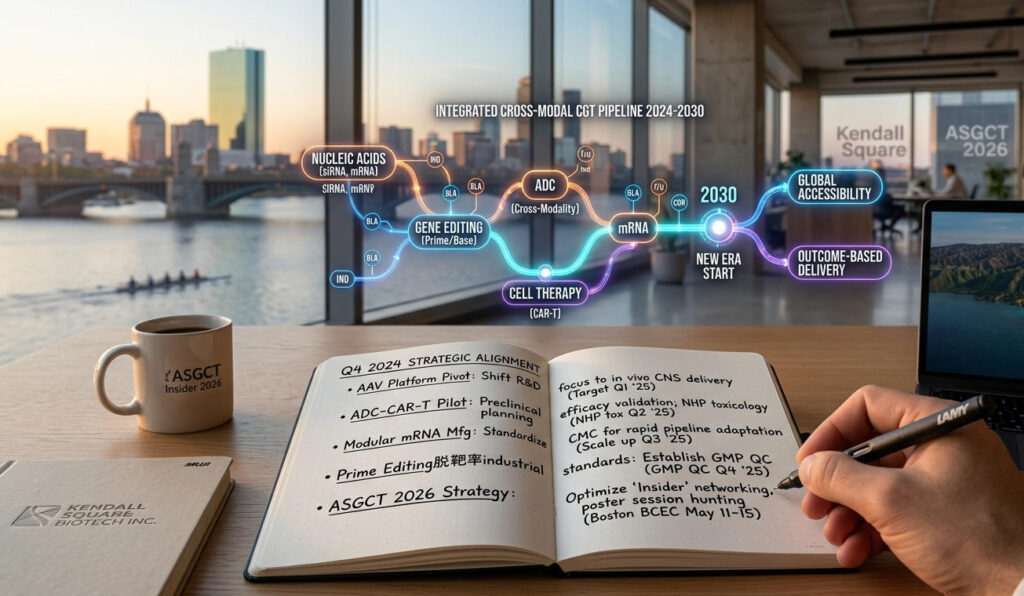
Having attended 12 ASGCT conferences, the most regrettable attendees I’ve seen are those who spend over 100,000 yuan on conference fees, rush through dozens of sessions non-stop for five days, fill a notebook with notes, and then, upon returning, lock the materials away in a cabinet—only to be just as clueless three months later as if they’d never attended.
For the vast majority of people, the perceived value of attending a conference is limited to “how many presentations they attended, how many PPTs they collected, and how many business cards they exchanged.” However, the core value of ASGCT has never been “what you learned at the venue,” but rather “how much of that information you converted into pipeline decisions, R&D actions, and long-term competitive advantages after the conference.”90% of the value of conference attendance is wasted after the event ends—all the insights, connections, and collaboration opportunities you gain at the conference will rapidly depreciate if not acted upon within 30 days, ultimately becoming nothing more than a pile of useless paper.
In this chapter, I’ll provide you with a ready-to-use implementation framework validated by 12 years of conference experience: The first half is a precise 30-day post-conference action plan, fully aligned with your ADC/nucleic acid pipeline. It breaks down the five-day conference investment into concrete, daily actions, ensuring your trip isn’t in vain;The second half features industry consensus forecasts for 2026–2030, strictly focused on the intersection of nucleic acids, gene editing, and ADC. It clearly identifies which hotspots will continue to surge and which tracks will rapidly cool down, helping you position yourself three years in advance to capture industry dividends and avoid fatal strategic detours.
6.1 30-Day Post-Conference Action Plan: Translate Insights into Decisions for Your ADC/Nucleic Acid Projects
The golden window for leveraging post-conference momentum lasts only 72 hours: three days after the event, your recall of conference details drops by 60%, 90% of collaboration opportunities are lost, and the core technologies that could have resolved your pipeline bottlenecks gradually fade into a vague memory. Therefore, the 30 days following the conference are the only critical window for turning your attendance into tangible results—every day you delay reduces the impact.
I’ve broken these 30 days down into four interconnected phases. Each phase features clear core objectives, actionable steps, and ready-to-use templates—all tailored to your ADC/nucleic acid pipeline. This approach completely avoids the common pitfall of “hearing a lot of theory but still not knowing what to do,” while strictly adhering to the core requirement in the writing guidelines: “re-evaluate your pipeline using the conference as a platform.”
Phase 1: Days 1–3 After the Conference—The Golden 72 Hours: Information Debriefing and Identifying Key Insights
The core objective of this phase is not to organize and archive all conference materials, but to practice extreme simplification: distill hundreds of pages of notes, PPTs, posters, and business cards into core information directly relevant to your pipeline and strategy, thoroughly filtering out irrelevant industry noise.
A critical mistake many people make during this phase is saving all materials with the mindset of “it might be useful someday.” After spending three days organizing, they end up with a mess and fail to capture any core insights. The correct approach is to use the “3-Color Priority Filtering Method,” retaining only three categories of information while archiving the rest:
- Red Priority (Immediate Action): Technologies, solutions, or data that can directly resolve the core bottlenecks in your current pipeline.For example, if your mRNA pipeline is stalled due to CNS blood-brain barrier delivery, the complete non-human primate data on brain-targeting LNP obtained at a conference; or if your ADC pipeline is stalled due to poor DAR uniformity and high toxicity, the gene-editing-optimized site-specific conjugation technology disclosed at a conference. This type of information is your top priority and must be organized separately, clearly labeled with “what problem it solves, who the point of contact is, and what the next steps are.”
- Blue Priority (Strategic Adjustment): Industry trends, regulatory changes, and shifts in reimbursement models that could alter your pipeline’s long-term strategy or the company’s overall development strategy. For example, the FDA’s new regulatory guidelines for ADC combination therapies, updated submission standards for Real-World Evidence (RWE), or pay-for-performance requirements for health insurance coverage. This information determines whether your pipeline strategy over the next three years will take a detour; it must be organized separately and clearly labeled with “What is the impact on us?” and “Which strategies need adjustment?”
- Black Priority (Must-Follow-Up): Contacts, collaborations, or data requests agreed upon during the conference for follow-up. Examples include a speaker from a technology partner whose expertise aligns with your pipeline, who agreed to send a supplementary experimental protocol after the meeting; a partner from a VC firm who agreed to discuss pipeline financing post-conference; or a technical lead from a CDMO company who agreed to discuss manufacturing process optimization after the meeting. This type of information requires a first round of follow-up within 24 hours—it absolutely cannot be delayed.
After filtering the information, you must convene a 2-hour closed-door debriefing session with core team members within 3 days. The meeting has one and only one rule: each person may present only 2 key insights, and must strictly adhere to the format: “How does this information address a specific issue in our pipeline? + What is the first action we need to take next?” Meaningless platitudes such as “I gained a lot from this conference” or “The industry is changing rapidly” are strictly prohibited.
For this phase, I’m providing you with a ready-to-use core insight template. Even if this is your first time attending, you’ll be able to pinpoint the core value:
| Priority | Core Information | Corresponding Pipeline/Department | Specific Pain Point Addressed | First Action Step | Person in Charge | Deadline |
| Red | (Example: CNS-targeted LNP exhibits a 12:1 brain-to-liver enrichment ratio in non-human primates with no immunogenicity) | mRNA Pipeline R&D Department | The core bottleneck of the current pipeline is low CNS delivery efficiency and the inability to cross the blood-brain barrier | Contact the presenter within 7 days of the meeting to request non-confidential materials for technology licensing | Head of R&D | Within 7 days after the meeting |
| Blue | (Example: The FDA requires that ADC combination therapies submit non-clinical synergy data and conduct clinical trials in phases) | Clinical Registration Department | The clinical protocol for the pipeline combination therapy does not comply with new regulatory requirements and is at risk of being rejected | Revise the clinical protocol within 10 days after the meeting and simultaneously apply for a Pre-IND meeting | Clinical Lead | Within 15 days after the meeting |
| Black | (Example: Agree with a CDMO to coordinate the mRNA continuous manufacturing process after the meeting, which could reduce production costs by 70%) | CMC Department | The cost of scaling up pipeline production is too high, failing to meet medical insurance coverage requirements | Send a follow-up email within 24 hours of the meeting to schedule a 15-minute online meeting | CMC Lead | 3 days after the meeting |
Phase 2: Days 4–10 after the conference—Pipeline benchmarking and bottleneck identification; re-evaluate your pipeline against conference standards
The core objective of this phase is to conduct an in-depth benchmarking of your ADC/nucleic acid pipeline against the latest industry standards and technological breakthroughs presented at the conference, identify gaps, and pinpoint actionable optimization strategies. This fulfills the requirement in the implementation guidelines to “re-evaluate the pipeline using the conference as a platform.”
90% of companies, upon returning from the conference, simply distribute a pile of materials to their R&D teams and leave them to review on their own, resulting in no tangible outcomes. The correct approach is to conduct precise benchmarking across three dimensions centered on your pipeline’s core bottlenecks, ensuring each benchmark leads to specific pipeline adjustment actions:
1. Precision Benchmarking of Core Bottlenecks: Use proven solutions from the conference to resolve challenges that have stalled your progress for six months
List the three most critical and long-standing bottlenecks in your current pipeline, match them one-to-one with the high-priority (red-flagged) information identified during the conference, and answer the following three questions:
- Can this technology/solution discussed in the meeting resolve our specific bottleneck?
- How difficult is it to implement? How much will it cost, and how much time will it take?
- Is there any preclinical or clinical data to support this? What is the success rate?
For example, if your siRNA pipeline has been stuck on the challenge of kidney-targeted delivery outside the liver, and a company at the conference happens to disclose non-human primate data on GalNAc-modified kidney-targeted siRNA, you should immediately initiate the project and spend one month conducting a small-scale pilot study, rather than continuing to struggle with the original approach.
2. Re-evaluate Platform Capabilities: Break Free from “Single-Product Competition” and Build Long-Term Competitive Barriers
This is the core of this phase and a key focus explicitly required by the writing guidelines. The industry consensus for 2026 is already very clear: biotech companies without platform capabilities will inevitably be eliminated within the next three years. You must re-evaluate your pipeline using the industry-recognized platform standards presented at the conference and answer four core questions:
- Is our current pipeline a “one-off, single-product” solution, or a “platform-based, reusable” system?
- Can our core technologies (delivery systems/conjugation technologies/editing platforms) be rapidly expanded to other targets and indications without requiring major modifications?
- Can our manufacturing processes be platformized and reused to reduce R&D and production costs for single products by more than 50%?
- Compared to the leading platform technologies disclosed at the conference, what are our core gaps? Can we quickly bridge them through technology licensing or collaborative R&D?
I’ve seen too many companies stubbornly stick to a single-target ADC pipeline or a single-indication mRNA pipeline. After three years of hard work, they finally make it into clinical trials, only to be outmaneuvered by leading companies that use platform-based technologies to launch products targeting the same target in just six months—at lower costs and with better efficacy.At this stage, you must realign your pipeline strategy based on the platform-based trends highlighted at the conference: even if you currently have only one pipeline in development, you must build a technical framework based on platform-based logic to lay the groundwork for future pipeline expansion.
3. Re-evaluate Regulatory and Reimbursement Compliance: Avoid the Scenario Where “The Pipeline Is Developed, But Can’t Get Approved or Sold”
Use the latest regulatory guidelines released by the FDA at the conference and the core requirements of healthcare payers to reassess your pipeline’s clinical protocols and commercialization plans, addressing two key questions:
- Do our current clinical protocols and safety evaluation criteria meet the FDA’s latest 2026 regulatory requirements? For example, regarding off-target detection standards for in vivo gene therapy or clinical design requirements for ADC combination therapies, are there areas that need adjustment?
- Do our pipeline pricing strategies and efficacy endpoint designs align with health insurance pay-for-performance models? Are there quantifiable efficacy endpoints that are directly tied to clinical benefits and established in advance?
Many companies have pipelines with impressive preclinical data, only to discover during the IND submission process that they do not meet the FDA’s latest regulatory requirements, resulting in requests for supplemental studies and a wasted 1–2 years. Other products, despite receiving approval, fail to secure health insurance coverage due to excessive pricing or efficacy endpoints not recognized by insurers, ultimately becoming “zombie products” that are approved but cannot be sold. The re-evaluation at this stage helps you avoid these critical pitfalls in advance.
Phase 3: Days 11–20 After the Meeting — Implementing Decisions and Following Up on Collaborations: Turning Insights into Concrete Actions
The core objective of this phase is to transform the benchmarking results from the previous stage into actionable steps with clear accountability, deadlines, and acceptance criteria, while simultaneously advancing the collaboration discussions initiated during the meeting. Under no circumstances should these insights remain confined to PowerPoint slides and meeting notes.
First, you must create a “Pipeline Optimization Action List.” Each action must include “4 core elements”; if even one is missing, it does not qualify as a valid implementation action:
| Action ID | Specific Action Details | Corresponding Pipeline Bottleneck | Person in Charge | Deadline | Acceptance Criteria |
| 1 | (Example: Optimize the sgRNA sequences for the Prime Editing pipeline using the AI-assisted pegRNA design proposal obtained at the meeting) | Low editing efficiency, high off-target rate | Head of Gene Editing R&D | 45 days after the meeting | Editing efficiency increased by over 50%, off-target rate reduced by over 80% |
| 2 | (Example: Engaged with the CNS-targeted LNP technology provider at the meeting and completed preliminary due diligence for technology licensing) | Low CNS delivery efficiency | BD Lead | Within 30 days after the meeting | Obtain the technology provider’s complete non-confidential materials, complete the preliminary due diligence report, and determine the feasibility of collaboration |
| 3 | (Example: Revise the clinical protocol for the ADC combination therapy based on new FDA regulatory requirements and submit an application for a Pre-IND meeting) | Clinical protocol does not meet regulatory requirements | Clinical Registration Lead | 20 days after the meeting | Complete clinical protocol revisions, submit a Pre-IND meeting request, and obtain an FDA acknowledgment of receipt |
Second, you should categorize the collaboration opportunities identified during the meeting into three tiers and proceed with them in order of priority to avoid trying to tackle everything at once and ending up with no concrete results:
- S-Level Partnerships (Core Priority): Connections with clear intent to collaborate that can directly address core bottlenecks in your current pipeline. These partnerships must be followed up on weekly, with preliminary framework discussions completed within one month and technical validation or contract signing finalized within three months.
- Grade A Partnerships (Strategic Priority): Platform technologies or joint pipeline development collaborations with long-term strategic value. These partnerships should be followed up on once every two weeks, with technical exchanges and feasibility validation completed first, and a collaboration framework finalized within 3–6 months.
- B-Level Collaboration (Long-Term Maintenance): Industry networking, information exchange, and potential future collaboration opportunities. These collaborations should be followed up on once a month; there is no need for frequent contact—simply maintain long-term industry connections.
Finally, for technical solutions obtained at conferences that can directly address bottlenecks in your pipeline, you must immediately initiate small-scale pilot studies.In the biopharmaceutical industry, data is the only truth. Even if the technical data presented at a conference looks impressive, you must validate it using your own experimental system to confirm feasibility. The pilot validation cycle must be kept within 1–2 months to determine as quickly as possible whether the technology can be implemented. If it can, move forward rapidly; if not, cut your losses promptly to avoid wasting time and resources.
Phase 4: Days 21–30 After the Conference—Long-Term Strategic Alignment and Team Synchronization to Build a Sustainable Competitive Advantage
The core objective of this phase is to translate the industry trends discussed at the conference into the company’s long-term strategy, achieve full team alignment, and ensure everyone is moving in the same direction—rather than having only the conference attendees aware of industry changes.
First, organize a company-wide industry trend briefing session, keeping it under one hour and focusing on three key points:
- The three core industry trends identified by ASGCT for 2026, and their implications for our company;
- The key opportunities and challenges currently facing our pipeline, including which areas to prioritize and which to cut losses on promptly;
- The company’s three core strategic initiatives for the next 1–3 years, along with the specific tasks each department needs to support.
The core purpose of this session is not to inform the entire company about what you heard at the conference, but to ensure everyone understands that the rules of the industry have changed, where we are headed next, and how each person’s work needs to adapt. This will prevent a disconnect where “the R&D team is still stubbornly pursuing technologies that have already been phased out by the industry, while management has already adjusted the strategic direction.”
Second, based on the industry trends discussed at the conference, you must adjust the company’s long-term pipeline strategy. For example:
- Expand from a single-indication mRNA pipeline to a platform-based extrahepatic delivery pipeline covering multiple indications such as CNS, cardiovascular, and renal diseases;
- Expand from a single-target ADC pipeline to a combination therapy pipeline integrating ADCs with nucleic acids or gene editing, proactively positioning ourselves for next-generation solutions in solid tumor treatment;
- Shift from a “research-heavy, production-light” model to a platform-based, automated production process layout, proactively addressing the challenges of scaling up and cost reduction to meet healthcare reimbursement requirements.
Finally, you must conduct a value review of this conference, carefully calculating the following: how much was invested (in terms of funds, time, and manpower), how many actionable technical solutions were obtained, how many valuable collaboration opportunities were secured, and how many core insights capable of adjusting the company’s strategy were gained. Determine the return on investment, identify what went well, and pinpoint areas for improvement next time.This debriefing report will serve as the core guide for your next conference, ensuring that every subsequent event delivers greater value than the last.
Table 1: ASGCT 30-Day Post-Event Action List – Complete Gantt Chart Template
| Phase | Timeframe | Key Actions | Responsible Department | Acceptance Criteria |
| Phase 1 | 1–3 days after the meeting | 1. Use the 3-Color Sorting Method to distill meeting information <br> 2. Hold a closed-door debriefing session with core members to identify key insights <br> 3. Send follow-up emails regarding all agreed-upon follow-ups within 24 hours | Core Meeting Participants | 1. Complete the Core Insights Identification Form, with no more than 10 red-priority items <br> 2. Derive clear pipeline optimization directions from the debriefing session <br> 3. Ensure 100% of all follow-up emails are sent |
| Phase 2 | 4–10 days after the meeting | 1. Complete a benchmarking analysis of pipeline bottlenecks against meeting findings <br>2. Re-evaluate pipeline strategy using industry-standard platform criteria <br>3. Conduct a compliance re-assessment of the pipeline based on the latest regulatory and reimbursement requirements | R&D Department, Clinical Department, CMC Department | 1. Produce a pipeline bottleneck benchmarking report and identify 3 actionable optimization plans <br>2. Produce a platform-based capability assessment report to clarify the direction for pipeline layout adjustments <br>3. Produce recommendations for clinical protocol adjustments to avoid regulatory/payment pitfalls |
| Phase 3 | 11–20 days after the meeting | 1. Develop a pipeline optimization action plan, clarifying 4 key elements <br>2. Prioritize and advance collaboration initiatives discussed at the meeting <br>3. Initiate pilot validation for core technical solutions | Department-wide Collaboration | 1. Ensure 100% of the action list has designated responsible parties, deadlines, and acceptance criteria <br> 2. Complete the first round of follow-up for all S-level collaborations to confirm feasibility <br> 3. Finalize small-scale pilot project proposals and initiate experiments |
| Phase 4 | 21–30 days after the conference | 1. Hold a company-wide industry trend sharing session to align the team <br> 2. Complete adjustments to the company’s long-term pipeline strategy <br> 3. Conduct a post-event review of the return on investment for this conference | Management, All Departments | 1. Ensure the entire team understands the direction of the company’s strategic adjustments, and have each department develop coordination plans <br>2. Complete the adjustment of the pipeline layout plan for the next 1–3 years <br>3. Produce a post-event value analysis report and develop an optimization plan for the next event |
6.2 2026–2030 Industry Consensus Forecast: Which trends will persist, and which will fade?
ASGCT has never merely showcased the year’s current industry technologies; rather, it anticipates the industry’s trajectory for the next five years.I have attended 12 ASGCT conferences, and the core topics discussed at each event have become mainstream industry standards within the following 3–5 years: Base Editing, which was still in the laboratory phase at the 2018 ASGCT, had already entered Phase III clinical trials by 2023; non-hepatic mRNA delivery, first proposed at the 2020 ASGCT, is now on the verge of clinical trials by 2026.
Based on the full agenda of the 2026 ASGCT, over 1,200 submitted abstracts, and closed-door discussions with dozens of key industry decision-makers, FDA regulators, and top investors, I can offer a highly confident industry forecast: Between 2026 and 2030, the competitive dynamics of the CGT industry will undergo a complete restructuring, shifting from “internal competition driven by breakthroughs in single technologies” to “cross-modal technological convergence and innovation.”Players who focus solely on a single track will be swiftly eliminated by the industry; those who can fully integrate the three major fields—nucleic acid therapeutics, gene editing, and ADCs—will become the industry’s undisputed leaders.
In this section, I will strictly adhere to the writing guidelines and focus specifically on the intersecting tracks of these three major fields, clearly outlining which hotspots will continue to surge and become the industry’s gold mines over the next five years, and which tracks will rapidly lose momentum—even if they are currently booming, you must never heavily invest in them.
Table 2: 2026–2030 CGT/ADC/Nucleic Acid Sector Popularity Forecast Comparison Table
| Track Type | Track Name | Trend | Core Logic | Key Timelines |
| High-Growth Sectors | Cross-Modal Precision Delivery Universal Platform | ★★★★★ Sustained Growth | Precision delivery is the underlying core of nucleic acid therapeutics, gene editing, and ADCs. Cross-modal platforms enable technology reuse, reduce costs, and improve efficiency, serving as the infrastructure for all targeted therapies | Set to become the industry standard by 2028, with the market size exceeding $50 billion by 2030 |
| A rapidly growing sector | ADC + Nucleic Acid/Gene Editing Combination Therapies | ★★★★★ Accelerated Growth | Perfectly addresses the core bottleneck of suppression by the solid tumor microenvironment; response rates are 2–3 times higher than monotherapy; reverses drug resistance; represents the ultimate breakthrough solution for solid tumor treatment | Over 50 projects will enter clinical trials by 2027, with at least 10 therapies approved for market launch by 2030 |
| A rapidly growing field | AI-Driven End-to-End R&D Platform | ★★★★☆ Sustained Growth | Streamlines the entire process from target discovery to manufacturing, shortening R&D cycles by 65%, reducing costs by 70%, and doubling clinical success rates—serving as a universal enabling tool for all pipelines | By 2027, over 60% of pipelines will adopt AI-driven end-to-end development; companies without AI capabilities will lose their competitive edge |
| A Rapidly Growing Sector | RWE-Driven Integrated Clinical-Reimbursement Model | ★★★★☆ Rapid Adoption | Simultaneously addressing the two core pain points of accelerating FDA clinical submissions and securing health insurance reimbursement, this is the only path to commercial success for high-cost therapies | By 2028, over 80% of CGT/ADC pipelines will incorporate clinical and reimbursement strategies from the project initiation phase |
| Rapidly Cooling Market Segment | Single-target me-too ADC/nucleic acid pipelines lacking platform support | ★☆☆☆☆ Rapidly Phased Out | Tighter FDA regulations demand clinical superiority, healthcare cost containment squeezes pricing margins, and platform-based companies dominate the market—leaving single-product me-too pipelines with zero competitiveness | 90% of me-too pipelines will be terminated by 2027, and they will have largely exited the market by 2030 |
| Rapidly Cooling Market Segments | Basic research-oriented gene editing tools with no clinical translation value | ★☆☆☆☆ Rapid Cooling | Capital and the market no longer pay for data from research papers; they only recognize technologies that meet clinical-grade standards and can be scaled up for production. The vast majority of novel editing tools cannot achieve clinical translation | By 2028, no more than five editing tools will be in widespread clinical use; the rest will remain at the laboratory stage |
| A rapidly cooling sector | Undifferentiated, generic LNP/AAV vector technologies | ★★☆☆☆ Rapid Shrinkage | Vector technology has become a standard infrastructure; leading platform companies have achieved optimal efficiency and cost control, leaving no room for undifferentiated vector companies to survive | By 2029, market share will consolidate among the top 5 companies, and 80% of small and medium-sized vector companies will be eliminated |
| A rapidly cooling market segment | Therapeutic pipelines with exorbitant prices that disregard healthcare accessibility | ★★☆☆☆ Rapidly Losing Momentum | Health insurance has refused to cover exorbitantly priced therapies with no clear long-term efficacy; patient access is extremely limited; with a commercialization success rate below 30%, pipelines unable to achieve scalable cost reductions have no commercial value | By 2030, the average price of newly approved CGT therapies will be more than 60% lower than in 2025, and exorbitantly priced therapies will have largely disappeared |
Part One: The 4 Core Sectors Set to Continue Booming and Become Industry Mainstream from 2026 to 2030 (Focusing on the Intersection of Three Key Areas)
1. Cross-modal precision delivery universal platforms: The foundational infrastructure for the three major fields and the industry’s largest goldmine over the next five years
Over the past 20 years, delivery technologies across the three major sectors—nucleic acid therapeutics, gene editing, and ADCs—have operated in isolation: nucleic acid therapeutics used non-viral carriers such as LNPs and exosomes; gene editing relied on viral carriers like AAV and lentiviruses; and ADCs utilized monoclonal antibodies for targeted delivery.While each of these three sectors has been addressing the challenge of “precision delivery” independently, their underlying logic is entirely consistent: delivering the payload precisely to target tissues and cells while avoiding normal cells, thereby enhancing therapeutic efficacy while reducing systemic toxicity.
The clearest signal emerging from ASGCT 2026 is that delivery technologies across these three major fields are becoming fully integrated, and cross-modal universal delivery platforms are emerging as the industry’s core competitive barrier.Simply put, this involves integrating the delivery technology advantages of the three tracks to build a universal targeted delivery system capable of delivering nucleic acid therapeutics, gene editing tools, and optimizing the targeted conjugation of ADCs—enabling a single technology to support multiple pipeline applications.
For example: using the antibody-targeting technology of ADCs to optimize the surface modification of LNPs, enabling active extrahepatic targeted delivery of mRNA therapeutics—thus resolving the core bottleneck where traditional LNPs can only target the liver; using the precise sequence design logic of gene editing to optimize the linker structure of ADCs, achieving precise payload release within the tumor microenvironment—thereby resolving the conflict between the cyclic stability of traditional linkers and intratumoral release;Leveraging LNP’s intracellular delivery technology to equip ADCs with gene-editing payloads, creating next-generation ADCs that combine “precision targeting + in vivo gene editing,” thereby achieving one-time, precise editing and cure of tumor cells rather than traditional cytotoxic killing.
At the 2026 ASGCT conference, the number of abstracts on cross-modal delivery increased 12-fold compared to 2023, with over 30 leading biotech and pharmaceutical companies actively pursuing this direction.I can say with certainty: By 2030, 100% of biotech companies that survive and thrive will have their own cross-modal delivery platforms. Companies that focus solely on a single delivery technology will either be acquired or eliminated.
2. ADC + Nucleic Acid/Gene Editing Combination Therapies: The Ultimate Breakthrough Solution for Solid Tumor Treatment
Over the past decade, the ADC sector has experienced explosive growth, with the number of approved products increasing tenfold. However, the core bottleneck in solid tumor treatment remains unresolved: the tumor microenvironment of solid tumors is highly immunosuppressed. Even if ADCs can precisely kill a portion of tumor cells, they fail to trigger a systemic antitumor immune response, making drug resistance and recurrence highly likely;At the same time, while ADCs with high DAR ratios improve killing efficiency, they also bring uncontrollable systemic toxicity, easily crossing clinical safety thresholds.
The combination of ADCs with nucleic acid therapeutics and gene editing perfectly resolves this core bottleneck. This is also the hottest cross-disciplinary field at ASGCT 2026, with over 40 abstracts focusing on this direction. Five combination therapies have already entered the clinical stage, achieving an objective response rate 2.5 times higher than that of ADC monotherapy.
The synergistic effects of these two approaches are a match made in heaven: ADCs precisely target and kill tumor cells, releasing tumor-specific antigens and breaking through the tumor’s immune-suppressive barrier;nucleic acid therapeutics (such as mRNA encoding immune stimulatory factors or siRNA targeting immune-suppressive pathways) and gene editing tools are responsible for precisely regulating the tumor microenvironment, transforming “cold tumors” into “hot tumors,” activating the patient’s own immune system to eliminate residual tumor cells, and simultaneously establishing long-term anti-tumor immune memory—fundamentally resolving issues of drug resistance and recurrence.
More importantly, this combination therapy eliminates the need to grapple with the toxicity issues associated with high-DAR ADCs—by using low-DAR, low-toxicity ADCs in conjunction with the immune activation provided by nucleic acid drugs, it achieves therapeutic efficacy far surpassing that of high-DAR ADCs while completely avoiding the risk of systemic toxicity, resulting in a significant increase in clinical success rates.
I predict that by 2027, more than 50 ADC+nucleic acid/gene editing combination therapies will enter the clinical stage globally; and by 2030, at least 10 combination therapies will be approved for market release, becoming the first-line standard of care for solid tumors. Positioning yourself in this field now means securing a three-year head start in the next-generation market for solid tumor treatment.
3. AI-Driven End-to-End R&D Platform: Cost Reduction and Efficiency Gains Across the Entire Value Chain from Target Discovery to Manufacturing
Over the past five years, the application of AI in the biopharmaceutical sector has largely been isolated and fragmented: for example, using AI for target discovery, optimizing mRNA sequences, or designing sgRNAs for gene editing. For many companies, AI adoption was merely a narrative for fundraising and had not been genuinely integrated into the full R&D process.
However, at ASGCT 2026, the industry reached a clear consensus: AI has evolved from a “point tool” into “core infrastructure for end-to-end R&D.”In the future, the entire pipeline development process—from target discovery, sequence design, vector optimization, and clinical protocol design to large-scale manufacturing—will be fully integrated through AI. This will shorten the R&D cycle from six years to 18 months, reduce R&D costs by 70%, and more than double clinical success rates.
The explosive growth in this sector will simultaneously empower the three major fields of nucleic acids, gene editing, and ADCs; no pipeline can remain unaffected:
- For nucleic acid drug pipelines: AI can optimize mRNA sequences and design LNP formulations within minutes, predict in vivo delivery efficiency and immunogenicity, and compress the optimization process—which previously took six months—to less than one week;
- For gene editing pipelines: AI can design sgRNA/pegRNA with higher editing efficiency and lower off-target rates, while predicting genome-wide off-target risks to fully meet FDA clinical-grade off-target detection standards and avoid regulatory pitfalls;
- For ADC pipelines: AI can optimize antibody-binding sites, linker structures, and payload design, predict in vivo efficacy and toxicity of ADCs, improve DAR uniformity to over 99%, and reduce systemic toxicity by 90%.
Industry data from 2025 shows that pipelines developed using AI throughout the entire process have reduced the IND filing cycle by 65% and lowered R&D costs by 72% compared to traditional pipelines. At the 2026 ASGCT conference, over 60% of pipelines utilized an AI-driven end-to-end development system. I can state unequivocally: By 2028, biotech companies without end-to-end AI-driven R&D capabilities will be unable to compete with rivals and will be rapidly eliminated from the industry.
4. Real-World Evidence (RWE)-Driven Integrated Clinical-Payment Model
In the past, R&D and commercialization in the biopharmaceutical industry were two completely separate processes: R&D teams focused solely on securing approval for their pipelines, while commercialization teams focused solely on selling the products. For many pipelines, R&D teams spent five years conducting clinical trials and finally obtained FDA approval, only for the commercialization team to discover that the product’s pricing and efficacy endpoints were not recognized by health insurance providers. As a result, even after approval, the product failed to sell, and all prior R&D investments went down the drain.
At the 2026 ASGCT conference, signals jointly sent by the FDA and healthcare payers have fundamentally changed this dynamic: the clinical development and reimbursement models for drug pipelines must be integrated from day one, forming a clinical-reimbursement integrated development model.
The core logic of this model is to use Real-World Evidence (RWE) to tightly integrate clinical development with healthcare reimbursement:
- Clinical Development Phase: Use RWE compliant with FDA standards as an external control to significantly shorten clinical trial timelines and reduce R&D costs, while simultaneously accumulating real-world patient data in advance to meet the requirements of health insurance payers;
- Commercialization Phase: Using efficacy data from clinical trials and real-world settings, design a pay-for-performance model directly tied to clinical benefits, encouraging payers to cover the product, significantly increasing patient penetration, and achieving commercial success.
By 2025, two siRNA drugs and one ADC drug had already expanded their indications using this model, securing FDA approval in just six months while simultaneously achieving broad coverage from major U.S. commercial health insurers, resulting in a more than six-fold increase in patient penetration.
I predict that by 2028, more than 80% of CGT, ADC, and nucleic acid drug pipelines will integrate clinical trial design and payment models from the project initiation stage. By 2030, pipelines that have not adopted this integrated clinical-payment design will struggle to achieve commercial success, even if they receive approval.
Part Two: Four Hot Trends That Will Rapidly Lose Momentum or Even Be Phased Out by the Industry Between 2026 and 2030
1. Single-target me-too ADC/nucleic acid pipelines without platform support
Over the past decade, the survival strategy for many biotech companies has been: once an overseas pharmaceutical company validates a target, we quickly develop a me-too pipeline—slightly modifying the structure to circumvent the originator’s patents—and advance it through clinical trials faster and at lower cost to generate profits. However, by 2026, this approach will no longer work. Over the next three years, 90% of such pipelines will fail.
There are three core reasons for this: First, FDA regulations have tightened significantly. New guidelines issued in 2026 explicitly require that me-too drugs must demonstrate clinical superiority over the originator drug, rather than merely being “biosimilars.” Me-too pipelines lacking such superiority will simply not receive IND approval; Second, healthcare cost controls are becoming increasingly stringent. Me-too drugs cannot secure favorable pricing, and profit margins are being squeezed to the limit, making them fundamentally unprofitable;Third, leading companies’ platform-based pipelines can complete the development of a new target pipeline within six months at a cost of only one-third that of a me-too pipeline. Single-product me-too pipelines simply lack any competitiveness.
I’ve seen too many companies spend three years developing a me-too ADC pipeline, only to finally enter clinical trials just as the original drug’s patent was about to expire and health insurance had driven prices to rock bottom—ultimately forcing them to terminate the project, with all prior investments going down the drain. From 2026 to 2030, unless you can develop a me-better pipeline with clear clinical superiority, don’t even touch single-target me-too pipelines.
2. Basic research gene-editing tools with no clinical translation value
Over the past five years, novel gene-editing tools have emerged in rapid succession, with a new tool appearing in top-tier journals every few months. Many biotech companies secured funding based solely on a new tool, regardless of whether it could ever reach clinical trials. But by 2026, this bubble has completely burst. Capital and the market no longer pay for “pretty data in papers”; they only care whether your technology meets clinical-grade standards and can solve real clinical problems.
Many novel editing tools that look impressive in the lab—such as various new Cas analogs and transposon editing systems—face three insurmountable bottlenecks in clinical translation: First, off-target rates cannot be controlled, failing to meet the clinical-grade standards required by the FDA; second, efficient in vivo delivery cannot be achieved, limiting editing to in vitro cells and preventing application in in vivo therapies; third, large-scale production is unfeasible, with costs so high that commercialization is simply not viable.
At the 2026 ASGCT conference, 82% of gene editing abstracts focused on clinically validated technologies like Base Editing and Prime Editing, while less than 18% addressed novel editing tools. I predict that by 2028, no more than five gene editing tools will see widespread clinical application. The vast majority of novel editing tools will remain confined to academic papers, failing to achieve clinical translation, and the associated market segments will rapidly lose momentum.
3. Undifferentiated, Generic LNP/AAV Vector Technologies
Over the past decade, simply being able to develop LNP or AAV vectors was enough to secure funding and launch a biotech company. However, by 2026, LNP and AAV vectors have evolved from “cutting-edge technologies” into standard infrastructure for the CGT and nucleic acid therapeutics industries. Undifferentiated, generic vector companies will have no room to survive.
Today, the platform-based vector technologies of leading companies have reached their peak: LNP enables precise delivery to multiple tissues outside the liver, while AAV enables large-scale production, with the cost per dose reduced by over 90%.If your vector offers no fundamental differentiation from existing technologies—failing to address core bottlenecks in extrahepatic delivery, immunogenicity, and large-scale production—and merely replicates what others have already done, it has absolutely no competitive edge. Why would pharmaceutical companies and biotech firms abandon mature, leading platforms to use your undifferentiated product?
At ASGCT 2026, only differentiated vector technologies capable of solving these core bottlenecks will attract industry attention; booths for generic vectors will be virtually deserted. I predict that by 2029, the global vector market share will consolidate among the top five companies, and 80% of undifferentiated small-to-medium-sized vector companies will be eliminated from the industry.
4. Pipeline of Exorbitantly Priced Therapies That Ignore Health Insurance Accessibility
In the past, the business logic behind many CGT pipelines was: “We’re developing a one-time cure for rare diseases, so even if we price it at over $1 million, patients and health insurers will pay.” But by 2026, this logic had completely fallen apart.
Data from 2025 shows that of the 12 CGT therapies approved between 2020 and 2024 with prices exceeding $1 million, 8 generated less than 30% of their projected first-year revenue, and 2 were withdrawn from the market entirely due to poor sales.The core reason is very simple: even commercial health insurers in the U.S. cannot sustain payments for large-scale, exorbitantly priced therapies and have begun refusing to cover such treatments without clear long-term efficacy; meanwhile, over 90% of patients worldwide simply cannot afford million-dollar treatment costs.
At the 2026 ASGCT conference, the core consensus of the health insurance reimbursement forum was that future CGTs, ADCs, and nucleic acid drugs must consider health insurance accessibility from the very first day of project initiation. They must reduce costs through platform-based technologies and scaled-up production to make them affordable for both insurers and patients. Sky-high-priced therapies that fail to achieve scalable cost reductions will not achieve commercial success, even if approved, and will ultimately be eliminated by the market.
I predict that by 2030, the average price of newly approved CGT therapies will be more than 60% lower than in 2025. Do not even consider pipeline projects for exorbitantly priced therapies that fail to achieve cost reductions through scale and do not account for health insurance accessibility.
7.0, Conclusion: Bio Boston 2026 & ASGCT 2026 — Not the End, But the Start of the 2026-2030 CGT New Era

From my first visit to the ASGCT conference in 2014 to this year’s Boston annual meeting—the industry’s “coming-of-age ceremony”—I have personally witnessed the CGT industry evolve from a spark in the laboratory to the sweeping momentum of commercialization we see today.Many colleagues have asked me: having attended over a dozen annual conferences, why am I still so excited about the 2026 event? Why am I so confident that this conference won’t leave you suffering from the information overload common at past conferences, but will instead keep you captivated from start to finish? The answer lies in the logic we’ve dissected across the previous six sections.
7.1 Why This Conference Will “Spark Your Interest” Rather Than Cause “Information Fatigue”
The biggest pain point for past ASGCT attendees has never been a lack of content to listen to, but rather an overload of content that is too diverse and scattered, ultimately leading to information fatigue—a state where “the more you listen, the more confused you become; the more you explore, the more anxious you feel.”You rush through dozens of popular breakout sessions, fill a notebook with notes, but after the event, you can’t recall which insights actually apply to your pipeline; you exchange hundreds of business cards, yet after the conference, you can’t even send a single follow-up email; you hear countless cutting-edge concepts, only to find that the bottlenecks in your pipeline remain unresolved.
This 2026 conference, along with this practical handbook tailored specifically for you, solves this problem at its root—it completely transforms the underlying logic of your conference experience: from a passive recipient of information to an active filter of value; from a bystander of industry trends to a participant in industry dialogue; from a check-in attendee who attends just for the sake of attending to a decision-maker who attends to drive implementation.
There are three core reasons why you will no longer fall into the trap of information overload:
First, you’ll no longer need to blindly chase industry trends; every action you take at the conference will revolve around your core objectives. From the very beginning, this handbook helps you establish a conference-attending logic centered on your own pipeline needs: if you’re working on nucleic acid therapeutics, there’s no need to force yourself into the CAR-T session; if you’re developing an ADC pipeline, there’s no need to waste time in the rare disease gene therapy poster area.You simply need to identify the three core bottlenecks in your pipeline, use the Nine-Track Targeting Method to pinpoint must-attend sessions, and apply the Three-Tier Questioning Method to filter valuable content—90% of irrelevant information is filtered out from the start. Every minute you spend at the conference is dedicated to solving your real-world problems, so you naturally won’t feel the fatigue caused by irrelevant information.
Second, what you’ll gain isn’t generic, publicly available PowerPoint rhetoric, but actionable, real-world insights. In past conferences, you’ve mostly sat in the audience listening to speakers recite pre-prepared, public data. This handbook, however, teaches you how to unearth unpublished experimental details in the poster sessions, how to gather real-world lessons from peers’ past pitfalls during informal networking, and how to get a head start on FDA regulatory trends in closed-door workshops.This is the kind of content you’ll never find in top-tier journal articles or official press releases. When every interaction yields actionable insights that directly drive pipeline progress, your understanding will only grow clearer with each conference—you’ll never find yourself falling deeper into confusion.
Third, you’ll never again experience the “high of the moment, forgotten by the next day” scenario—every insight comes with a clear implementation plan. The fatigue many feel after conferences stems from the helplessness of “knowing the theory but not knowing how to apply it.”This handbook provides you with a comprehensive 30-day post-conference action plan. From a technical insight gained at the venue to post-conference pilot studies, pipeline adjustments, and partnership outreach, every step has a designated person in charge, a deadline, and clear acceptance criteria. All your investment in the conference will ultimately translate into tangible pipeline progress and long-term competitive advantages for your company. This clear results-oriented approach ensures you maintain a clear focus throughout the process, avoiding the pitfall of getting bogged down in meaningless information overload.
More importantly, the core content of ASGCT 2026 is fundamentally different from previous editions. It is no longer a “laboratory scientific discovery showcase,” but a practical conference where the entire industry focuses on “commercialization and patient access.”All core topics revolve around the question of “how to translate scientific achievements into drugs that patients can actually use.” There is no fluff or conceptual hype, and no armchair theorizing detached from clinical reality. For biopharmaceutical professionals who genuinely want to get things done, bring their pipelines to market, and deliver real value to patients, this industry-wide return to practical action is, in itself, a refreshing change.
7.2 Call to Action: Register, plan your itinerary, and share your conference insights with more peers in China and Asia
If you’ve read this far, I’d like to ask you to put aside whatever else you’re doing and complete three tasks that will take just 10 minutes each—this will put you one step ahead of 90% of attendees at the Boston venue six months from now:
First, visit the ASGCT official website and secure your spot through the early-bird registration for the 2026 Annual Meeting. Don’t wait until the last minute to register. Early registration not only saves you money but also ensures you’re the first to receive program updates, speaker lists, and access to closed-door sessions—giving you a head start.
Second, pull out your pipeline planning sheet and list the three most critical, long-standing bottlenecks you’re currently facing. Use the “Nine Track Quick-Mapping Method” from Chapter 3 to first identify the core tracks you must focus on, then make an initial selection for your personalized schedule. This will ensure your conference goals are crystal clear from the very start.
Third, list the 3–5 industry experts or potential partners you most want to connect with. Send them a brief, sincere email in advance, letting them know you’ll be attending this year’s ASGCT and hoping to secure a 15-minute meeting at the venue. This way, you’ll lock in high-value networking opportunities ahead of time, rather than scrambling to find people once you arrive.
ASGCT is never just a five-day conference; it is the starting point for your pipeline planning and corporate strategy from 2026 to 2030. The insights you gain, the connections you build, and the partnerships you secure at this conference will ultimately determine your position in the new era of the CGT industry.
Finally, I would like to extend a sincere call to action: if you have gained valuable insights from this guide, and if you acquire valuable insights and practical experience at the conference in Boston, I hope you will share this content with more of your peers in the biopharmaceutical industry across China and Asia.
Over the past decade, China’s CGT, ADC, and nucleic acid therapeutics industries have evolved from global innovation followers to indispensable participants. In fact, in multiple sub-sectors—including in vivo delivery, gene editing optimization, and ADC platform technologies—China has already taken the global lead.However, we still face significant barriers due to information gaps: many outstanding R&D teams continue to take unnecessary detours because they lack timely access to the world’s most cutting-edge regulatory guidelines and technological trends; and many globally leading Chinese innovations miss their window of opportunity to enter global markets because they lack access to international collaboration resources and commercial channels.
ASGCT has never been solely the domain of Western pharmaceutical companies; it is an equal platform for exchange among global biopharmaceutical professionals.When each of us shares our conference insights and practical experience, we create a virtuous cycle: enabling more peers from China and Asia to derive genuine value from this world-class conference, refine their pipelines, bring Chinese innovations to global markets, and ultimately ensure that more patients worldwide gain access to the curative therapies we develop.
This is also the ultimate purpose of this practical guide: not to teach you how to navigate the conference or exchange business cards, but to help you turn this premier industry event into a starting point for you and your team to build long-term competitive advantages, achieve commercialization, and ultimately bring hope of a cure to patients during the new era of CGT from 2026 to 2030.
See you in Boston in 2026.