- 1. What’s Really Worth Watching at FIP 2026: “Delivery Capabilities” Are Becoming the Focus of biotech 2026 Industry Assessment
- 2. The buzz around in vivo CAR-T in biotech 2026 reminds us that the future watershed for advanced therapies may lie in delivery systems rather than cell factories
- 3. Drug Delivery in biotech 2026 Is Evolving from a Behind-the-Scenes Technology to a Front-and-Center Competitive Advantage
- 4. This biotech 2026 conference isn’t meant for “browsing the agenda”; it’s better suited for attending with specific validation questions in mind
- 5. AI, Digitalization, and Real-World Data at biotech 2026: The Boundaries of Value at the Tool Level
- 6. Different Attendees Should Not Interpret biotech 2026 at FIP in the Same Way
- 7. Turning biotech 2026 at FIP into an Assessment Framework: The Three Key Stages of Delivery, Scalability, and System Integration
- 8. biotech 2026 FAQ Frequently Asked Questions
1. What’s Really Worth Watching at FIP 2026: “Delivery Capabilities” Are Becoming the Focus of biotech 2026 Industry Assessment
In the biotech 2026 landscape, a subtle yet far-reaching shift is taking place in the criteria for evaluating drug innovation in 2026, reflecting pharmaceutical industry trends. Over the past decade, the industry’s approach to measuring a therapy’s potential has been relatively straightforward: who identified a new target, who validated a first-in-class mechanism, and whose pipeline produced the best data in early-stage clinical trials—these metrics formed the underlying logic for valuations and transactions.But as we enter 2026, a growing number of cases are revealing a long-underestimated reality: a large number of therapies that looked promising at the target and mechanism levels ultimately stumbled on issues that seem to belong to the “execution level”—such as “whether they can be delivered to the right location,” “whether they can be used correctly in real-world clinical settings,” “whether they are covered by reimbursement systems,” and “whether they can be safely delivered to regions with inadequate cold-chain infrastructure.”The distance between scientific concepts and actual products is longer than the capital markets are willing to acknowledge—and longer than most R&D narratives are willing to admit.
Targets and mechanisms remain the starting point for drug innovation—target discovery and mechanism validation are still the foundation. However, when delivery systems, quality systems, pharmaceutical services, and supply accessibility begin to frequently appear on the list of reasons for product failure, the industry’s focus must shift accordingly.No matter how promising a target may be, if the delivery platform cannot maintain batch-to-batch consistency under GMP conditions, if the formulation’s stability is insufficient to withstand global transport, or if pharmacists lack the ability to manage adverse reactions to novel therapies—then the commercial value of that target will be diminished, or even reduced to zero, by these “execution-level” issues.

Against this backdrop, the FIP World Congress 2026 (World Congress of Pharmacy and Pharmaceutical Sciences) takes on new significance as a premier biopharmaceutical conference. It is not a typical R&D summit—the agenda does not feature a barrage of pipeline updates or clinical data releases. Instead, pharmaceutical science, clinical practice, educational systems, supply systems, and patient access are all discussed within the same framework.For those accustomed to tracking pipeline developments and deal news at conferences like ASCO or BIO, FIP may seem “too academic,” “too pharmacy-focused,” or “too far removed from the core of R&D.”But it is precisely this cross-sector perspective that gives us the opportunity to see the disconnects between the laboratory and the patient—disconnects that are systematically overlooked at R&D conferences—and these disconnects are often the turning points where a product shifts from having a “great scientific story” to facing the “hardships of real-world implementation.”
More specifically, the value of FIP is not to replace ASCO and BIO—it offers a perspective that these two conferences do not cover.ASCO addresses “whether a therapy is effective based on clinical data,” BIO addresses “whether the pipeline’s value is recognized by the market and investors,” while FIP addresses “whether a therapy, after moving beyond clinical trials and investment, can be delivered, managed, paid for, and adopted within the real-world healthcare system.” Only by observing these three conferences in combination can one see the complete journey of a therapy.
1.1 FIP 2026 Conference Overview: Scale, Sessions, and Entry Points for Observing “Delivery Capabilities”
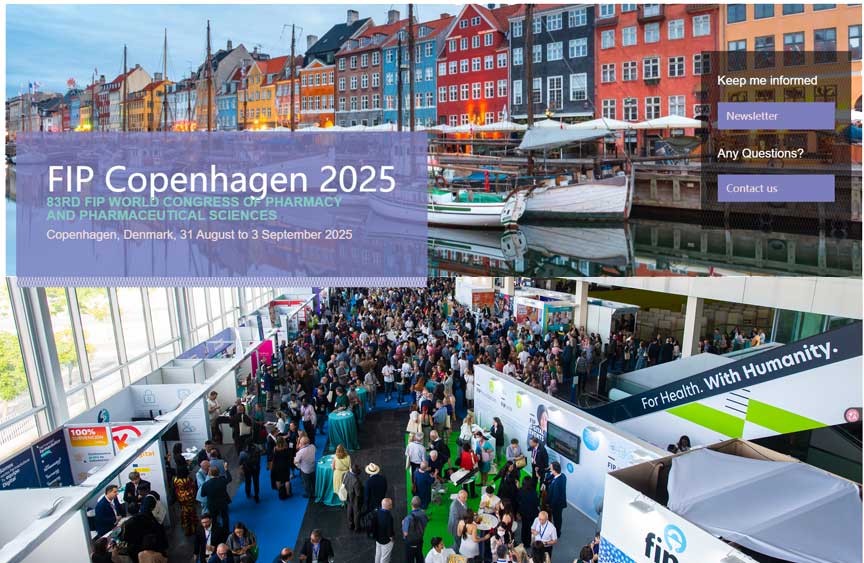
The FIP World Congress 2026 will be held from August 30 to September 2, 2026, at the Palais des congrès de Montréal in Montreal, Canada, a hub for Montreal life sciences. The theme of the congress is “One Health, One Pharmacy—Bridging Science, Practice, and Education.” The previous edition, held in Cape Town, South Africa, in 2025, attracted 3,455 registered pharmacy professionals and pharmaceutical industry representatives from more than 90 countries worldwide.The official website is https://www.fip.org, and updates on the 2026 Congress can be tracked via the “Events” section of the FIP website.
These figures and location details are not included merely to fulfill the requirements of a standard conference introduction—they serve the main narrative of this article. The scale of the event—3,455 attendees from more than 90 countries—demonstrates that FIP’s forum is a comprehensive platform spanning pharmaceutical science, practical application, education and training, and global health policy, rather than a deep dialogue confined to a single technical field.A significant proportion of attendees come from countries and regions with varying levels of healthcare resources and regulatory environments. Their concerns extend beyond questions like “Is the target novel?” or “Is the mechanism first-in-class?” to include issues such as “Can medications be properly dispensed, stored, used, and reimbursed in pharmacies across different countries?”, “Can cold-chain infrastructure support the distribution of new vaccines in tropical regions?”, and “Do pharmacist training programs cover the knowledge needed to manage advanced therapies?”As a city at the crossroads of French- and English-speaking North America, Montreal naturally lends this conference a structure conducive to cross-system dialogue—bringing together North American regulatory frameworks, European traditions of pharmaceutical practice, and accessibility challenges in developing countries, all within a single city.
In terms of topic relevance, FIP’s Pharmaceutical Sciences section explicitly covers drug delivery (Delivery Systems), nucleic acid drug delivery systems (LNP, GalNAc technology), the stability of macromolecular formulations, precision medicine, and new dosage forms. The Pharmacy Practice section discusses the management, dispensing, and medication education related to advanced therapies once they enter the pharmacy. The Global Health section focuses on vaccine distribution, the cold chain, supply shortages, and patient education.The “Education” section addresses the development of training systems for pharmacists and healthcare professionals. The intersection of these sections precisely covers the entire chain from technology to the patient—encompassing “delivery, quality, service, and accessibility.”
| Dimensions | FIP World Congress | ASCO / BIO and other R&D summits |
| Core Focus | The complete pathway of a drug from R&D to the patient | Pipeline Updates, Clinical Data, and Transaction News |
| Attendee Demographics | Pharmacists, pharmaceutical scientists, educators, policymakers, suppliers | Researchers, Clinicians, Investors, Business Development Teams |
| Topic Coverage | Delivery systems, formulation stability, pharmaceutical services, accessibility, global health | Target mechanisms, clinical trial design, regulatory approval, commercialization strategies |
| Typical Discussion Formats | Cross-sector dialogue: Collaboration among science, practice, and education | In-Depth Focus on a Single Track: Latest Advances in a Specific Target or Indication |
| Questions Worth Exploring | “Can the therapy be delivered, administered, paid for, and made widely available?” | “Does the therapy have new targets and new data?” |
| Unique Value for Attendees | Identify the gaps overlooked by R&D conferences | Core Channels for Tracking Pipelines and Transactions |
This comparison is not intended to disparage R&D summits—ASCO and BIO are irreplaceable when it comes to tracking pipelines and deals. But if you want to know where an advanced therapy might get stuck in the real-world healthcare system after moving beyond early-stage clinical trials, FIP offers a perspective that R&D summits do not cover. Only by viewing all three conferences together can you see the complete journey of a therapy.
| FIP 2026 Agenda Sections | Connection to Delivery/Accessibility Issues | Typical Discussion Focuses | Reminders for Attendees |
| Pharmaceutical Sciences | Nucleic Acid Drug Delivery (LNP/GalNAc), Stability of Macromolecular Formulations, Novel Dosage Forms | Definition of Quality Attributes, Cross-Project Reuse, Scale-Up Experience, and Validation of Targeting Accuracy | Don’t just focus on whether a concept is new; ask about scalability and data reusability across projects |
| Pharmacy Practice | Management, dispensing, medication education, and adverse reaction monitoring of advanced therapies once they enter the pharmacy | Expanded role of pharmacists, pre-administration assessment, adherence management, and interdepartmental collaboration | Pharmacy service capabilities are a hard constraint for the implementation of advanced therapies, not merely a soft supporting measure |
| Education & Training | Training on the use of complex therapies, mechanisms for interdisciplinary collaboration, and the development of a knowledge system for novel therapies | Does the pharmacist education system cover knowledge of new drug delivery platforms? Is training resources accessible? | Building a training system requires a time investment; regulatory approval ≠ demonstrated capability |
| Global Health & Access | Vaccine distribution, cold chain infrastructure, supply shortages, patient education, and cross-border access | Accessibility bottlenecks stem not only from price but also from supply, cold chain, and service capacity | Global access to advanced therapies is constrained by non-price hard constraints |
The intersection of these four sectors precisely covers the “delivery–quality–service–accessibility” chain. While each sector possesses its own professional depth when viewed in isolation, FIP’s unique value lies in the dialogue between them—new technologies from the scientific end directly confront the practical constraints of the implementation end. This collision of “technology meeting reality” is what makes FIP most worth listening to.
| Time | Conference | Location | Key Topics | Complementarity with FIP |
| September 2025 | FIP 2025 Cape Town | Cape Town, South Africa | Pharmaceutical Practice and Global Health Equity | Building on the themes and lessons learned from the previous FIP conference |
| May 2026 | ASCO 2026 | Chicago, USA | Clinical Oncology Data and Pipeline Updates | Providing a foundation of pipeline and clinical data; FIP addresses implementation challenges |
| June 2026 | BIO 2026 | Boston, USA | Biotechnology Transactions and Industry Trends | Providing insights into capital and transaction trends; FIP explores the path to commercialization |
| August 30–September 2, 2026 | FIP 2026 Montreal | Montreal, Canada | Cross-Disciplinary Dialogue on Pharmaceutical Science, Practice, and Education | Building on Data from the First Half of the Year: Examining Delivery, Quality, Service, and Accessibility |
When viewed on the industry conference timeline, FIP takes place in the second half of the year, following ASCO and BIO. By then, attendees have had half a year to digest the pipeline and transaction information from the first half—FIP’s value lies in helping them explore the next step: whether these new therapies in the pipeline can truly be brought to market after moving beyond clinical trials and capital. This “exploring the next step” perspective is something that pure R&D conferences do not provide.
1.2 “One Health, One Pharmacy”: From Conference Banner to Industry Imperative
“One Health, One Pharmacy” is the official theme of FIP 2026. Taken at face value, “One Health, One Pharmacy” sounds like a hollow slogan on a conference banner. However, within the industry context of 2026, this theme actually points to a growing—yet rarely seriously discussed—contradiction within the industry:As new therapies become increasingly complex—with in vivo CAR-T requiring engineering modifications within the body, nucleic acid drugs demanding precise targeted delivery, macromolecular formulations necessitating strict cold-chain storage, and gene editing requiring long-term follow-up monitoring—the role of pharmacy is being redefined. Yet the speed and depth of this redefinition may not keep pace with the growing complexity of these therapies.
Traditionally, the role of a pharmacist has been that of a dispenser and medication counselor—compounding medications according to prescriptions, explaining dosage and administration to patients, and monitoring basic medication safety. This role was appropriate in the era of traditional small-molecule drugs—when administration methods were relatively simple, the spectrum of adverse reactions was relatively controllable, and pharmacy management was highly standardized.However, in the era of advanced therapies, the functions that pharmacy must assume are expanding into an intermediary layer: bridging drug science (whether the targeting precision and batch consistency of delivery platforms are reliable), clinical practice (whether dosing regimens are feasible and the spectrum of adverse reactions is fully understood), the education system (whether healthcare professionals have mastered the knowledge required to manage new therapies), the supply system (whether the cold chain and dispensing capabilities can support the global distribution of complex formulations), and patient access(whether reimbursement and access policies can cover the costs of new drug delivery systems).
In this context, “One Pharmacy” refers to the connecting role that pharmacy plays—not one of unification or monopoly—but rather the idea that when the complexity of a therapy spans multiple professional disciplines, the gaps between these areas require a bridge, and pharmacy happens to occupy that connecting point.Delivery platforms address the question of “whether it can be delivered”; pharmacy services address “whether it can be used correctly once delivered”; supply systems address “whether it can be delivered sustainably”; and payment systems address “whether the cost can be covered.” The gaps between these links cannot be bridged by any single profession—but pharmacy can serve as the intermediary layer connecting them.
“One Health” is not merely a slogan either. It points to the fact that when an in vivo CAR-T therapy transitions from a custom product costing hundreds of thousands of dollars to an industrialized “ready-to-use” medication, the challenges facing the healthcare system will not disappear—they will simply shift from “Can the cell factory deliver on time?” to “Can the healthcare system safely receive and manage it?”Who will establish and implement patient screening criteria and pre-administration assessment protocols? Do pharmacists possess the expertise to understand the pharmacokinetics of the delivery vehicle and determine the optimal timing for administration? Have protocols for the early identification and management of adverse reactions been established? Who is responsible for managing adherence to multi-dose regimens? As therapies transition from highly customized “one-in-a-million” treatments to large-scale applications, these end-user processes will not automatically fall into place—they require proactive development and training investments from the pharmacy services system.
If you plan to attend FIP 2026, don’t treat “One Health, One Pharmacy” as mere decorative text on a conference banner. Treat it as an industry proposition that needs to be validated: As advanced therapies reach a broader population, is the pharmacy system ready to assume the role of an intermediary?When attending the Pharmacy Practice sessions, don’t just look at the session titles—pay attention to the extent to which speakers acknowledge the shortcomings and gaps in the existing system. This candor is more valuable for assessment than optimistic outlooks, because acknowledging gaps implies an accurate assessment of reality, whereas optimistic outlooks may signal an avoidance of the issues.
2. The buzz around in vivo CAR-T in biotech 2026 reminds us that the future watershed for advanced therapies may lie in delivery systems rather than cell factories
In the first half of 2026, data and capital trends related to in vivo CAR-T (In Vivo CAR-T) and broader cell and gene therapy dominated industry discussions.Eli Lilly announced a bet on Kelonia Therapeutics with a potential total value of up to $7 billion; Kelonia’s in vivo CAR-T therapy, KLN-1010, achieved a 100% minimal residual disease (MRD) negativity rate in clinical trials for relapsed/refractory multiple myeloma.Industry giants such as AstraZeneca and Novartis have also been actively announcing the latest clinical and preclinical breakthroughs in this field. Driven by this dual momentum of capital and data, many view in vivo CAR-T as an “improved version of CAR-T”—faster, cheaper, and more convenient. However, this assessment is overly conservative and may even mislead the direction of the field.
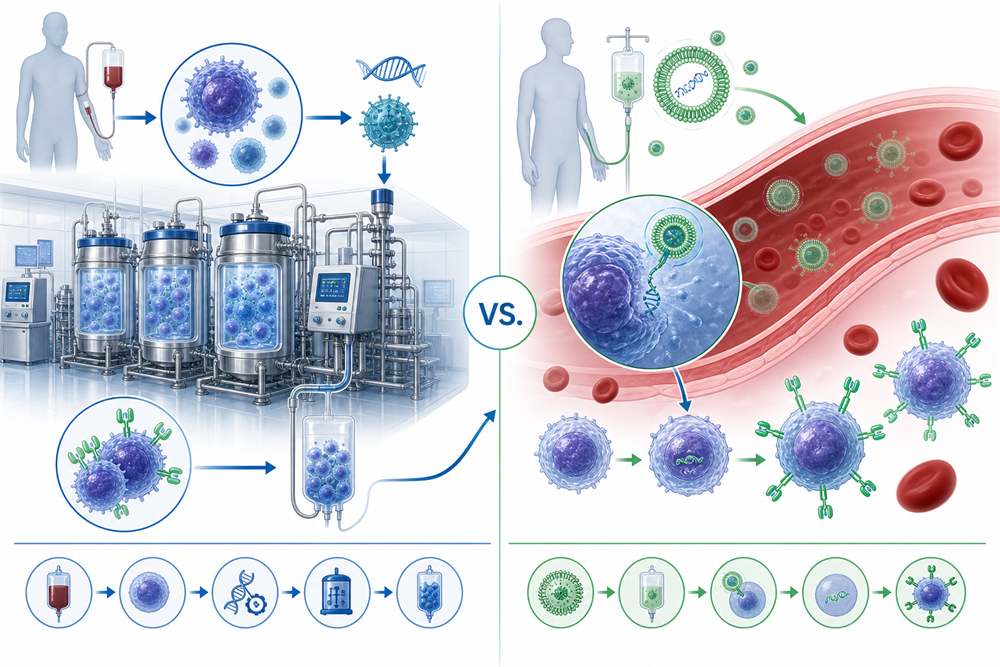
In vivo CAR-T is not an improvement on traditional CAR-T—it transforms the underlying manufacturing logic of cellular gene therapy: shifting from “in vitro customization” to “in vivo delivery.”This shift moves the key to a product’s success from the cell factory to the delivery vehicle. If the industry focuses solely on “more convenient CAR-T” while overlooking the competition in delivery systems underlying this manufacturing paradigm, it will miss a structural transformation currently underway—a transformation that affects not only the CAR-T sector but also offers insights for all advanced therapies reliant on delivery systems (nucleic acid drugs, gene editing, and targeted delivery of small molecules).
2.1 In Vivo CAR-T: A Rewriting of the Manufacturing Paradigm, Not Just a More Convenient CAR-T
The traditional ex vivo CAR-T manufacturing process is an extremely complex, expensive, and fragile chain of customized steps. A patient’s T cells must be extracted, sent to a central overseas facility for in vitro modification and expansion, and then shipped back to the hospital for infusion into the patient.This process takes several weeks and costs hundreds of thousands or even millions of dollars. An even more critical issue is that many patients with advanced-stage disease experience a worsening of their condition or even die while “waiting for the drug,” and the myeloablative chemotherapy (lymphodepletion) administered prior to reinfusion carries severe toxic side effects—including bone marrow suppression, increased risk of infection, and organ damage. This means that traditional CAR-T therapy is not only expensive and fragile from a manufacturing perspective but also results in an extremely painful experience for patients.
2.1.1 Vector Differentiation: Three Approaches—LNP, AAV, and Lentivirus
The pathway for CAR-T within the body is entirely different: a delivery vector (lentiviral vector or mRNA LNP) is administered intravenously, allowing it to directly locate T cells within the patient’s body and carry out the engineering modifications. This means the “central cell factory” stage could be completely bypassed.CAR-T therapy is transforming from a customized medical product into a “ready-to-use” drug capable of large-scale industrial production. Conceptually, the revolutionary nature of this shift is clear: the manufacturing cycle is shortened from weeks to potentially hours or days; costs are expected to drop from the millions to the level of ADCs or peptides; and patients are spared or relieved of the burden of chemotherapy.
However, from the perspective of manufacturing paradigms, the change is not merely a matter of “greater convenience”—the essence of the change lies in a shift in the core variables defining the product. As treatment transitions from in vitro customization to in vivo delivery, the focus of quality control shifts from “the efficiency of cell factory modification and the consistency of expansion” to “the targeting accuracy, expression efficiency, and safety of the delivery vector.”Vector selection itself has become a key differentiator in this new technological landscape: lentiviral vectors offer the advantage of sustained expression but carry a risk of insertion mutations; mRNA LNP vectors allow for a controllable expression window but may require multiple doses; and non-viral targeted delivery, though still in its early stages, is theoretically safer.Different vector approaches involve trade-offs in terms of therapeutic durability, safety margins, and manufacturability; these trade-offs ultimately manifest in product definition and regulatory pathways—it is a matter of “what kind of product each vector choice defines” rather than “which one is better.”
The criteria for assessing administration safety must also shift accordingly. Traditional CAR-T safety assessments focus on monitoring CRS and neurotoxicity after reinfusion, whereas in vivo CAR-T safety assessments must be moved forward to the vector administration stage—the immunogenicity of the vector, the risk of off-target expression, expression levels in non-target cells, and the pharmacokinetic characteristics of vector clearance must all be fully understood prior to administration.This is not merely a technical issue but also a matter of regulatory framework: the existing regulatory system for cell and gene therapies is based on the ex vivo model, while the safety assessment framework for the in vivo model is still taking shape.
The logic behind patient screening is also evolving. Traditional CAR-T patient screening primarily focuses on whether T-cell quantity and quality are sufficient to support in vitro modification, and whether the patient can tolerate myeloablative chemotherapy.Patient screening for in vivo CAR-T therapy must simultaneously consider: Can the patient’s T cells be effectively targeted and modified by the vector in vivo? Will the patient’s immune status affect the vector’s delivery efficiency? Will the patient’s history of infections and organ function have varying effects on the response following vector administration? Establishing these screening criteria requires the accumulation of clinical experience and cannot be achieved through theoretical deduction alone.
The redistribution of responsibilities at the pharmacy is a direct manifestation of the shift in the manufacturing paradigm at the point of use. In traditional CAR-T therapy, the pharmacy’s role was relatively passive—receiving customized products, storing them according to specifications, performing reinfusion procedures, and monitoring adverse reactions following reinfusion.In vivo CAR-T shifts pre-administration patient screening and assessment, carrier administration procedures, and post-administration monitoring of adverse reactions entirely to the clinical side—pharmacists must understand the carrier’s pharmacokinetics to determine the timing and dosage of administration, identify carrier-related acute reactions during administration, and track the effects of in vivo modification and new patterns of adverse reactions after administration. Developing these capabilities requires a training system and a significant time investment; they cannot be resolved by a single regulatory approval document.
| Dimensions | Ex Vivo CAR-T (Traditional) | In Vivo CAR-T (In Vivo) | The Core Implications of the Paradigm Shift |
| Manufacturing Approach | Ex vivo: Patient T cells → Modification at a central facility → Expansion → Reinfusion | In vivo: Intravenous delivery of a carrier → T-cell modification completed in vivo | Manufacturing shifts from “in vitro customization” to “in vivo delivery,” shifting the core variables defining the product |
| Manufacturing Cycle | Several weeks (collection + transport + modification + expansion + reinfusion) | Potentially shortened to a few hours or days | A shorter cycle, not merely “greater convenience”—a fundamental shift in manufacturing logic |
| Manufacturing Cost | Hundreds of thousands to millions of dollars per case | Expected to drop to the industrial-scale cost level of ADCs or peptides | Cost reductions stem from the logic of industrial-scale mass production, not process optimization |
| Risks for Patients on the Waiting List | Patients with advanced-stage disease may experience worsening of their condition or die while waiting for the drug | Ready-to-use, significantly shortening the waiting window | Waiting for risks to be eliminated has changed the timing of patient selection |
| Need for myeloablative chemotherapy | Myeloablative chemotherapy (lymphodepletion) is required prior to transfusion and is associated with significant toxic side effects | Some treatment regimens may eliminate or reduce the burden of chemotherapy | The reduced chemotherapy burden has altered patient experience and compliance expectations |
| Core of Quality Control | Efficiency of cell factory optimization, consistency of expansion, and release criteria | Targeting accuracy, expression efficiency, and safety of delivery vectors | The focus of quality control has shifted from the production facility to the delivery vector |
| Role of the Pharmacy | Receipt, storage, and reinfusion (the engineering process takes place at the cell factory) | Pre-administration assessment, vector management, and adverse event monitoring (all performed at the clinical site) | The pharmacy’s responsibilities have expanded from passive execution to proactive risk management |
| Scaling Bottlenecks | Manufacturing capacity, cold-chain transportation, patient matching | Batch production of carriers, standardized administration, and systematic training | Scaling bottlenecks have shifted from the manufacturing side to the usage side |
| Regulatory Framework | Existing System Based on the Ex Vivo Model | The regulatory framework for the in vivo model is still taking shape | Regulatory alignment remains a source of uncertainty in the product’s path to market |
Purpose of This Table This table aims to highlight a structural shift: as the key to a product’s success shifts from the cell factory to the delivery vehicle, the industry’s criteria for evaluating advanced therapies must also adjust accordingly. The focus shifts from “whether the factory can produce” to “whether the vehicle can deliver,” from “whether the manufacturing end can deliver” to “whether the usage end can be managed,” and from “whether individual product data is good” to “whether platform capabilities are transferable.” These adjustments represent a rewriting of the decision-making logic rather than incremental optimization.
| Vector Types | Expression Characteristics | Safety Considerations | Manufacturing Scalability | Current Maturity | Impact on Product Definition |
| Lentiviral Vectors | Sustained expression; a single dose may provide long-term efficacy, eliminating the need for repeated dosing | Risk of insertion mutations requires long-term follow-up monitoring; vector immunogenicity must be evaluated | Existing GMP manufacturing experience, but in vivo dosing regimens are still being established | Preliminary clinical data show a 100% MRD-negative rate for KLN-1010 in MM | Defines a “single-dose, long-lasting” product formulation, but requires long-term safety data to support it |
| mRNA LNP | The expression window is controllable (ranging from several days to several weeks), which may require multiple doses | Immunogenicity risks are relatively manageable; LNP itself has a tendency to target the liver, requiring surface modification | LNP production builds on existing experience with COVID-19 vaccines and offers good scalability | Several companies have entered early-stage clinical trials; non-hepatic targeting is still being optimized | Defines a product format with “controllable expression and adjustable dosage,” but compliance management is more complex |
| Non-viral targeted delivery | Theoretically safer (no genomic integration) and offers high design flexibility | Delivery efficiency remains to be validated; off-target risks need to be assessed; and vector clearance kinetics require further study | Significant platform potential, but manufacturing processes are not yet mature | Most are still in the preclinical stage, with a considerable distance to go before scaling up | In theory, the safest product formulation can be defined, but the technology is not yet mature enough to support near-term commercialization |
Each of the three vector types has its pros and cons; there is no clear-cut winner. However, from an industry perspective, the ability to “deliver the drug to the right cell, the right tissue, at the right time” is becoming a more commercially valuable asset than “who has the newest target.” Vector selection is a core variable in product definition rather than a secondary technical decision—different vector choices will define different product forms, regulatory pathways, and business models.
| Pharmacy Operations | Traditional CAR-T | In-vivo CAR-T | Skill Gaps and Training Needs |
| Product Receipt and Storage | Receipt of customized cell products; strict cold chain management (ultra-low temperature); short shelf life | Receipt of vector-based formulations; stored at 2–8°C or frozen; potentially longer shelf life | Storage conditions differ but management principles are similar, resulting in lower training transfer costs |
| Pre-administration Patient Assessment | Confirm T-cell quality (data provided by the manufacturing facility) and assess tolerance to myeloablative chemotherapy | Assess the in vivo status of T cells (via real-time monitoring by the clinical team) and evaluate the safety of vector administration | The assessment logic shifts from manufacturing data to real-time in vivo data, requiring pharmacists to acquire new testing capabilities |
| Administration procedures | Infusion procedure (performed by trained nurses/pharmacists), with a highly standardized process | Intravenous vector administration appears simpler, but decisions regarding timing and dosage are more complex | While the procedure is simplified, decision-making complexity increases, requiring support from carrier pharmacokinetics (PK) knowledge |
| Post-administration monitoring | Monitoring for CRS and neurotoxicity (with established frameworks and grading criteria) | The spectrum of adverse reactions may differ (carrier-related immune reactions + new in vivo CRS patterns), and a monitoring framework has not yet been established | New monitoring frameworks and identification criteria must be established; traditional CAR-T experience cannot simply be applied |
| Management of Multiple Doses | Typically a single infusion; no compliance management required | mRNA LNP may require 2–4 doses, making adherence management a new challenge | Adherence management requires the establishment of patient education and follow-up systems |
| Interdepartmental Collaboration | Led by the Hematology Department, with support from the Pharmacy Department | Increased need for multidisciplinary collaboration across delivery, immunology, and pharmacy | Collaboration workflows and communication mechanisms need to be redesigned |
Changes in pharmacy operations for in vivo CAR-T therapy These operational changes are different, not simpler. While the procedure itself may be simplified (shifting from reinfusion to intravenous injection), decision-making becomes more complex (timing and dosing require knowledge of the carrier’s pharmacokinetics), the monitoring framework must be restructured (the spectrum of adverse reactions may differ), and adherence management may become more complex (due to multi-dose regimens).The role of pharmacists shifts from passive executors to active risk managers—this expanded role requires training and systemic support.
2.2 Delivery Vectors Will Become Key Assets in the Commercialization of Advanced Therapies
The clinical and investment fervor surrounding in vivo CAR-T therapy reveals a judgment that the industry is reevaluating: “Who can deliver the drug to the right cells, the right tissues, at the right time” is shifting from a technical ancillary function to a core business driver.In the past, the role of delivery systems in product narratives was akin to “packaging”—the core value lay in the drug itself (target, mechanism, efficacy data), while delivery served merely as the technical support to “get it there.” However, the logic behind in vivo CAR-T therapy has reversed this relationship: delivery vehicles are no longer merely supportive; they are themselves the decisive factor in a product’s success or failure. Without a reliable delivery vehicle, even the best CAR structure cannot be expressed in vivo.
Judging by mergers and acquisitions and licensing deals, the intensity of capital activity surrounding in vivo CAR-T and delivery platforms in the first half of 2026 far exceeded that of transactions involving targets and mechanisms during the same period. The core of Eli Lilly’s $7 billion bet on Kelonia is a delivery technology that enables CAR-T to function in vivo—not another target pipeline or yet another CAR-T pipeline.AstraZeneca and Novartis’ strategies similarly center on delivery capabilities—they are acquiring or licensing delivery platforms, not targets—specifically the platform capability to “safely and efficiently deliver engineered instructions to T cells in vivo.” The structure of these transactions itself indicates that capital markets are reassessing the independent commercial value of delivery platforms.
Delivery vectors are becoming a reusable commercial asset. If an LNP formulation can efficiently express CAR structures in T cells, in theory it can also deliver different engineered instructions to other cell types—NK cells, macrophages, liver cells, and muscle cells. The transferability of the vector platform means its commercial value does not depend on the success or failure of a single project, but rather on its ability to be reused “across targets, tissues, and indications.”This is similar to the logic behind linker-payload platforms in ADCs: the delivery technology itself can serve as the basis for independent valuation. A successful linker-payload combination can be reused across different antibodies and different payloads, thereby making the platform’s value far exceed that of a single ADC project. The same logic is emerging in in vivo CAR-T and nucleic acid drug delivery.
| Valuation Dimensions | Traditional Target/Mechanism-Based Pipelines | Delivery Vector Platforms | ADC Linker-Payload Platform (Analogy) |
| Sources of Value | Efficacy data for a single target in a single indication | Validation of the carrier’s delivery capability across multiple cell types and tissues | Stability and efficacy of the linker-payload across different antibodies and payloads |
| Risk Diversification | Pipeline failure = project value reduced to zero | Failure of a single project does not affect the platform’s value for reuse across projects | Failure of a single ADC does not affect other ADCs derived from the platform |
| Transferability | Target mechanisms are typically not transferable (changing the target = a new project) | Vector formulations can be reused across cell types and indications | Linker-payload combinations can be reused across antibodies and payloads |
| Valuation Basis | Clinical data + market forecasts | Platform validation + scope of reuse + manufacturability | Stability data + reuse cases + manufacturing maturity |
| Competitive Barriers | Target Patents + Pioneering Data | Vector Patents + Process Know-how + Quality System | Linker chemistry patents + linking technology know-how |
| Business Model | Single-product licensing / M&A | Platform Licensing + Joint Development + Multi-Pipeline Derivatives | Platform Licensing + Joint Development + Multi-ADC Derivatives |
The valuation logic for delivery carrier platforms is highly similar to that of ADC linker-payload platforms—both are examples where “the delivery technology itself serves as an independent basis for valuation.”When evaluating such projects, BD teams must look beyond data from a single indication and also assess the carrier’s transferability and manufacturing maturity. If the carrier has only been validated in a single project, lacks experience in process scale-up, and has zero data on cross-project reusability—then its “platform” label is merely a marketing term, not a technical reality.
2.3 Conferences like FIP are ideal for asking, “Once the technology succeeds, who will ensure it is used correctly?”
FIP will not be a dedicated forum for in vivo CAR-T—its agenda does not include the release of large volumes of CAR-T clinical data, nor will there be a flurry of pipeline updates or deal announcements. But this is precisely where FIP’s value as an observation window lies: after a therapy has demonstrated “technical feasibility” through clinical data and capital enthusiasm at ASCO and BIO, who will ask, “Can it be used correctly within the real-world healthcare system?”
In-vivo CAR-T delivery vectors may solve the problem of “whether the therapy can be delivered,” but after delivery, there is an entire chain of processes that requires oversight: Who sets the patient screening criteria before administration? Do pharmacists possess the knowledge of the vector’s pharmacokinetics to determine the timing and dosage during administration? Have protocols for the early identification and management of adverse reactions been established? Who manages adherence to multi-dose regimens?Are interdepartmental collaboration mechanisms functioning smoothly? Does the reimbursement system understand and stand ready to cover the costs of these novel delivery-based therapies? These “post-delivery” issues are rarely seriously scrutinized at ASCO and BIO—because attendees’ focus is on pipelines and deals, not on the implementation process at the point of use.
FIP’s Pharmacy Practice, Education, and Global Health sections specifically address these issues. While technical discussions on delivery systems take place in the Pharmaceutical Sciences section, the Pharmacy Practice, Education, and Global Health sections delve into what happens after delivery.This comprehensive “technology-use-access” perspective is something that pure R&D conferences cannot provide—ASCO focuses on “whether a therapy is effective,” while FIP focuses on “whether a therapy can be used correctly once it is effective.” The two are complementary and equally indispensable.
If you’re interested in in vivo CAR-T or delivery platforms, don’t just chase data and deals at ASCO and BIO. Attend the Pharmacy Practice and Global Health sessions at FIP to see if speakers acknowledge the reality that “successful delivery does not equal successful use”—this acknowledgment itself serves as a gauge of the industry’s maturity. An industry discussion that focuses solely on technical prospects while ignoring challenges on the usage side may be an evasion of the problem rather than a solution.
3. Drug Delivery in biotech 2026 Is Evolving from a Behind-the-Scenes Technology to a Front-and-Center Competitive Advantage

For a long time, drug delivery was viewed as a “behind-the-scenes technology (drug delivery innovation)”—the protagonists of the R&D narrative were targets and mechanisms, while delivery systems played a supporting role, merely ensuring that the drug reached its intended location.However, this perception is being pushed to the forefront by several industry shifts: in vivo CAR-T therapy has made the delivery vehicle a core variable of the product; the efficacy of nucleic acid therapeutics (siRNA, mRNA, ASO) directly depends on the targeting precision and stability of the delivery platform; the storage and transportation conditions of macromolecular formulations (bispecific antibodies, multispecific antibodies, long-acting fusion proteins) determine whether they can access different healthcare settings;and the bottlenecks in the global distribution and accessibility of new vaccines lie not in antigen design but in the cold chain and supply chain. Delivery is moving from behind the scenes to the forefront because the previously overlooked issues of “whether it can reach its destination” and “whether it can be used correctly” are increasingly appearing on the list of reasons for product failure.
The Pharmaceutical Sciences section of FIP 2026 covers Delivery Systems, nucleic acid drug delivery, macromolecular formulation stability, and the distribution and accessibility of novel vaccines—topics that precisely correspond to several key hurdles in the shift of delivery from “behind the scenes” to “the forefront.”The following three subsections will discuss, respectively, why these hurdles also represent the final barriers determining whether a drug can transition from a scientific concept to a real product. The technical and end-user challenges at each barrier are intertwined—solving technical problems does not equate to solving product problems.
3.1 The Challenges of Nucleic Acid Drugs and LNPs Go Beyond Simply Encapsulation
LNPs (lipid nanoparticles) and GalNAc (N-acetylgalactosamine) are the two mainstream platforms for nucleic acid drug delivery today. LNPs have already demonstrated the feasibility of large-scale production in COVID-19 mRNA vaccines—the experience of administering billions of doses worldwide has provided unprecedented validation data for the manufacturability and scalability of LNPs.However, when shifting from vaccines to targeted therapeutics, the challenges facing LNPs go far beyond simply “whether nucleic acids can be encapsulated”—particle size distribution, PDI, encapsulation efficiency, tissue targeting, stability, and batch-to-batch consistency: each of these quality attributes directly impacts the fate of the specific product.
Particle size distribution and PDI (polydispersity index) are the first quality attributes that require scrutiny. The particle size of LNPs directly affects their distribution in the body and the efficiency of cellular uptake—an overly broad particle size distribution indicates the presence of subpopulations with inconsistent behavior within a batch, which directly impacts the predictability of efficacy and safety.PDI is a quantitative measure of the uniformity of the particle size distribution; a PDI greater than 0.3 typically indicates insufficient batch consistency, while a PDI less than 0.2 is the release standard for most therapeutic nucleic acid drugs.However, in actual production, LNP particle size control is influenced by multiple factors, including microfluidic process parameters (mixing speed, temperature, flow rate ratio), lipid formulation ratios (proportions of ionizable lipids, PEG-conjugated lipids, auxiliary lipids, and cholesterol), and the buffer system (pH, ionic strength).Maintaining a stable PDI across batches is an engineering challenge that requires process optimization—it cannot be solved simply by “adjusting the formulation” nor stabilized by merely “changing microfluidic parameters.”
Encapsulation efficiency is the second key issue. Encapsulation efficiency measures the proportion of nucleic acid within the LNP that is actually encapsulated within the lipid shell, rather than remaining free in solution. Free nucleic acid not only lacks therapeutic efficacy but may also trigger an immune response—unencapsulated mRNA in the bloodstream can be rapidly degraded by RNases and activate the immune system, leading to immunogenic reactions following administration.High encapsulation efficiency (>90%) can be achieved under laboratory conditions, but during scaled-up production, mixing speed, temperature control, and the order of lipid dissolution all affect the consistency of encapsulation efficiency. In particular, as the length of the nucleic acid sequence increases (e.g., a full-length mRNA sequence is much longer than siRNA), the encapsulation conditions need to be re-optimized—this requires formulation-level adjustments rather than minor parameter tweaks.
3.1.1 Is LNP a “Platform” or a “Formulation”?—Cross-Project Reusability Is the Deciding Factor
Tissue targeting is the most critical challenge as LNPs transition from vaccines to therapeutics.COVID vaccines do not require precise targeting—it is sufficient for the LNP to express locally after intramuscular injection, and systemic distribution is not an issue. However, therapeutic nucleic acid drugs need to reach specific tissues (liver, lungs, tumors, central nervous system), while LNPs naturally tend to target the liver (after intravenous administration, most are taken up by the liver because the sinusoidal endothelial cells in the liver allow large particles to pass through).GalNAc enables precise targeting of liver cells via the ASGPR receptor—this has provided a mature delivery platform for liver-targeted nucleic acid therapeutics. Alnylam’s siRNA drug portfolio (Onpattro, Givlaari, Oxlumo, Leqvio) has all been brought to market based on the GalNAc platform.However, non-hepatic targeting—particularly lung, tumor, and central nervous system (CNS) targeting—remains in the early exploratory stages and is still a considerable distance from becoming a reusable platform.Lung-targeted delivery requires addressing issues related to particle size and deposition efficiency control in inhalation delivery; tumor-targeted delivery must contend with fluctuations in targeting efficiency caused by tumor heterogeneity; and central nervous system-targeted delivery must simultaneously address both the efficiency of crossing the blood-brain barrier and safety concerns.
Stability is a critical constraint determining whether a drug can be deployed in different healthcare settings. LNPs have limited stability under liquid storage conditions—most require storage in a cold chain at 2–8°C, and their shelf life is typically measured in months.Freezing can extend shelf life, but the freeze-thaw process may cause particle size changes and a decrease in encapsulation efficiency, requiring optimized cryoprotectant formulations and freezing/thawing protocols. These stability constraints can be managed within pharmacy networks in North America and Western Europe, but in tropical regions and in hospitals in developing countries with unstable power supplies, a break in the cold chain means the drug becomes ineffective. Stability is not merely laboratory data—it is a hard constraint on whether a drug can be used under diverse conditions around the world.
| Quality Attributes | LNP Platform | GalNAc Platform | Impact on Product Fate |
| Particle Size Distribution | Requires strict control of microfluidic parameters; target PDI < 0.2; batch-to-batch stability requires process validation | Chemical coupling: Particle size control is relatively simple, and batch-to-batch consistency is good | Excessively broad particle size distribution → Inconsistent in vivo distribution → Reduced predictability of therapeutic efficacy → Regulatory concerns |
| Encapsulation Efficiency | Sensitive to microfluidic mixing conditions; process validation is required for scale-up; encapsulation conditions for long-sequence nucleic acids must be re-optimized | Chemical conjugation is highly efficient and stable, unaffected by sequence length | Insufficient encapsulation efficiency → free nucleic acids → risk of immunogenicity + loss of efficacy → compromised safety |
| Tissue Targeting | Intrinsic liver targeting; non-liver targeting requires surface modification or specialized formulations (e.g., SORT technology); data validating targeting is still being accumulated | ASGPR-mediated liver targeting offers high precision; targeting of intrahepatic subtypes is still being optimized | Targeting deviation → off-target expression → safety risks + loss of efficacy → product definition compromised |
| Stability | Limited stability during liquid storage (2–8°C for several months); cryoprotectants and freeze-thaw protocols require optimization for frozen storage; significant cold chain constraints | Solid-state conjugates exhibit good stability, with relatively less stringent cold chain requirements | Insufficient stability → Stringent cold chain requirements → Limited accessibility → Inability to reach regions with inadequate cold chain infrastructure |
| Batch Consistency | Cross-project reuse requires validation of CQA stability across different nucleic acid sequences; most “platforms” claim to still be at the formulation level | Coupling chemistry is relatively stable, with good cross-project consistency; multiple Alnylam products on the market have been validated | Batch inconsistency → Difficulty in product release + regulatory scrutiny + diminished platform value → The “platform” label may be merely a marketing term |
| Manufacturing Scalability | There is a foundation of experience in large-scale production of COVID-19 vaccines (validated for billions of doses), but GMP specifications for therapeutic LNPs are more stringent | Chemical synthesis offers good scalability, with existing commercial production experience | Inability to scale up → Costs cannot be reduced → Limited accessibility → Commercial-scale production cannot be achieved |
The core conclusion of this table is that “whether it can be encapsulated” is merely the most superficial issue. Particle size, encapsulation efficiency, targeting, stability, and batch consistency—the relationship between these quality attributes and clinical performance is the true basis for determining whether a delivery platform is truly viable. Failure in any single quality attribute could directly alter the product’s fate—the gap between “slightly reduced efficacy” and “undermining the product’s definition” may be wider than imagined.
| Target Tissue | Currently Available Platforms | Maturity Rating | Potential for Cross-Project Reuse | Key Bottlenecks | The Meaning of Industry Assessment |
| Liver | GalNAc (ASGPR-mediated), LNP (intrinsic propensity) | Mature market with multiple products already on the market (Onpattro, Givlaari, Leqvio, etc.) | High GalNAc (validated across 4+ projects), moderate LNP | Targeting of intrahepatic cell subtypes is still being optimized (e.g., hepatic stellate cells, Kupffer cells) | The bottlenecks in liver targeting lie in reimbursement and supply, not in the delivery technology itself |
| Lung | Inhaled LNP, surface-modified LNP, and formulations with optimized PEG-to-lipid ratios | Early stage; limited clinical validation; most are still in the preclinical phase | Low; most formulations still require optimization on a case-by-case basis | Control of particle size and deposition efficiency for inhalation delivery; targeting of pulmonary cell subtypes | The primary bottleneck for lung targeting is delivery technology, followed by reimbursement and supply |
| Tumors | Tumor microenvironment-responsive LNPs, ligand-modified targeted LNPs, and pH-sensitive formulations | Early to mid-stage; some have preclinical data, but clinical validation is extremely rare | Low to moderate; tumor heterogeneity leads to significant fluctuations in targeting efficiency | Tumor heterogeneity, off-target expression, and interference from the immune microenvironment | Tumor targeting remains a considerable distance from “platform-level reusability”; project-by-project optimization remains the norm |
| Central Nervous System | Nasal-to-brain delivery, blood-brain barrier (BBB) crossing formulations, receptor-mediated BBB crossing formulations | Very early stage; most have only proof-of-concept data | Extremely low; nearly every project requires independent formulation development | Dual challenges of blood-brain barrier (BBB) crossing efficiency and safety, as well as control of intracerebral distribution | Targeting the central nervous system is one of the most difficult challenges in delivery technology; commercialization is still several years away |
| Spleen/Lymph Nodes | SORT technology (altering tissue affinity by adjusting lipid ratios), specialized PEG formulations | Early-stage; non-clinical validation data available, but clinical data is extremely limited | Currently, SORT technology is theoretically transferable to different tissues | Validation of the targeting mechanism, experience with large-scale production, and clinical safety data | Spleen/lymph node targeting has platform potential, but validation data is insufficient |
As shown in this table, the maturity of nucleic acid drug delivery platforms varies significantly across different tissues—while liver-targeted platforms are mature and have marketed products, non-liver-targeted platforms are largely still in the project-by-project optimization phase, remaining quite far from “platform-level reusability.”For the industry, this implies that while accessibility bottlenecks for nucleic acid drugs in liver-targeted indications primarily lie in reimbursement and supply, for non-liver indications, the primary bottleneck is the delivery technology itself—the technology has not yet matured to a level that supports commercialization.
3.2 The Stability of Macromolecular Formulations: The Intersection of Pharmaceutical Science and Patient Experience
3.2.1 Stability Data Goes Beyond Cold Chain Parameters—It Determines the Patient’s Medication Experience
Stability issues for large-molecule drugs (bispecific antibodies, multispecific antibodies, long-acting fusion proteins, and ADCs) are often simplified to “cold chain requirements”—storage at 2–8°C, no freezing, and no exposure to high temperatures. However, stability actually bridges the two dimensions of pharmaceutical science and patient experience, and its impact extends far beyond the cold chain itself. Stability is not a minor laboratory issue—it is a critical factor determining whether a drug can enter different countries and healthcare environments with varying levels of resources.
Storage stability determines whether a drug can enter different countries and healthcare settings with varying levels of resources. A bispecific antibody that must be stored within a strict 2–8°C cold chain can be managed within pharmacy networks in North America and Western Europe—regions with mature cold chain infrastructure, stable power supplies, and standardized pharmacy storage conditions. However, in rural clinics in tropical regions or in hospitals in developing countries with unstable power supplies, a break in the cold chain means the drug becomes ineffective.A 2–8°C requirement may seem simple, but maintaining it in a tropical environment with room temperatures of 30–40°C requires uninterrupted cold chain monitoring, backup power, and rapid-response contingency plans for cold chain disruptions. These infrastructure conditions are often lacking in many target markets.The stability requirements of the FDA and EMA are typically based on the ICH Q1A guideline, which mandates the provision of data under long-term storage (25°C/60% RH) and accelerated conditions (40°C/75% RH). However, real-world challenges are far more complex than the conditions set by ICH—extreme temperature fluctuations, power outages, shipping delays, and pharmacies with non-compliant storage conditions are all scenarios not covered by the ICH guidelines.
Transport stability determines whether a drug can be delivered safely. Large-molecule drugs face risks of temperature fluctuations, mechanical vibration, and exposure to light during transport. Vibration can lead to protein aggregation or fragmentation—aggregates are a major source of immunogenicity, while fragmentation may alter the drug’s pharmacokinetic profile. Temperature fluctuations can accelerate degradation—even brief deviations from the 2–8°C range can have irreversible quality impacts on certain sensitive bispecific antibodies or ADCs.Light has a particular impact on the linker-payload combinations of certain ADCs—ultraviolet light may cause linker cleavage and payload leakage, which not only affects efficacy but may also increase the risk of systemic toxicity.These transportation risks are not solely the responsibility of logistics companies—formulation design must consider transport tolerance during the development phase, including excipient selection (stabilizers, antioxidants, buffer systems), container sealing systems (glass vs. polymers, seal integrity), and packaging protection design (light protection, temperature control, vibration damping).
Ease of administration is a direct link between stability and the patient experience. If one bispecific antibody can only be administered via intravenous infusion due to stability limitations—requiring patients to stay in the hospital for several hours for the infusion—while another is administered via subcutaneous injection—which patients can self-administer or have administered by a community pharmacist in 5 minutes—the gap between the two in terms of accessibility and adherence will directly impact real-world efficacy.Subcutaneous injection places higher demands on the formulation’s concentration (high concentration is required to achieve small-volume dosing), viscosity (high viscosity affects injection force and the patient experience), and local tolerability (subcutaneous tissue is more sensitive to certain excipients than intravenous administration).Whether these technical challenges are resolved determines whether a drug is “limited to use in infusion centers at tertiary hospitals” or “available at primary care clinics and community pharmacies”—the latter being the prerequisite for widespread accessibility.
The risk of immunogenicity is a hidden consequence of stability issues—and it is also the aspect most prone to underestimation. Aggregation, fragmentation, and chemical degradation of protein-based drugs during storage and transportation may increase immunogenicity—leading to the production of anti-drug antibodies (ADAs) in patients, which can result in reduced efficacy (neutralizing ADAs block drug activity) or increased adverse reactions (non-neutralizing ADAs may form immune complexes and trigger infusion reactions).Immunogenicity is not a metric assessed only once during clinical trials—it requires continuous monitoring in real-world settings over the long term, as the incidence of ADAs following prolonged exposure may be significantly higher than what is observed in short-term clinical trials.Pharmacists play a frontline monitoring role in identifying early signs of immunogenicity during patient medication education—such as progressively worsening infusion reactions, unexplained declines in efficacy, or the need to increase the dose to maintain effectiveness—and this monitoring capability must be grounded in an understanding of the relationship between drug stability and immunogenicity.
| Stability Dimension | Technical Requirements | Impact on Patient Accessibility | Role of Pharmacists | Real-World Challenges |
| Storage Stability | Long-term stability at 25°C/60% RH; accelerated stability data at 40°C/75% RH; ICH Q1A framework | Determines whether a drug can be used in regions with inadequate cold chains—a cold chain break = drug failure | Monitoring of pharmacy storage conditions, expiration date management, and contingency plans for cold chain disruptions | Pharmacies in tropical regions with room temperatures of 30–40°C, power outages, and non-compliant storage conditions |
| Transport Stability | Vibration tolerance, temperature fluctuation tolerance, and light protection (especially for the linker-payload of ADCs) | Determines whether a drug can be safely delivered to remote areas—transportation risk = quality risk | Quality inspection upon receipt, review of transport records, and verification of temperature monitoring data | Transportation delays, temperature fluctuations outside the specified range, vibration damage, exposure to light |
| Ease of Administration | High-concentration subcutaneous injection formulations (>100 mg/mL), low viscosity (<20 cP), and good local tolerability | Determines whether patients need to go to a tertiary hospital for administration—convenience gap = accessibility gap | Instructions for subcutaneous injection, adherence management, and monitoring of injection site reactions | Viscosity challenges with high-concentration formulations, local tolerability of excipients, and variations in patients’ ability to self-administer |
| Immunogenicity Risk | Low aggregation rate (<1% monomer loss), low fragmentation, and controllable chemical degradation | Long-term efficacy and safety assurance—the incidence of ADA determines the sustainability of real-world efficacy | Identification of infusion reactions, monitoring of ADA signals, and early warning of declining efficacy | The incidence of ADAs under long-term exposure may be higher than in short-term clinical trials; differences in ADA risk across patient populations |
Each stability dimension represents both a technical requirement and an accessibility constraint—solving technical problems does not equate to solving product problems. When making formulation decisions, the formulation team must not rely solely on laboratory data—they must ask, “Can this formulation maintain its quality under real-world conditions?” and “Will it enable more patients to access the treatment?” Pharmacists serve as both implementers and monitors in this process—their expertise determines the safety and sustained efficacy of the drug in real-world use.
3.3 Global Access to New Vaccines and Advanced Therapies Ultimately Depends on Supply Systems
The Global Health section of the FIP will discuss the equitable distribution of vaccines and access to advanced therapies, but many discussions tend to get stuck at the “price and payment” level—medicines are too expensive, insurance doesn’t cover them, and developing countries cannot afford them. These are certainly real issues, but access bottlenecks extend beyond price.Cold-chain infrastructure, pharmacy service capacity, healthcare worker training, mechanisms for addressing supply shortages, patient education, and adherence support—these “non-price” factors are often the real constraints preventing medicines from reaching a broader population.
The cold chain is the first major constraint.Most new vaccines (mRNA vaccines, recombinant protein vaccines) and advanced therapies (mRNA LNP for in vivo CAR-T therapy, nucleic acid drugs) require strict temperature control. The storage requirements for mRNA vaccines in ultra-cold chains (–20°C to –70°C) exposed significant gaps in global cold chain infrastructure during the 2021 COVID-19 vaccine distribution—ultra-cold chain coverage in many countries in Africa and Southeast Asia was far from sufficient to support large-scale distribution.According to WHO data, approximately 50% of vaccines worldwide are rendered ineffective during transport due to cold chain disruptions, and this figure is even higher in tropical regions and areas with unstable power supplies. Similarly, the 2–8°C cold chain requirements for macromolecular drugs and certain nucleic acid drugs face the same risk of disruption in regions with unstable power supplies—a seemingly simple 2–8°C storage condition can result in temperature deviations lasting several hours each day in pharmacies without an uninterrupted power supply.
Pharmacy service capacity represents the second major constraint. As advanced therapies enter routine medical practice, pharmacists must possess capabilities far beyond traditional dispensing and medication counseling:understanding the pharmacokinetic characteristics of novel delivery platforms (the distribution, expression, and clearance patterns of carriers in the body); conducting pre-administration patient screening and assessment (T-cell counts, immune status, organ function); monitoring post-administration adverse reactions (identifying new patterns of adverse reactions rather than simply applying traditional frameworks); managing adherence to multi-dose regimens (mRNA LNP may require 2–4 doses); and recognizing early signs of immunogenicity(changes in infusion reactions prior to the onset of ADA). Developing these capabilities requires a training system and a significant time investment—it is not something that can be resolved by a single regulatory approval document. When an in vivo CAR-T therapy receives regulatory approval for market launch, it does not mean that the pharmacy is ready to manage it—approval and readiness are two distinct matters.
Addressing supply shortages is the third often-overlooked hard constraint. When an advanced therapy transitions from a “one-in-a-million” case to large-scale production, the stability of the supply chain for key raw materials (specialized lipids, nucleotide modifications, cell culture medium components, and specialized excipients) and the production capacity flexibility of raw material suppliers may become a greater bottleneck than the product itself.Lipid supply shortages during the distribution of COVID-19 vaccines have already demonstrated this—the bottleneck was not vaccine plant capacity, but rather that lipid supply could not keep pace with the growth in demand. The same issue may arise with carrier raw materials for in vivo CAR-T therapies, modified nucleotides for nucleic acid drugs, and specialized excipients for macromolecular drugs. Supply chain fragility is not an isolated phenomenon—it is a systemic risk inherent in the scaling-up of advanced therapies.
Drug delivery and pharmaceutical services form a continuous chain, not two separate stages. Delivery platforms address the question of “whether it can be delivered”; pharmaceutical services address the question of “whether it can be used correctly once delivered”; and the supply system addresses the question of “whether it can be delivered continuously.”A breakdown in any one of these three links will render all prior efforts futile—no matter how promising the target, how precise the delivery vector, or how impressive the clinical data, if the cold chain is disrupted, pharmacists lack the necessary management capabilities, or supply shortages cannot be addressed, the product cannot transition from “clinical success” to a “commercial reality.”FIP 2026 offers a window into this entire chain—don’t just focus on delivery technology; look at the chain as a whole.
4. This biotech 2026 conference isn’t meant for “browsing the agenda”; it’s better suited for attending with specific validation questions in mind

Unlike ASCO, the FIP agenda does not follow a clear pipeline announcement schedule—you won’t walk away with a pile of new data and deal information just by “browsing” the agenda.The value of FIP lies in helping you validate questions that cannot be addressed at typical R&D conferences: Is the delivery platform truly scalable? Can the quality system support large-scale production? Are pharmaceutical services ready to support advanced therapies? The answers to these validation questions won’t appear in conference abstracts—you’ll need to ask for specific data during presentations, verify the platform’s capabilities at the exhibition booths, and listen for speakers acknowledging real-world gaps in the Pharmacy Practice session.
4.1 CMC, Formulation, and Process Teams Should Focus on “Scalability” Rather Than Just the Novelty of the Concept
CMC, formulation, and process teams attending FIP should focus on “scalability.” Delivery platforms are often presented in papers and conference reports as “proof of concept”—demonstrating encapsulation, targeting, and expression under laboratory conditions, with impressive data and optimistic conclusions.However, the gap between proof of concept and GMP-scale production is far greater than most reports are willing to acknowledge. This gap cannot be bridged simply by “fine-tuning parameters”—it requires process expertise, quality system development, and cross-project validation.
4.1.1 Specific Indicators of Scalability
Here are several specific questions worth asking on-site: Does the delivery platform already have experience with scaled-up production? Don’t just accept the statement, “We produced a 500 mL batch”; instead, ask, “We have continuously produced multiple batches under GMP conditions—what are the coefficient of variation (CV) values for particle size and encapsulation efficiency between batches? Are the release criteria based on clinical exposure data or on process capability? What are the investigation and corrective actions when criteria are exceeded?” How are Critical Quality Attributes (CQAs) defined?Don’t just accept “We measured particle size and encapsulation efficiency”; instead, ask, “Within what range are variations in particle size distribution and PDI considered to exceed release criteria? Are these criteria based on clinical data or process capability? What impact does a change in PDI from 0.15 to 0.25 have on clinical exposure and safety?” Can the analytical methods support batch release?Don’t just accept “We use DLS to measure particle size”; instead, ask, “Have we established end-to-end analytical methods covering the entire supply chain from raw materials to finished product, including stability monitoring methods? Do the analytical methods account for degradation pathways? What is our capability for identifying and quantifying degradation products?””Is it necessary to redevelop the process for different indications or target cells? Don’t just accept the statement, ‘Our platform is flexible’; instead, ask, ‘When changing the nucleic acid sequence, do particle size and encapsulation efficiency require re-optimization of the formulation and preparation parameters? How long is the optimization cycle? How significant are the adjustments to process parameters when switching between projects?’”
| Validation Dimensions | Questions to Ask | Typical “Nice but Insufficient” Answers | Characteristics of a Truly Reliable Answer |
| Scaling Experience | “How many batches have you produced continuously under GMP conditions? What is the coefficient of variation (CV) for the CQA between batches? What are the investigation and corrective actions taken when values exceed the standards?” | “We’ve produced 500 mL batches, and the results have been excellent.” | Provide specific batch numbers, coefficient of variation data, acceptance criteria ranges, and OOS investigation records |
| CQA Definition | “Are the release criteria for particle size and PDI based on clinical exposure data or process capability? What clinical impact would a change in PDI from 0.15 to 0.25 have?” | “We measured particle size and encapsulation efficiency.” | Clarify the logical relationship between the CQA and clinical exposure/safety; establish release criteria supported by clinical data |
| Analytical Methods | “Are there end-to-end analytical methods covering the entire process from raw materials to finished product? Are there stability monitoring methods? What is the capability for identifying and quantifying degradation products?” | “We have DLS and HPLC.” | Analytical methods cover raw materials, intermediates, finished products, stability monitoring, degradation pathways, and quantification of degradation products |
| Cross-Project Reusability | “If we change the nucleic acid sequence, how much adjustment will be required to the formulation and process? How long is the optimization cycle? What is the range of variation in CQAs?” | “Our platform is very flexible.” | Provide specific examples: the extent of CQA changes after sequence changes, the amount of process adjustments required, and the duration of the optimization cycle |
| Failure Cases | “What technical challenges did you encounter on which project? How did you resolve them?” | Do not mention or avoid the topic | Honestly share technical challenges and the resolution process, including issues that have not been fully resolved |
The core message of this table is: novelty of the concept is the criterion for evaluating a paper, while scalability is the criterion for evaluating a product. The CMC team should use the latter to screen platforms worth pursuing further during FIP—a platform with a highly novel concept but zero scalability data may be less valuable at the product level than a platform with a less novel concept but extensive GMP scale-up experience.
4.2 BD and Strategy Teams Must Determine Whether Platform Capabilities Are Truly Transferable
4.2.1 Distinguishing Between Pipeline-Based Value and Platform-Based Value
When evaluating in vivo CAR-T or delivery platform projects, BD teams are prone to two misconceptions: first, focusing solely on the hype surrounding a single project’s clinical data (a figure like “100% MRD negativity” is so eye-catching that it can easily overshadow underlying issues regarding vector capability and transferability); second, treating “platform” as a catch-all label (nearly every company claims to be a “platform company,” but for most, “platform” is merely a marketing term rather than a technical reality). The true criterion for assessing platform capability is “transferability”—whether the delivery logic remains valid after switching targets, tissues, or patient populations.
Here are a few specific evaluation criteria: Does the value of an in vivo CAR-T or delivery platform stem from data for a single project or from reusable technical modules? If a company’s valuation is based entirely on the MRD negativity rate of KLN-1010—then its value lies in its pipeline rather than its platform; a project failure would mean its valuation drops to zero.True platform value should be reflected in the following: the carrier formulation maintains stable targeting and expression efficiency across different CAR structures; the manufacturing process does not require large-scale redevelopment across different projects; and the quality system can be reused across different indications. Only if the delivery logic remains valid after changing the target, tissue, or patient population does the platform have a basis for independent valuation.
Another criterion for evaluation is whether the manufacturability of the vector platform aligns with the clinical data. If a project has strong clinical data but the vector has only been produced at the laboratory scale, the first step toward commercialization may be stalled at the manufacturing stage—this issue requires a clear timeline and cost estimate for resolution, rather than merely asking “when can it be resolved” and “how much will it cost.”When conducting due diligence, the BD team should request access to batch data collected under GMP conditions, data on variations in critical quality attributes (CQAs) across projects, process scale-up timelines, and cost estimates—these data points are harder to obtain than clinical data, but they determine whether a project can transition from “clinical success” to “commercial success.”
| Evaluation Dimensions | Characteristics of Pipeline Projects | Characteristics of Platform-Based Projects | Questions BD Should Ask |
| Value Proposition | Clinical Data for a Single Indication | Cross-indication vector validation | “Apart from the current project, is there data on this vector in other cell types? How much do the CQAs change after modifying the CAR structure?” |
| Reusability | Changing the target = a new project; reusability is virtually nonexistent | Vector formulations can be reused across projects; process and quality systems are transferable | “After changing the CAR structure more than twice, what is the extent of variation in CQAs? How much process adjustment is required?” |
| Risk Diversification | Project failure = valuation drops to zero | The failure of a single project does not affect other pipelines derived from the platform | “If the current indication fails in clinical trials, does the platform have other projects in development? What is the data maturity of these projects?” |
| Manufacturing Logic | Each project develops its own process; scaling-up experience applies only to the current project | The platform has a unified manufacturing process that can be scaled across projects | “Is your GMP scale-up specific to a single project or platform-wide? What is the scale-up timeline and cost estimate?” |
| Commercial Structure | Single-Product Licensing/M&A | Platform Licensing + Joint Development + Multi-Pipeline Derivatives | “Is your collaboration model product-specific or platform-wide? Does the scope of the license cover only the current indication or also include platform-derived pipelines?” |
BD teams should not focus solely on the hype surrounding a deal. If a project is supported by data for only a single indication, the delivery system has not been validated across multiple projects, and there is no experience in scaling up the manufacturing process—then its “platform” label is merely a marketing term, not a technical reality. The focus of due diligence should expand from “whether the clinical data is good” to “whether the delivery system can be transferred, the manufacturing process can be scaled up, and the quality system can be reused.”
4.3 Pharmaceutical Practice and Hospital Pharmacy Teams Must Focus on “How to Manage Advanced Therapies Once They Enter Routine Clinical Care”
This section reflects the FIP’s unique perspective. At R&D meetings, pharmacists and pharmaceutical practice teams have almost no opportunity to speak—they do not discover targets, design clinical trials, or negotiate deals. However, as advanced therapies enter routine clinical practice, the role of pharmacists is shifting from that of a “supporting actor” to that of a “risk manager”—transforming from passive executors into active risk identifiers and monitors.
Pre-administration assessment is the first stage requiring pharmacist involvement. The administration of in vivo CAR-T requires an evaluation of the patient’s T-cell count and activity (assessed in vivo, rather than based on results from in vitro testing), history of previous infections (whether viral load might affect vector delivery efficiency), immune status (whether the patient is currently taking immunosuppressants, which could impact in vivo modification), and organ function (whether liver and kidney function is sufficient to handle the metabolism and clearance of the vector).These assessments directly impact the safety and expected efficacy of administration—while evaluations for traditional CAR-T therapy are performed by the clinical team prior to myeloablative chemotherapy, the streamlined administration process of in vivo CAR-T may shift the responsibility for these assessments to the pharmacy department.
The identification of adverse reactions is a particularly critical area of focus. The spectrum of adverse reactions for in vivo CAR-T may differ from that of traditional CAR-T—the severity and timing of cytokine release syndrome (CRS) may vary due to the different pace of in vivo modification (which is gradual, unlike the one-time, massive activation of T cells following ex vivo expansion and reinfusion), and the presentation of neurotoxicity may also differ.Pharmacists must be able to identify these “new patterns” of adverse reactions during post-administration monitoring—rather than simply applying the monitoring framework used for traditional CAR-T therapy. Applying the old framework to monitor new patterns of adverse reactions may result in missing early warning signs.
| Management Aspects | Traditional CAR-T (Pharmacist’s Role Is Relatively Passive) | In-vivo CAR-T/Advanced Therapies (Expanded Role for Pharmacists) | New Capabilities to Be Developed | Estimated Time for Capability Development |
| Pre-administration Assessment | Led by the clinical team, with pharmacists assisting in reviewing prescriptions | Pharmacists must understand the carrier’s pharmacokinetics to participate in decisions regarding timing and dosage | Knowledge of carrier pharmacokinetics and development of pre-administration screening criteria | Training period: 6–12 months; standard development requires accumulation of clinical experience |
| Medication Education | Routine infusion education; templates for materials are available | Pharmacists must participate in the development and refinement of educational materials for novel therapies | Understanding the mechanisms and risks of new therapies; ability to develop educational materials | Development of educational materials takes 3–6 months; iterative updates require real-world usage experience |
| Adverse Reaction Monitoring | Adapt the traditional CRS/neurotoxicity monitoring framework | The adverse reaction profile may differ in vivo, requiring a new model | Ability to identify and provide initial management of novel adverse reactions | Establishing a new model requires 1–2 years of accumulated clinical experience |
| Compliance Management | Single infusion; compliance management is relatively straightforward | mRNA LNP may require multiple doses, making adherence management more complex | Management of multi-dose regimens and patient support systems | Establishing an adherence management system takes 6–12 months |
| Interdepartmental Collaboration | Led by the Hematology Department, with support from the Pharmacy Department | Increased need for multidisciplinary collaboration across delivery, immunology, and pharmacy | Establishment of Interdepartmental Communication and Collaboration Workflows | Establishment of collaboration processes: 3–6 months; further time required for team coordination |
The role of pharmacists in the management of advanced therapies is expanding—shifting from a supporting role to that of a risk manager, and evolving from a passive executor to an active risk manager. This expansion of role requires a training system and a time investment; it does not happen automatically simply because regulatory approval has been granted. Approval and readiness are two distinct matters—approval signifies that “regulators deem the product market-ready,” while readiness signifies that “the healthcare system has the capacity to manage the product.” The gap between these two is often the biggest bottleneck in the implementation of advanced therapies.
5. AI, Digitalization, and Real-World Data at biotech 2026: The Boundaries of Value at the Tool Level

The FIP 2026 agenda already includes topics such as AI-driven pharmaceutical care, AI in hospital pharmacy, and real-world data. While these topics are worth discussing, restraint is needed—they should not be presented as mere “AI buzzwords,” but rather as tools that support drug delivery, medication decision-making, and quality systems. AI and digitalization are tools, not the central narrative.The central theme is whether delivery capabilities and the pharmacy system can support the implementation of advanced therapies; AI is merely one of the accelerators along this central theme—if an accelerator cannot be audited and trusted, it has no place in the decision-making process.
5.1 The Value of AI at Pharmaceutical Conferences: Integrating into Auditable Decision-Making Processes Rather Than Merely Showcasing Technology
The application of AI in pharmaceutical settings is shifting from “concept demonstrations” to “actual deployment,” but there is still a considerable distance to go before it truly enters auditable decision-making processes.Auditability means that AI-generated recommendations can be traced and verified—what are the data sources? Does the data come from real-world pharmacy scenarios (rather than simulated or synthetic data)? Can the model training process be reviewed? Can human experts understand and verify the logical chain behind the model’s recommendations? Do the recommendations link to validated data on patient outcomes and key quality attributes? If the answers to these questions are all “no,” then the AI application remains merely a technical demonstration, not an auditable decision-making tool.
5.1.1 The Gap Between “Seeming Useful” and “Being Trustworthy”
The AI-related topics discussed at FIP are worth listening to, but you should ask follow-up questions: Did the speakers clarify the authenticity of the data sources? Are the model’s recommendations explainable? Is there validation data on patient outcomes? What are the false positive and false negative rates?Under what conditions does the model fail? If the answers to these questions are all “no” or ambiguous, then the AI application is still at the “seems useful” stage, a considerable distance from being “trustworthy”—and “trustworthiness” is the prerequisite for integration into an auditable decision-making process.
| Application Directions | Current Demonstration Phase | Requirements for Auditable Decision-Making | Gap Assessment | Prerequisites for Integration into Decision-Making Processes |
| Prescription Review AI | “AI Can Detect Irrational Prescriptions” | Is the data source reliable? Is the detection logic explainable? What is the false positive rate? What is the false negative rate? | Most systems still rely on matching against known databases rather than real-world data; there is a lack of public verification regarding interpretability and false positive rates | Real-world data sources + explainable logic + publicly disclosed false positive rate + validation based on patient outcomes |
| Drug Interaction Prediction | “AI Can Predict DDI Risks” | Is the prediction based on real-world medication records? Has the accuracy of DDI predictions for new drugs been clinically validated? | Most prediction models are based on known DDI databases and have limited predictive capability for new drug DDIs | Real-world medication records + validation of new drug DDI predictions + clinical accuracy data |
| Dosage Regimen Optimization | “AI Can Provide Personalized Dosage Recommendations” | Is the recommendation logic linked to patient outcome data? Does it cover different patient populations and scenarios involving multiple medications? | Most recommendation algorithms lack validation against patient outcomes, and their applicability across different populations has not been fully tested | Patient outcome validation data + cross-population applicability testing + coverage of polypharmacy scenarios |
| Inventory and Supply Forecasting | “AI Can Predict Drug Shortages” | Does the forecast data come from the actual supply chain? Can it distinguish between structural shortages and temporary fluctuations? | The COVID-19 pandemic exposed the limitations of supply chain forecasting models; predictions of structural shortages remain weak | Real-world supply chain data + differentiation between structural and temporary shortages + validation of predictive accuracy |
The conclusion from this table is that while AI has clear application directions in pharmaceutical settings, there is a significant gap between “seeming useful” and “being trustworthy.” At the heart of this gap lies the authenticity of data sources, model interpretability, and validation of patient outcomes—these are precisely what “auditability” entails. Without auditability, AI can only serve as “reference information” rather than “the basis for decision-making” in the decision-making process.
5.2 The Significance of Real-World Data Lies in Verifying Whether Complex Therapies Truly Improve Patient Outcomes
In FIP discussions, real-world data (RWD) should be framed within the context of drug accessibility, medication safety, adherence, and the effectiveness of pharmacist interventions—rather than being presented as mere “introductions to data platforms” or vague narratives like “big data empowering pharmacy.” The criterion for evaluating the value of RWD is this: Does it help us verify whether complex therapies have truly improved patient pathways in real-world settings?
5.2.1 Data Volume Is the Means; Judgment Is the End
Several evaluation dimensions for RWD in pharmaceutical contexts: For reimbursement decisions—can RWD provide long-term efficacy and safety data that clinical trials cannot cover? Clinical trial follow-up periods typically last only 1–3 years, but many advanced therapies (particularly gene editing and in vivo CAR-T) require long-term safety monitoring for more than 5 years.If RWD can bridge this time gap and help payers determine whether “this therapy is worth covering in the long term for real-world patient populations,” its value in making such judgments is concrete rather than vague.
Regarding regulation—can RWD address the limitations of clinical trials by providing data on rare adverse reactions (low-frequency events that cannot be detected due to insufficient sample sizes in clinical trials), drug safety in specific populations (the elderly, children, and patients with multiple comorbidities), and long-term efficacy decline?Currently, the quality of data from spontaneous reporting systems (such as the FDA’s FAERS) varies widely, coverage of structured electronic health record (EHR) data is insufficient, and efforts to standardize RWD across regulatory systems are still underway. These shortcomings in data infrastructure limit the strength of evidence provided by RWD in regulatory decision-making.
Regarding pharmacy services—can RWD track the effectiveness of pharmacist interventions and verify that “pharmacist involvement in pre-dispensing assessments and adverse reaction monitoring” actually improves patient outcomes?Currently, there are few RWD studies on the effectiveness of pharmacist interventions; most are single-center, retrospective designs, and there is a lack of multicenter, prospective studies and standardized evaluation frameworks. This means it is difficult to use RWD to answer the question of whether pharmacist interventions are worth the investment—and this question is precisely what determines whether the pharmacy service system can secure resource support.
Regarding patient management—can RWD reveal the true causes and scale of adherence issues to help design more effective patient support programs? Adherence data mostly comes from prescription records (whether prescriptions are renewed on time), but lacks insights into patient behavior (why did they stop taking the medication? Was it due to side effects, financial pressure, or doubts about efficacy?).This gap in data dimensions means that adherence management programs are often based on assumptions rather than actual causes—and assumption-driven programs are typically less effective than data-driven ones.
| Assessment Dimensions | Questions RWD Can Answer | Current Data Foundation | Areas Requiring Enhancement | Impact on Decision-Making After Enhancement |
| Payment Decisions | “What are the long-term efficacy and safety of the therapy in real-world patient populations?” | Some therapies have 5+ years of follow-up data, but real-world data (RWD) for most advanced therapies is still being collected | Cross-payment-system efficacy comparisons, long-term safety monitoring, and real-world cost-effectiveness data | Help payers make evidence-based—rather than theoretical—decisions on whether to cover a treatment |
| Regulatory Considerations | “What is the incidence of rare adverse reactions? How safe is the drug for specific patient populations?” | Data quality in spontaneous reporting systems varies widely, and coverage of structured EHR data is insufficient | More structured EHR data integration, data standardization across regulatory systems, and methods for detecting low-frequency events | Help regulators identify safety issues overlooked in clinical trials |
| Pharmacy Services Validation | “Do pharmacist interventions improve patient outcomes?” | Limited number of studies; most are single-center, retrospective, and lack a standardized evaluation framework | Multicenter prospective studies, standardized frameworks for evaluating intervention effects, and harmonized patient outcome measures | Providing evidence-based justification for securing resources for pharmacy services |
| Patient Management | “What are the true causes and extent of adherence issues?” | Data primarily based on prescription records, lacking insights into patient behavior | Collection of patient behavior data, stratified analysis of reasons for discontinuation, and quantification of factors influencing adherence | Helping to design data-driven patient support programs rather than hypothesis-driven ones |
The value of RWD depends on data quality and coverage. For most advanced therapies today, RWD is still in the accumulation phase—but this is precisely the issue FIP is well-suited to address: When data is insufficient, how can we establish a reasonable evidence framework to guide decision-making? This question has far greater practical value than simply stating, “We have a big data platform.”
AI and RWD are worth listening to at FIP, but don’t let them distract you from your focus on delivery and pharmacy systems.After listening to a session on AI, ask yourself three questions: Does this AI application have a real-world data source? Are the recommendations interpretable? Has it been validated against patient outcomes? If the answer to all three is “no,” it’s still just a tool demonstration. After listening to a session on RWD, ask yourself: Do these data help me determine whether “the therapy has improved the patient journey in real-world settings”? If the answer is “no,” it’s still just a pile of data rather than a basis for decision-making.
6. Different Attendees Should Not Interpret biotech 2026 at FIP in the Same Way

FIP is not a conference “tailored for a specific group”—rather, it is the same conference that offers different value to different attendees. When faced with the same Pharmacy Practice report, drug R&D personnel, pharmaceutical companies’ market access teams, and CDMO suppliers focus on entirely different issues and validation perspectives.R&D personnel want to know “whether the delivery platform is scalable”; market access teams want to know “whether the healthcare system can accommodate it”; and CDMOs want to know “where the limits of their capabilities lie”—these represent three distinct evaluation perspectives within the same conference. Tailoring attendance strategies based on the audience’s role is far more practical than simply compiling a “target audience list.”
6.1 Drug R&D and Formulation Specialists: Focus on Delivery, Stability, and Manufacturability
At FIP, drug R&D and formulation professionals should pay less attention to broad slogans and more to whether the platform is feasible in practice. The sessions on Delivery Systems, nucleic acid drug delivery, and macromolecular formulation stability within the Pharmaceutical Sciences track are where these attendees should invest the most time.
Specific areas of focus and lines of inquiry: the targeting accuracy and batch-to-batch consistency of delivery systems—don’t just ask “Can it be encapsulated?” but probe further: “What is the coefficient of variation for particle size distribution? Is the CQA stable when reused across projects? What does a change in PDI from 0.15 to 0.25 mean?” These questions offer more practical value at the product level than simply asking “Is the concept novel?”Formulation stability performance under various conditions—don’t just look at “compliance with ICH guidelines,” but ask, “Is quality maintained under real-world shipping and storage conditions? Is there data on stability performance across different climatic regions (tropical, cold, humid, dry)?” ICH data is the minimum requirement; it does not provide all the answers.Does the quality control system cover the entire supply chain from raw materials to finished products?—Don’t just ask, “Are there release tests?” but follow up with, “Are there stability monitoring methods? Have degradation pathways been systematically analyzed? What is the capability for identifying and quantifying degradation products?” Release testing is an end-point check; a full-chain quality system ensures process integrity.Is there practical experience with process scale-up rather than theoretical calculations?—Don’t just accept “theoretically, it can be scaled up”; instead, ask: “How many batches have been produced continuously under GMP conditions, and what is the coefficient of variation (CV) for critical quality attributes (CQAs)? What is the range of process parameter adjustments when transferring between projects? What are the estimated scale-up timeline and costs?” The gap between theoretical and actual scale-up can be significant.
| Areas of Focus | Specific Questions to Ask | Stages Not Worth Spending Time On | Evaluation Criteria |
| Delivery System | Particle Size/PDI Coefficient of Variation Across Batches? Are there clinical validation data for non-liver targeting? What is the magnitude of change in CQA after sequence modification? | Reports on “novel delivery platforms” that are purely conceptual—prospects without concrete data | Includes GMP batch data + cross-project reuse validation + scale-up data |
| Formulation Stability | Quality retention data under real-world transport conditions? Stability performance across different climatic regions? Contingency plan for cold chain breaches? | Stability report presenting only ICH-standard data—no discussion of real-world challenges | Includes real-world shipping data + validation across different climate zones + contingency plans for cold chain breaches |
| Quality Control | Are there stability monitoring methods? Have degradation pathways been systematically analyzed? What is the scope of analytical methods? | CMC reports that only list release testing parameters—without addressing process assurance | Stability indicator methods + degradation pathway analysis + full-chain coverage |
| Process Scale-Up | Number of GMP continuous production batches? Coefficient of variation (CV) for critical quality attributes (CQAs)? Scope of process adjustments across projects? Scale-up timeline and costs? | Claims of “scalability” based solely on laboratory-scale data—no actual scale-up experience provided | GMP batch data + scale-up timeline + cost estimates |
Time allocation principles for R&D and formulation staff: Prioritize presentations with concrete data; skip those offering only concepts and prospective descriptions. The value of FIP lies in candid discussions of technical limitations and failure cases—such presentations are more valuable than outlooks that are “promising but face many implementation challenges.”
6.2 Pharmaceutical Companies’ Market Access and Medical Affairs Teams: Focus on How Complex Therapies Are Integrated into the System
For market access and medical affairs teams at FIP, the focus is not on technical details but on “system readiness”—specifically, whether the healthcare system has sufficient service capacity, reimbursement mechanisms, and patient support to accommodate the real-world use of advanced therapies once they emerge from clinical trials. This is an issue that is not seriously discussed at ASCO or BIO—because attendees’ focus is on pipelines and deals, not on the implementation pathways at the point of use.
If in-vivo CAR-T therapy moves from highly customized applications to broader use, commercialization challenges will not automatically disappear—they will simply shift from the manufacturing end to the healthcare system. Who will handle patient education? Are educational materials comprehensive? Do pharmacists have the capacity to conduct pre-administration assessments and monitor adverse reactions? Do training programs cover the management of novel therapies? Do reimbursement systems understand and stand ready to cover the costs of these new drug delivery methods? Can supply chains in different countries support cold-chain and distribution requirements?These issues are not seriously discussed at ASCO or BIO, yet they determine whether an advanced therapy can transition from “clinical success” to “commercial success”—clinical success being “good efficacy data,” and commercial success being “actual patients having access to the treatment.”
| Areas of Focus | Questions to Ask | Connection to Commercial Success | Consequences of Failure |
| Pharmacy Service Capabilities | Do pharmacists have the capability to manage new therapies? Does the training system cover this? How long is the training period? | Insufficient service capabilities → Medication safety risks → Regulatory restrictions → Barriers to market access | Inadequate pharmacist capabilities = medication safety risks = potential regulatory restrictions on scope of use |
| Reimbursement Mechanisms | What is the cost structure of novel drug delivery systems? Do payers understand the value of delivery platforms? What are the coverage criteria? | Lack of understanding by payers → Insufficient coverage → Poor patient access → Limited commercial scale | Payers’ lack of understanding of the value of drug delivery = Stringent coverage criteria = Poor patient access |
| Supply System | What is the coverage of cold chain infrastructure in different regions around the world? What are the mechanisms for addressing supply shortages? How stable is the supply of raw materials? | Cold chain disruption → Medication degradation → Safety incidents → Loss of trust → Market contraction | Regions with inadequate cold chain infrastructure = risk of drug degradation = potential safety incidents |
| Patient Education | Are patient education materials for new therapies comprehensive? Have adherence management plans been established? Are the reasons for discontinuing treatment being tracked? | Insufficient education → Poor adherence → Reduced efficacy → Real-world data does not support reimbursement renewal | Incomplete educational materials = adherence issues = reduced real-world efficacy |
Time allocation for Market Access and Medical Affairs teams at FIP: Prioritize attending the Pharmacy Practice and Global Health sessions—these sessions directly address the question of “who will manage the therapy once it is implemented.” Do not limit yourself to the technical details in the Pharmaceutical Sciences sessions—a more comprehensive overview of technical details can be found at ASCO and BIO.
6.3 CDMOs, Suppliers, and Platform Companies: Don’t Just Showcase Capabilities; Be Prepared to Address Your Limitations
6.3.1 Acknowledging Limitations Means Being Honest About Technical Realities
The most common mistake CDMOs, suppliers, and platform companies make when exhibiting or attending FIP is to tout a “universal platform”—“Our delivery platform can cover all targets, all tissues, and all indications.”Professional attendees have very little trust in such claims, because anyone who has worked on delivery projects knows that no single carrier formulation can deliver consistent performance across all scenarios. Acknowledging limitations demonstrates honesty about technical realities and an accurate assessment of one’s own capabilities. This honesty is the foundation of trust.
| Communication Approach | “One-Size-Fits-All Platform” Narrative | Narrative with Clear Boundaries | Trust Response from Professional Readers | Impact on Future Collaboration |
| Description of Capabilities | “Covers all targets and tissues” | “Liver-targeted projects are mature (3+ projects at GMP), while non-liver-targeted projects are in the early stages” | The latter is more credible—it acknowledges the actual differences in maturity | Clear boundaries → Well-defined scope of collaboration → Reduced risk of future disappointment |
| Process Experience | “Flexible and scalable platform” | “12 GMP batches, PDI coefficient of variation < 0.15” | The latter is backed by data; the former is just marketing talk | Backed by data → Efficient due diligence → Faster collaboration progress |
| Failure Cases | Not mentioned or sidestepped | “Project X’s targeting efficiency is below target; optimization is underway” | The latter demonstrates an honest approach to technical realities | Acknowledging challenges → Reasonable expectation management → Sustainable collaboration |
| Cross-Project Reuse | “No adjustments are needed when switching projects” | “Switching sequences typically requires 2–4 weeks of optimization, with a 15–20% adjustment range” | The latter is more realistic; the former makes one doubt whether they’ve actually done the work | Real data → Accurate timelines and cost estimates → Reliable project planning |
Professional readers place greater trust in clear articulations of limitations—because acknowledging limitations signifies honesty about technical realities and an accurate assessment of one’s capabilities. This honesty is the foundation of trust and a prerequisite for sustainable collaboration. Claims of a “universal platform” may win over clients at the initial meeting, but gaps will be exposed during due diligence—and the loss of trust resulting from these gaps far outweighs the short-term cost of honestly acknowledging limitations from the start.
Regardless of which type of attendee you are, the core value of FIP is to help you ask, “Can advanced therapies truly be implemented after they emerge from clinical trials?”R&D professionals ask, “Is the delivery platform scalable and reusable?” Market access specialists ask, “Can the healthcare system accommodate it?” CDMOs ask, “Where are the limits of our capabilities?” Attending with your own validation questions in mind is far more efficient than simply “wandering” through the agenda—because FIP’s answers aren’t found in conference abstracts, but in on-site Q&A sessions and discussions at the exhibition area.
The value of FIP 2026 does not lie in the fact that “you should attend the conference”—it lies in the fact that it provides an assessment framework: one that helps readers determine whether drug innovations can progress from the laboratory, capital markets, and early-stage clinical trials to become real-world products that are deliverable, manageable, affordable, and widely accessible. This assessment framework consists of three specific hurdles, not just a slogan: delivery reliability, scalability, and system readiness. A failure at any one of these hurdles could render all prior efforts futile.
7. Turning biotech 2026 at FIP into an Assessment Framework: The Three Key Stages of Delivery, Scalability, and System Integration
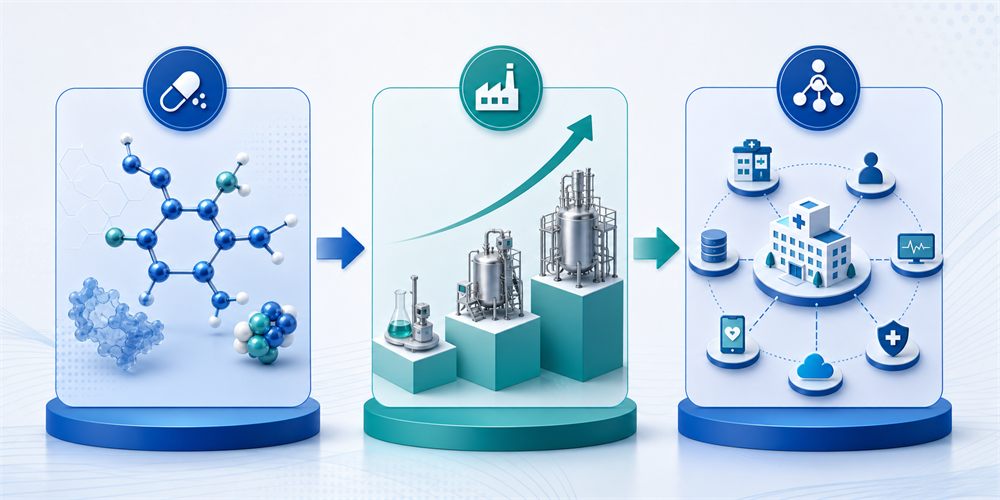
7.1 The Three Key Takeaways from the Conference
First Assessment: Is the delivery solution for a given advanced therapy sufficiently reliable? This “reliability”refers to batch-to-batch consistency under GMP conditions—not merely “capable of encapsulation and targeting” at the proof-of-concept stage—(whether the coefficient of variation for Critical Quality Attributes (CQAs) remains within acceptable limits across multiple consecutive production batches), CQA stability during cross-project reuse (whether particle size and encapsulation efficiency require re-optimization after sequence changes), quality retention under real-world transport and storage conditions (whether quality degrades under varying climatic and transport conditions), and the predictability of in vivo expression(whether the pharmacokinetics of the vector after administration are predictable). If an in vivo CAR-T delivery vector performs well under laboratory conditions but experiences a sharp rise in PDI coefficient of variation during scale-up, a decline in encapsulation efficiency during real-world transport, and requires reformulation when reused across projects—then its level of “reliability” is insufficient to support commercialization.
Second criterion: Can the formulation and quality system support scaling up?When an advanced therapy scales up from a few hundred thousand cases to mass production, can the formulation’s stability adapt to varying global climates and shipping conditions? Does the quality system cover the entire supply chain from raw materials to finished products—not just release testing, but also stability testing methods, degradation pathway analysis, and process assurance? Are the analytical methods sufficient to support batch release and long-term stability monitoring? Can the cold chain and reconstitution requirements be met within the supply systems of target markets?These conditions for “supporting large-scale production” are just as critical to a product’s fate as the scientific quality of the therapy itself—scientific quality determines “whether the treatment is effective,” while the ability to scale up determines “whether enough patients can access it.”
Third Consideration: Can pharmaceutical services and the healthcare system support its real-world use? Has a pre-administration assessment process been established? Do pharmacists possess the capabilities to manage this novel therapy—understanding carrier pharmacokinetics (PK), conducting pre-administration assessments, and identifying new patterns of adverse reactions?Does the adverse reaction monitoring protocol cover new patterns of adverse reactions that may arise with in vivo CAR-T therapy? Are patient education materials comprehensive—not only explaining “how to use” the therapy, but also informing patients about “what might happen” and “when to contact the medical team immediately”? Are interdepartmental collaboration mechanisms functioning smoothly? Does the reimbursement system understand and plan to cover the costs of this novel drug delivery method?These questions are rarely thoroughly addressed at R&D meetings, yet they determine whether a therapy can transition from “clinical success” to a “real-world product”—clinical success means “good data,” while a real-world product means “patients can actually use it.”
| Evaluation Criteria | Core Issues | Evaluation Criteria | What Does Failure Mean? | Relevance to FIP |
| Delivery Reliability | “Is the delivery strategy sufficiently reliable?” | GMP batch consistency + cross-project CQA stability + quality maintenance under real-world conditions + predictable in vivo expression | Unreliable delivery → Uncertain product definition → Dual obstacles to commercialization and regulatory approval | Delivery Systems Topic in the Pharmaceutical Sciences Section |
| Support for Scaling Up | “Can the formulation and quality systems support scaling up?” | Global Transport Stability + End-to-End Quality System + Cold Chain Accessibility + Adequacy of Analytical Methods | Insufficient support → Quality decline after scaling up → Safety incidents → Market withdrawal | Formulation Stability Topic in the Pharmaceutical Sciences Section |
| System-Wide Implementation | “Can pharmaceutical services and the healthcare system accommodate real-world use?” | Evaluation Process + Pharmacist Competency + Adverse Event Monitoring + Patient Education + Reimbursement Coverage | Insufficient support → Risks at the point of use → Reduced efficacy → Reimbursement providers do not support contract renewal | Pharmacy Practice + Global Health + Education Section |
These three considerations are not three separate issues—they are three checkpoints along a single chain. Reliable delivery addresses “Can it be delivered?”; scalable support addresses “Can it be delivered to enough people?”; and system integration addresses “Once delivered, can it be used correctly?” If any one of these checkpoints fails, all prior efforts may be rendered meaningless. The value of FIP 2026 lies in helping you examine all three checkpoints simultaneously—rather than focusing on just one.
7.2 A Common Lesson from In Vivo CAR-T for All Complex Therapies
The buzz surrounding in vivo CAR-T should not be portrayed as the “sole protagonist.” It serves more as an industry signal: the more complex a therapy becomes, the less we can rely solely on the scientific narrative. The scientific narrative behind in vivo CAR-T is compelling—modifying T cells in vivo eliminates the need for a central manufacturing facility, reduces costs, shortens wait times, and eliminates the need for chemotherapy.However, between this narrative and a real-world product, there are still challenges to address: the targeting precision and safety of the delivery vehicle; the adaptation of quality systems (shifting from an ex vivo framework to an in vivo framework); the readiness of pharmacy services (transitioning from passive execution to proactive risk management); the capacity of the healthcare system to accommodate the therapy (evaluation processes, monitoring protocols, and collaboration mechanisms); and coverage by the reimbursement system (recognizing the independent value of the delivery vehicle)—the adequacy of each of these components could become a bottleneck.
This caution applies not only to in vivo CAR-T. Take the non-hepatic targeted delivery of nucleic acid drugs, for example—the scientific narrative is “precise targeting of tissues other than the liver,” but the practical bottlenecks lie in targeting efficiency, off-target risks, and the ability to reuse the delivery system across different projects.The stability of macromolecular formulations under different climatic conditions—the scientific narrative is “new bispecific antibodies demonstrate superior efficacy,” but the implementation bottlenecks lie in cold chain accessibility and convenience of administration.Distribution of novel vaccines in regions with inadequate cold chains—the scientific narrative is “mRNA vaccines offer strong protection,” but the practical challenges lie in ultra-cold chain coverage and supply stability. Off-target risks and long-term follow-up for gene editing—the scientific narrative is “one-time editing, lifelong benefits,” but the practical challenges lie in long-term safety and regulatory frameworks. All complex therapies face a similar structure: “the scientific narrative is compelling, but the path to implementation is long.”
FIP 2026 offers a window into this implementation process—because it brings pharmaceutical science, practice, education, and global health together for discussion in a single forum. FIP is not exclusively dedicated to in vivo CAR-T therapy, giving attendees the opportunity to see the breaking points beyond the scientific narrative.These breaking points are what ultimately determine a product’s fate—no matter how promising the target, how novel the mechanism, or how impressive the clinical data, if delivery is unreliable, scaling support is insufficient, or the system lacks the capacity to integrate it, the product cannot evolve from a “scientific concept” into a “real product.” The value of FIP lies in helping you identify these breaking points—not in helping you track the scientific narrative itself.
8. biotech 2026 FAQ Frequently Asked Questions

8.1 Which biopharmaceutical professionals should attend the FIP World Congress 2026?
FIP is not just a conference for pharmacists and pharmaceutical experts. Its topics cover drug delivery systems, nucleic acid drug delivery platforms, macromolecular formulation stability, precision medicine, vaccine services and global accessibility, advanced therapy management in pharmaceutical practice, educational training system development, real-world data applications, and the deployment of AI in pharmacy. The following groups of readers can all find content directly relevant to their work at FIP:
| Audience Groups | Relevance to FIP Topics | Sectors Worth Watching | Key Research Focus Areas |
| Formulation and Delivery R&D Professionals | LNP/GalNAc delivery, particle size control, batch-to-batch consistency, cross-project reuse | Pharmaceutical Sciences – Delivery Systems | Is the delivery platform scalable? Is there sufficient data to support cross-project reuse? |
| BD and Strategy Teams | Valuation logic for delivery platforms, assessment of transferability, distinction between projects and platforms | Pharmaceutical Sciences + Exhibition Area Discussions | Is the platform’s capability truly transferable? Is the valuation based on the pipeline or the platform? |
| Market Access and Medical Affairs | Pharmaceutical Services Capabilities, Reimbursement Coverage, Patient Education, Supply Systems | Pharmacy Practice + Global Health | Can the healthcare system accommodate advanced therapies? Do payers understand the value of delivery? |
| Pharmacists and Pharmacy Practitioners | Advanced Therapy Management, Pre-administration Assessment, Adverse Event Monitoring, Interdepartmental Collaboration | Pharmacy Practice + Education | Are pharmacists prepared to manage new therapies? Does the training system cover these needs? |
| CDMOs and Suppliers | Description of Capability Boundaries, Demonstration of Batch Experience, Quality System Exchange | Exhibition Area + Pharmaceutical Sciences | Where are the limits of your capabilities? How can you earn the trust of professional readers? |
| Global Health and Supply Chain | Cold Chain Infrastructure, Response to Supply Shortages, Vaccine Distribution and Accessibility | Global Health | Is cold chain coverage sufficient? Can the supply system support continuous delivery? |
Different groups focus on different issues at FIP, but they all point to the same overarching theme: whether advanced therapies can be successfully implemented in real-world healthcare systems after leaving the clinical trial phase. Attending with your own specific questions in mind is far more efficient than simply “browsing” the agenda.
8.2 Why Can In Vivo CAR-T Serve as an Industry Entry Point for Understanding FIP 2026?
In vivo CAR-T is not a dedicated topic at FIP—FIP will not feature a large volume of CAR-T clinical data. However, the capital and clinical buzz surrounding in vivo CAR-T in 2026 precisely illuminates the real-world context of FIP’s core themes: as advanced therapies shift from “off-body customization” to “in vivo delivery,” the key to a product’s success shifts from the manufacturing end to the delivery and administration end.The selection of delivery vectors for in vivo CAR-T (lentivirus vs. mRNA LNP vs. non-viral), the shift in the focus of quality control (from the manufacturing facility to the delivery vector), and the expansion of pharmacy responsibilities (from passive execution to active risk management)—these changes are precisely the types of issues to be discussed in FIP’s Pharmaceutical Sciences, Pharmaceutical Practice, and Global Health sections.
Intracorporeal CAR-T was chosen as the entry point because it provides a concrete, high-profile case study for understanding how the “delivery–quality–service–accessibility” chain operates in actual products—though FIP is by no means limited to intracorporeal CAR-T.Using a high-profile case to drive discussion on structural issues is more likely to resonate with readers and spur action than directly discussing the abstract question of “whether the pharmaceutical system is ready.” However, the article must clearly state that in-vivo CAR-T is an entry point rather than the theme of FIP—otherwise, it would mislead readers into believing that FIP is exclusively about CAR-T, which would be a misrepresentation of the conference’s content.
8.3 What questions should attendees prepare in advance?
The following are ready-to-use probing questions, categorized by attendee role:
① How is the targeting of the delivery platform validated? — Don’t just accept “We targeted the liver”—ask follow-up questions such as: “What are the quantitative data on targeting efficiency? What is the off-target rate? Does targeting efficiency change when the nucleic acid sequence is altered? Are there differences in targeting efficiency across different patient populations?”
② What are the key quality attributes? — Don’t just accept “We measured particle size and encapsulation efficiency”; instead, ask: “What is the coefficient of variation for the particle size distribution? Are the release criteria based on clinical data or process capability? What does a PDI greater than 0.3 mean? How does this affect clinical exposure and safety?”
③ Are there scale-up production data? — Don’t just accept “theoretically, scale-up is possible”—ask follow-up questions such as: “How many batches have been produced continuously under GMP conditions? What is the coefficient of variation (CV) for Critical Quality Attributes (CQAs) between batches? How much process adjustment is required when transferring the process to a different project? What are the scale-up timeline and cost estimates?”
④ What role do pharmacists play in patient management? — Don’t just accept “pharmacists are important” — ask follow-up questions such as: “What are the specific responsibilities of pharmacists in pre-administration assessments? At what stage do pharmacists intervene in the adverse reaction monitoring process? Do pharmacists possess knowledge of carrier pharmacokinetics to support dosing decisions?”
⑤ What is the biggest bottleneck when complex therapies enter primary care or international markets? — Don’t just accept “more investment is needed” — ask follow-up questions such as: “What is the coverage rate of cold-chain infrastructure in the target market? Does the pharmacist training system cover knowledge of new therapies? Do payers understand the value of delivery platforms? Is the supply system resilient enough to handle shortages?”
8.4 How does this conference differ from a pure R&D conference?
FIP’s interdisciplinary nature is what fundamentally distinguishes it from pure R&D conferences. Pure R&D conferences (ASCO, AACR, BIO) focus on how drugs are invented—target discovery, mechanism validation, clinical data, and transaction dynamics. FIP simultaneously focuses on how drugs are taught, delivered, managed, and integrated into public health systems.
This means FIP is well-suited to address questions that cannot be answered at R&D conferences: Once an advanced therapy moves beyond early-stage clinical trials, where might it encounter bottlenecks in real-world healthcare systems? Are the targeting and batch consistency of delivery platforms sufficient to support scaling up? Are pharmacists prepared to manage the administration and adverse reactions of new therapies? Can cold-chain and supply systems ensure the sustained delivery of drugs in target markets? Do payers understand and stand ready to cover new drug delivery therapies?These issues are not seriously discussed at ASCO or BIO, as attendees’ focus is on pipelines and deals—yet they determine whether a therapy can transition from “clinical success” to a “real-world product.”
| Dimensions | Pure R&D Conferences (ASCO/BIO) | FIP World Congress | Complementary Relationship |
| Core Focus | How Drugs Are Invented | How Drugs Are Invented + Educated About + Delivered + Managed + Integrated into Public Health | ASCO focuses on “whether drugs can be invented,” while FIP focuses on “whether they can be implemented”—the two are complementary |
| Depth of Discussion | In-Depth Single-Track Sessions: Latest Advances in a Specific Target/Indication | Cross-stage dialogue: Synergy among science, practice, and education | R&D conferences focus on pipeline depth; FIP focuses on the completeness of the implementation pathway |
| Overlooked Issues | Delivery reliability, scalability support, and system integration | These are precisely the questions FIP aims to address | FIP complements R&D meetings by incorporating the “user-side” perspective they overlook |
| Participant Composition | Researchers, Clinicians, Investors, Business Development Professionals | Pharmacists, pharmaceutical scientists, educators, policymakers, suppliers | Different participant perspectives = different evaluation dimensions = a more comprehensive view |
| Judgments Suitable for Validation | Does the therapy have new targets and new data? | Can the therapy transition from clinical success to a commercial product? | Both assessments are indispensable—pipeline data without a commercialization pathway equals commercial risk |
FIP is not a substitute for ASCO—the two are complementary. ASCO helps you track pipelines and deals, while FIP helps you examine the commercialization pathway after a therapy exits clinical trials. Only by combining observations from all three conferences (ASCO + BIO + FIP) can you see the complete trajectory of a therapy: from invention to commercialization, from data to product, and from clinical success to real-world accessibility.
Another point worth noting here is that the length of the “commercialization pathway” for complex therapies is often inversely proportional to the “complexity” of their scientific narrative.The scientific narrative behind in vivo CAR-T is incredibly compelling—it enables T-cell modification within the body, eliminates the need for a central manufacturing facility, reduces costs, and shortens wait times. However, the path to market is equally complex—carrier selection involves three distinct tracks, the focus of quality control must shift, pharmacy responsibilities must be expanded, regulatory frameworks must be adapted, and training systems must be established.The more compelling the scientific narrative, the more attention it attracts from capital markets and the media; yet the challenges of the implementation pathway are often drowned out by this intense focus—a figure like “100% MRD negativity” is so eye-catching that it’s easy to overlook questions like “What is the coefficient of variation for PDI during carrier scale-up production?”—issues that are equally critical to the product’s fate.
This is why conferences like FIP offer unique insights into complex therapies—they provide a perspective “beyond the scientific narrative.” While ASCO and BIO focus on the scientific narrative itself (targets, mechanisms, clinical data), FIP examines the implementation pathway beyond that narrative (delivery, quality, service, and accessibility).Only by combining these two perspectives can one see the full trajectory of a therapy. If one relies solely on the scientific narrative without considering the implementation pathway, industry assessments will tend to favor “promising prospects” while overlooking “potential implementation challenges”—a bias that has led to numerous cases over the past decade where “the scientific story was strong but the product’s fate was poor.”
One point worthy of special attention is this: do not equate “regulatory approval” with “capacity.” When an in vivo CAR-T therapy receives marketing authorization from the FDA or EMA, it means that the regulatory agency has determined the product’s efficacy and safety data are sufficient to support market launch—but it does not mean that pharmacies and healthcare systems already have the capacity to manage this product.Approval signifies that “regulators deem the product ready for the market,” while readiness signifies that “the healthcare system has the capacity to manage the product.” The gap between the two—where approval outpaces readiness—may be the greatest systemic risk to the implementation of advanced therapies. In the Pharmacy Practice session at FIP, it is worth asking: Do the speakers acknowledge this gap? Do the solutions they propose include timelines and resource estimates?
A practical reminder: When listening to RWD-related presentations at FIP, don’t just accept claims that “we have a big data platform”—ask whether “this data helps me make specific decisions.” The value of a data platform lies not in the volume of data it contains, but in its ability to answer specific decision-making questions.An RWD study with data from only 100 patients that can answer “Has this therapy improved patient pathways in real-world use?” is more valuable for decision-making than a large platform with data from 100,000 patients that can only tell you “we have data.” Data volume is a means; judgment is the end—don’t let the means overshadow the end.
Let’s place the observational value of FIP within a more specific industry context: In the first half of 2026, ASCO released a batch of pipeline data, and BIO finalized a series of transactions. From a R&D perspective, these data and transactions appear very promising—new targets, new mechanisms, new clinical results, and new licensing partnerships.But if you turn to FIP to ask, “Once these new therapies in the pipeline emerge from clinical trials, can they be delivered, managed, paid for, and widely adopted?” you’ll find that many of the answers are uncertain. How much batch-to-batch consistency data is available for the delivery platforms? Does the formulation remain stable under real-world shipping conditions? Do pharmacists have the capability to manage adverse reactions to these novel therapies? Can the cold chain and supply systems in target markets support continuous delivery? Do payers understand the independent value of the delivery vehicles?The answers to these questions won’t appear in ASCO abstracts—but they determine whether a pipeline can progress from “clinical success” to becoming a “real product.”
Another point worth noting here is that the length of the “implementation pathway” for complex therapies is often not proportional to the “fascinating nature” of their scientific story.The scientific narrative behind in vivo CAR-T is incredibly compelling—it enables T-cell modification within the body, eliminates the need for a central manufacturing facility, reduces costs, and shortens wait times. However, the path to commercialization is equally complex—it involves choosing among three distinct development tracks for delivery vectors, shifting the focus of quality control, expanding the responsibilities of pharmacies, adapting regulatory frameworks, and establishing training systems.The more compelling the scientific narrative, the more attention it attracts from capital markets and the media; yet the challenges of the implementation pathway are often drowned out by this intense focus—a figure like “100% MRD negativity” is so eye-catching that it’s easy to overlook a question like “What is the coefficient of variation for PDI during carrier scale-up production?”—a factor that is equally critical to the product’s fate.
This is why conferences like FIP offer unique insights into complex therapies—they provide a perspective “beyond the scientific narrative.” While ASCO and BIO focus on the scientific narrative itself (targets, mechanisms, clinical data), FIP examines the implementation pathway beyond that narrative (delivery, quality, service, and accessibility).Only by combining these two perspectives can one see the full trajectory of a therapy. If one relies solely on the scientific narrative without considering the implementation pathway, industry assessments will tend to favor “promising prospects” while overlooking “potential implementation challenges”—a bias that has led to numerous cases over the past decade where “the scientific story was strong but the product’s fate was poor.”
A practical reminder: When listening to RWD-related presentations at FIP, don’t just hear “we have a big data platform”—ask follow-up questions like “do these data help me make specific decisions?” The value of a data platform lies not in the volume of data it holds, but in its ability to answer specific decision-making questions.An RWD study with data from only 100 patients that can answer “Has this therapy improved patient pathways in real-world use?” is more valuable for decision-making than a large platform with data from 100,000 patients that can only tell you “we have data.” Data volume is a means; judgment is the end—don’t let the means overshadow the end.
Let’s place the observational value of FIP within a more specific industry context: In the first half of 2026, ASCO released a batch of pipeline data, and BIO finalized a series of transactions. From a R&D perspective, these data and transactions appear very promising—new targets, new mechanisms, new clinical results, and new licensing partnerships.But if you turn to FIP to ask, “Once these new therapies in the pipeline emerge from clinical trials, can they be delivered, managed, paid for, and widely adopted?” you’ll find that many answers are uncertain. How much batch-to-batch consistency data is available for the delivery platforms? Is formulation stability maintained under real-world shipping conditions? Do pharmacists have the capability to manage adverse reactions to these novel therapies? Can the cold chain and supply systems in target markets support continuous delivery? Do payers understand the independent value of the delivery vehicles?The answers to these questions won’t appear in ASCO abstracts—but they determine whether a pipeline can progress from “clinical success” to “a real product.”
How attendees allocate their time at FIP directly impacts the quality of what they take away. An inefficient approach is to “wander” through the program in order—attending every session from the first to the last, hoping to gain insights from each one. But at FIP, this approach is ineffective because not every presentation is directly relevant to your work.An efficient approach is to listen selectively with your own validation questions in mind—attending only those sessions that help you validate your assumptions and, in the exhibition area, engaging only with teams willing to share specific data and edge cases. This targeted approach requires you to clarify in advance exactly what you need to validate—whether “the delivery platform is scalable,” “the healthcare system can accommodate it,” or “where the limits of your own capabilities lie.”Once you’ve defined your validation goals, your time allocation at FIP will become targeted rather than aimless.
Patient education and adherence support are the fourth often-overlooked hard constraint. Patient education for advanced therapies is not as simple as “telling patients how to use the treatment”—it must cover risk warnings during the administration process (what reactions might occur, when to contact the medical team immediately), adherence management for multiple-dose regimens (why patients need to return on time for a second dose, what happens if a dose is missed),, lifestyle adjustments (diet, exercise, medication contraindications), and self-monitoring of treatment efficacy (how to determine if the treatment is working, how to recognize early signs of waning efficacy). Developing these educational materials requires pharmacists’ involvement in their creation and iteration—they must be continuously updated and optimized based on real-world usage experience, rather than simply distributing a set of templates.